Tell us about the job
Takes about a minute. No obligation.
A mini-split repair in this county starts with the equipment itself: how old it is, how it was installed, and whether it has been serviced. 42 severe weather events were recorded in Haywood County, North Carolina between 2015 and 2024. At that rate, severe weather touches a system here now and then, but the compressor that quit and the board that failed owe more to years of steady use and an original install that was never quite right than to any storm load. A contractor will check refrigerant levels, inspect electrical connections, and look at the condition of the indoor and outdoor units before weather enters the conversation at all.
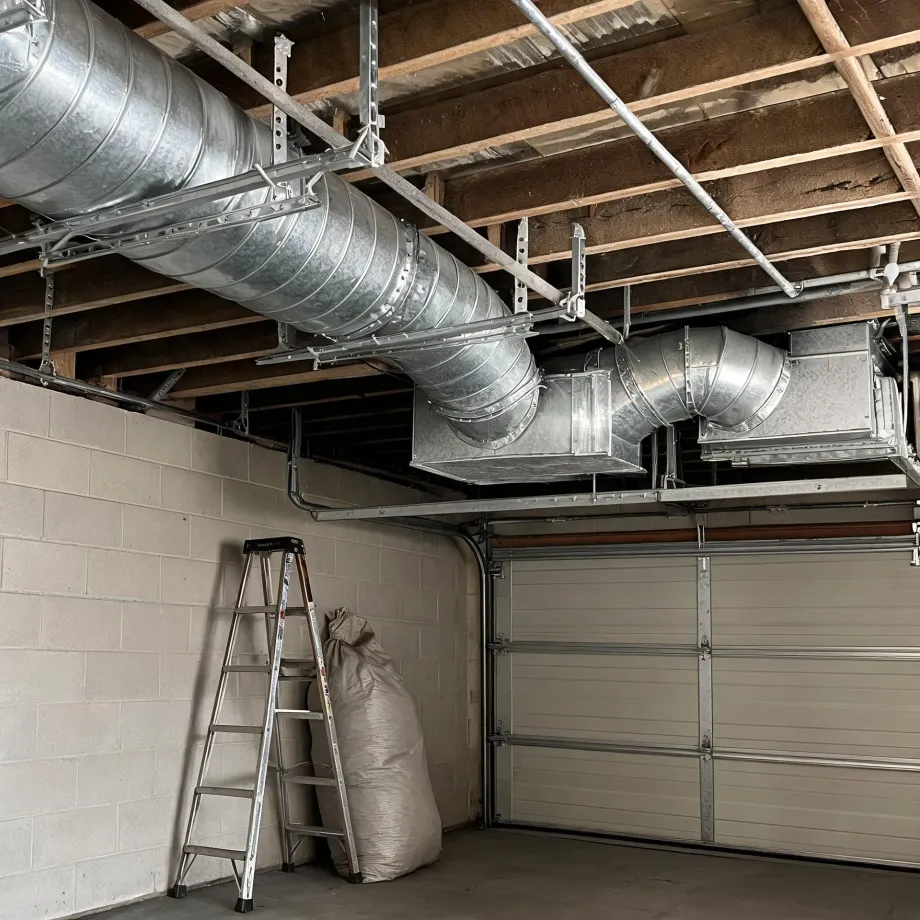
Wiring and line-set connections in houses of this vintage have often been spliced, extended, or adapted across more than one generation of equipment, and that history shows up when a contractor opens the unit and traces what feeds it. Half the homes in Haywood County, North Carolina were built in 1983 or earlier (2020-2024 ACS 5-year). A fault that presents at the mini-split head or compressor can originate further back, in the branch circuit or the connection points serving it, and a repair scoped only to the obvious component misses that. The opened system tells a contractor which it is.
The Parts of a Mini-Split a Contractor Checks During Repair
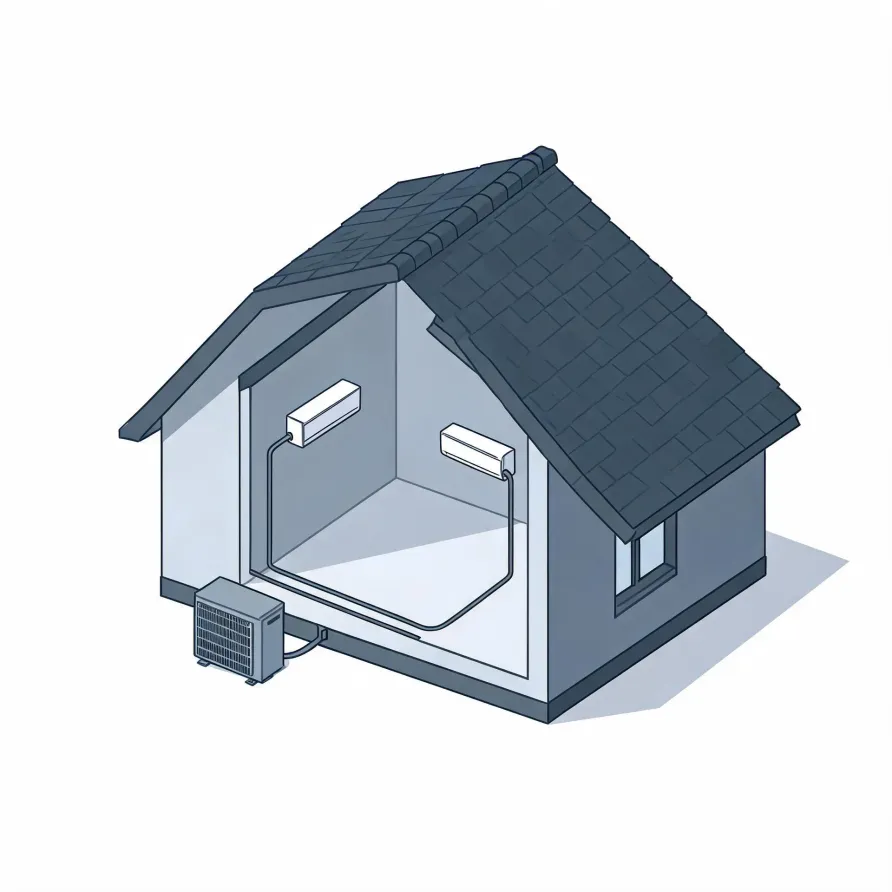
The indoor air handler mounts high on an interior wall and is the piece most homeowners notice. It holds the evaporator coil, a blower fan, and a filter, and any one of those can be the source of a problem. A fault here often shows up as weak airflow, ice on the coil, or the unit failing to cool or heat the room at all.
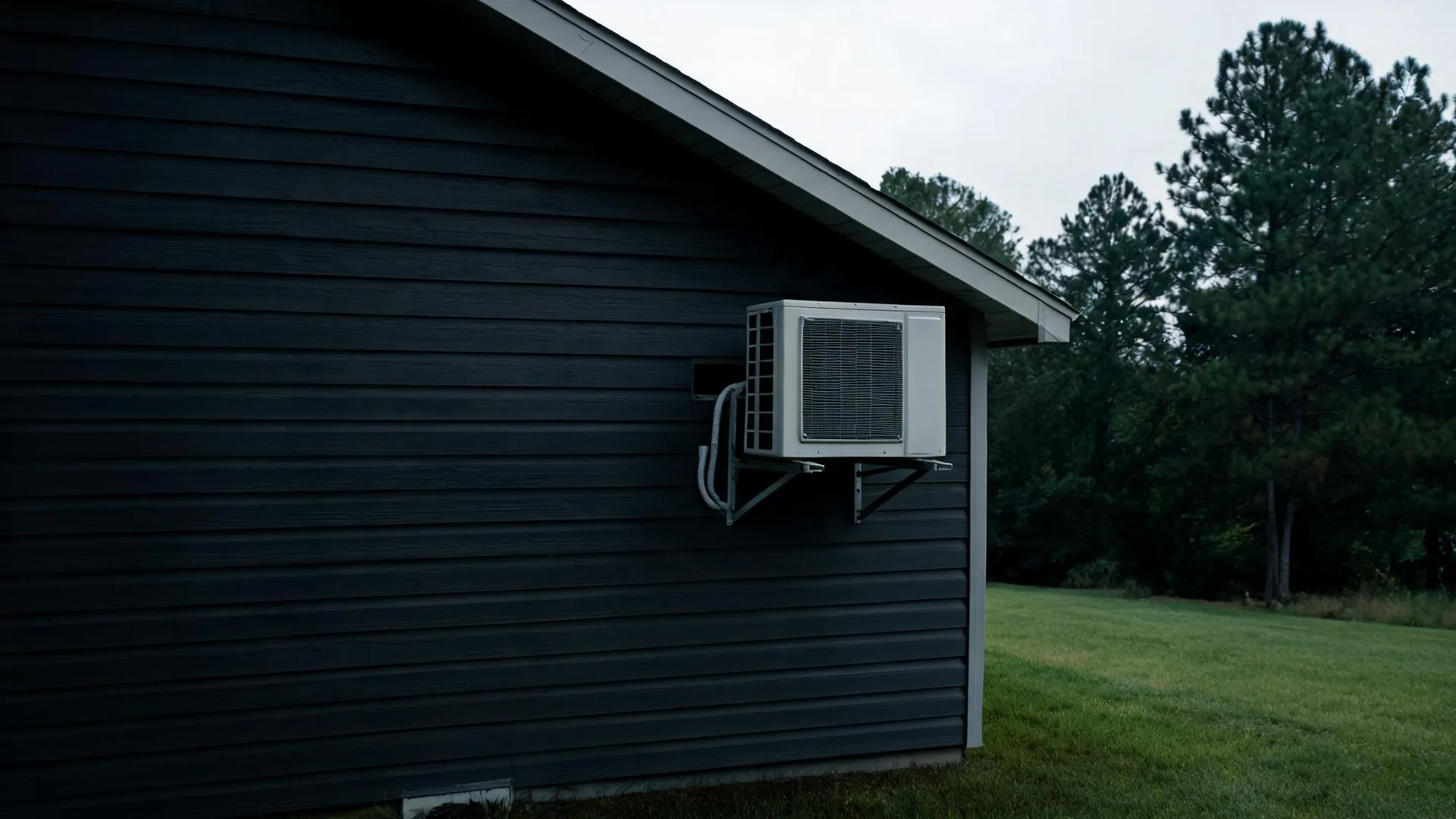
The outdoor condenser unit sits on a pad or bracket outside the house and contains the compressor and condenser coil, which are the components a contractor checks when the system runs but produces no change in temperature. The refrigerant line set and the condensate drain run between the two units, and a crack, clog, or leak in either one can cause symptoms that look like a failure somewhere else entirely.
The drawing shows a typical mini-split layout, and a licensed contractor determines which components apply to the specific system and conditions in your home.
Find a contractor in Haywood CountyHaywood County by the numbers
42 severe weather events were recorded in Haywood County, North Carolina between 2015 and 2024.
NOAA National Centers for Environmental Information, Storm Events Database, bulk CSV export, events 2015-01-01 through 2024-12-31.Half the homes in Haywood County, North Carolina were built in 1983 or earlier (2020-2024 ACS 5-year).
U.S. Census Bureau, 2020-2024 American Community Survey 5-Year EstimatesHaywood County, North Carolina holds 35,560 housing units (2020-2024 ACS 5-year).
U.S. Census Bureau, 2020-2024 American Community Survey 5-Year EstimatesOwners occupy 74.9% of the occupied homes in Haywood County, North Carolina (2020-2024 ACS 5-year).
U.S. Census Bureau, 2020-2024 American Community Survey 5-Year EstimatesCodes & Licensing for Mini-Split Repair in Haywood County, North Carolina2 sourced rules and standards
Licensing Rules for HVAC Repair in Haywood County, North Carolina
North Carolina issues Class I heating licenses covering all systems in all structures, and Class II licenses covering heating systems in single-family detached residential dwellings.
North Carolina requires a license before any person or firm may engage in, or offer to engage in, the business of heating contracting.
Severe Weather Events in Haywood County
Haywood County's climate puts real stress on heating and cooling equipment over time. How often that stress arrives shapes how hard a mini-split has to work and how soon its components need attention.
42 severe weather events, 2015–2024. Source: NOAA National Centers for Environmental Information, Storm Events Database.