Tell us about the job
Takes about a minute. No obligation.
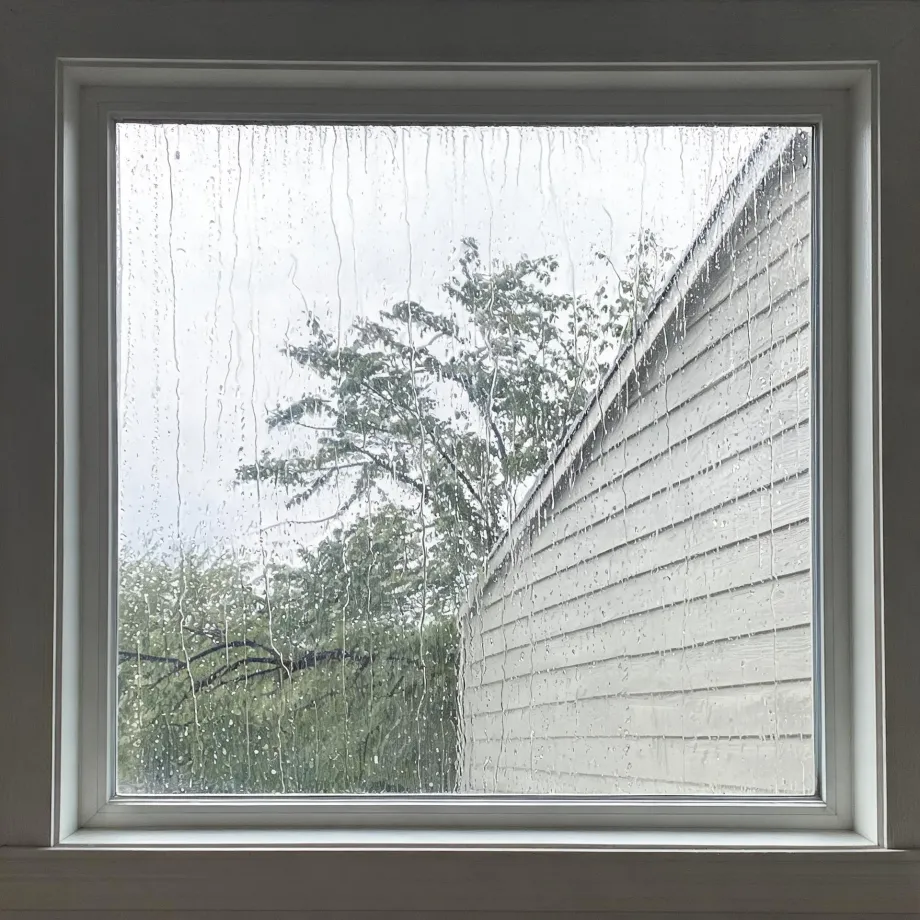
Before a contractor can tell you what a repair will take, they have to work out why a part gave out. 109 severe weather events were recorded in Wilson County, North Carolina between 2015 and 2024. That puts genuine weather load on the table as a factor, and a good diagnosis accounts for it. Refrigerant lines, capacitors, and drain systems all carry that load differently, and a contractor working a mini-split repair here checks each one before settling on a cause. Age and installation quality still explain most failures, but dismissing storm load in this county leaves the diagnosis short.
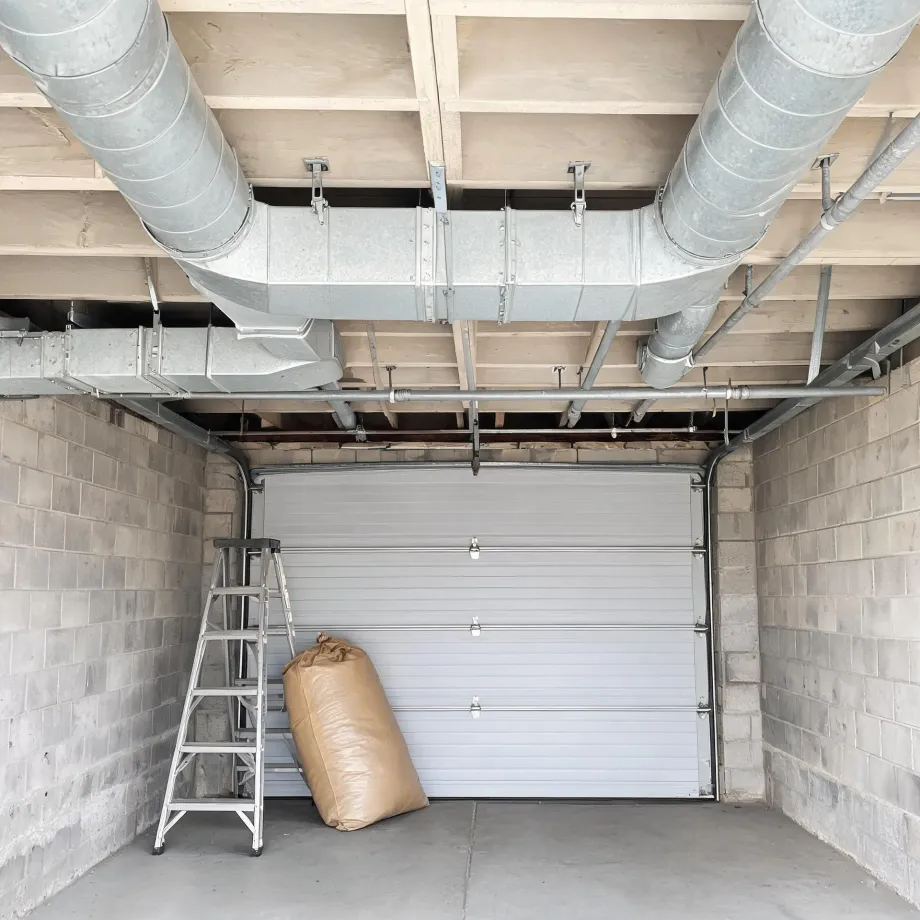
Older electrical work and routing that was retrofitted rather than planned from the start shape what a contractor finds once a mini-split is opened for repair. Half the homes in Wilson County, North Carolina were built in 1986 or earlier (2020-2024 ACS 5-year). A system added to a house that age was worked into walls, ceilings, and circuits that were already there, and the repair call often turns up line sets run through tight spaces, condensate drainage that was improvised, or electrical connections modified well after the original installation. Those conditions change what the repair actually is, and whether a given part fix holds or leads to the next call within a season.
The Parts of a Mini-Split a Contractor Checks During Repair
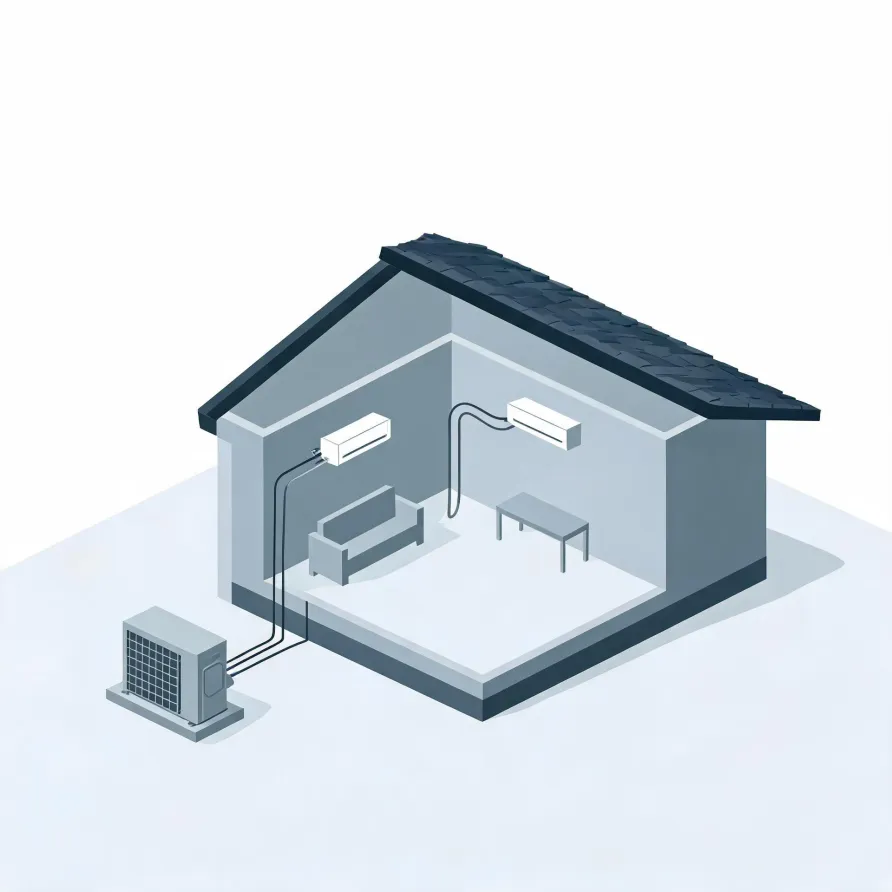
The indoor air handler mounts high on a wall inside the room and is the piece a homeowner sees every day. It holds the evaporator coil, a blower fan, and a filter. When cooling or heating fails, runs unevenly, or produces odd sounds, these components are where a contractor starts looking.
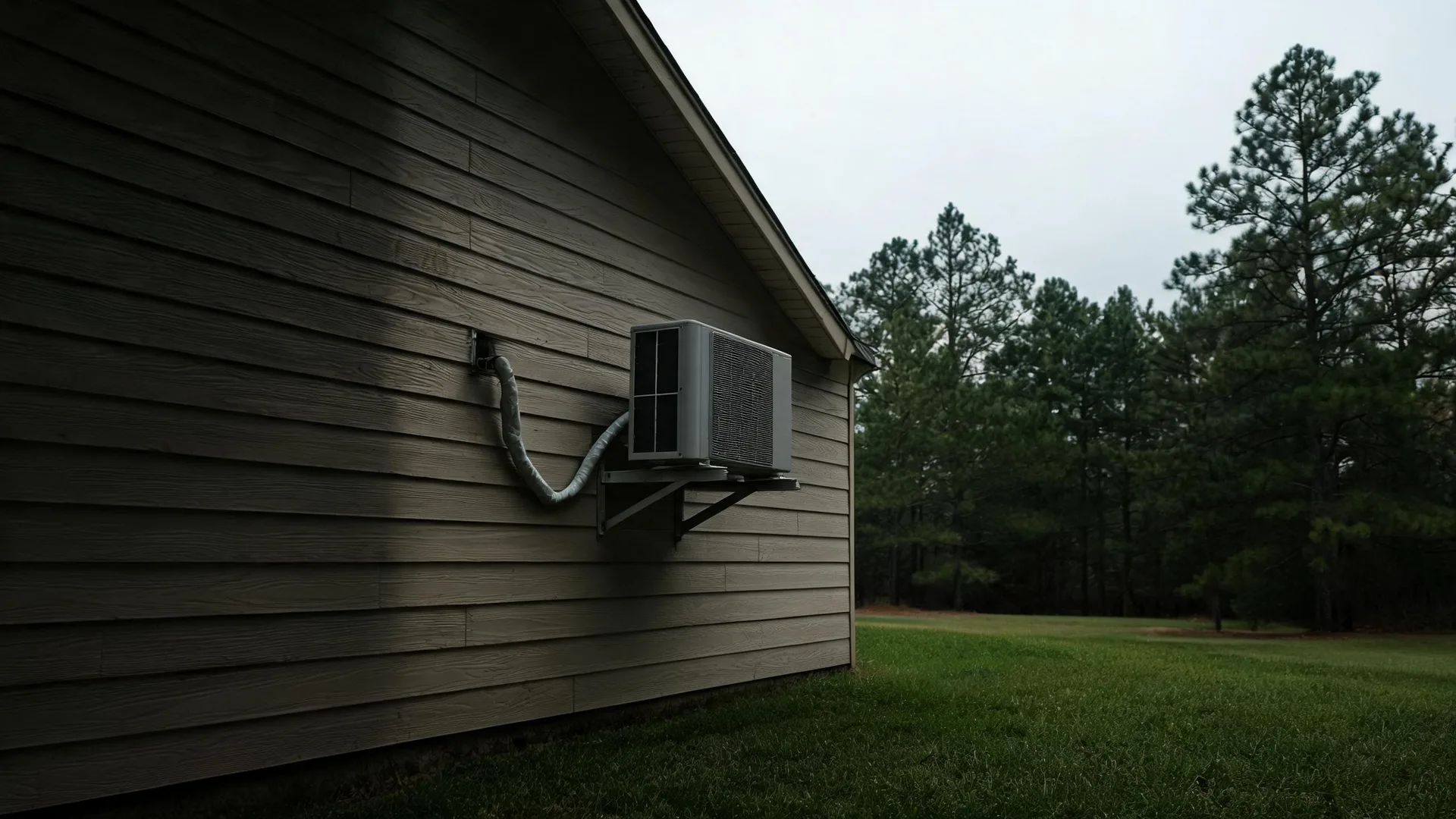
Outside the house sits the condenser unit, which carries the compressor and a second fan. A refrigerant line set and a condensate drain line run between the two units through a small opening in the wall. The compressor, the refrigerant lines, and the electrical connections between the two units are all part of what a contractor traces when the indoor handler shows symptoms but the problem lives outside.
The drawing shows a typical mini-split layout, and a licensed contractor determines which components apply to your specific installation.
Find a contractor in Wilson CountyWilson County, by the numbers
109 severe weather events were recorded in Wilson County, North Carolina between 2015 and 2024.
NOAA National Centers for Environmental Information, Storm Events Database, bulk CSV export, events 2015-01-01 through 2024-12-31.Half the homes in Wilson County, North Carolina were built in 1986 or earlier (2020-2024 ACS 5-year).
U.S. Census Bureau, 2020-2024 American Community Survey 5-Year EstimatesWilson County, North Carolina holds 37,053 housing units (2020-2024 ACS 5-year).
U.S. Census Bureau, 2020-2024 American Community Survey 5-Year EstimatesOwners occupy 60.0% of the occupied homes in Wilson County, North Carolina (2020-2024 ACS 5-year).
U.S. Census Bureau, 2020-2024 American Community Survey 5-Year EstimatesRules & Standards Behind Mini-Split Repair in Wilson County, North Carolina2 sourced rules and standards
Licensing Rules for HVAC Repair in Wilson County, North Carolina
North Carolina issues Class I heating licenses covering all systems in all structures, and Class II licenses covering heating systems in single-family detached residential dwellings.
North Carolina requires a license before any person or firm may engage in, or offer to engage in, the business of heating contracting.
Severe Weather Events in Wilson County
Storms, temperature swings, and humidity put real stress on mini-split systems over time. How hard the weather pushes equipment here shapes what repair work looks like and how often it comes up.
109 severe weather events, 2015–2024. Source: NOAA National Centers for Environmental Information, Storm Events Database.