Tell us about the job
Takes about a minute. No obligation.
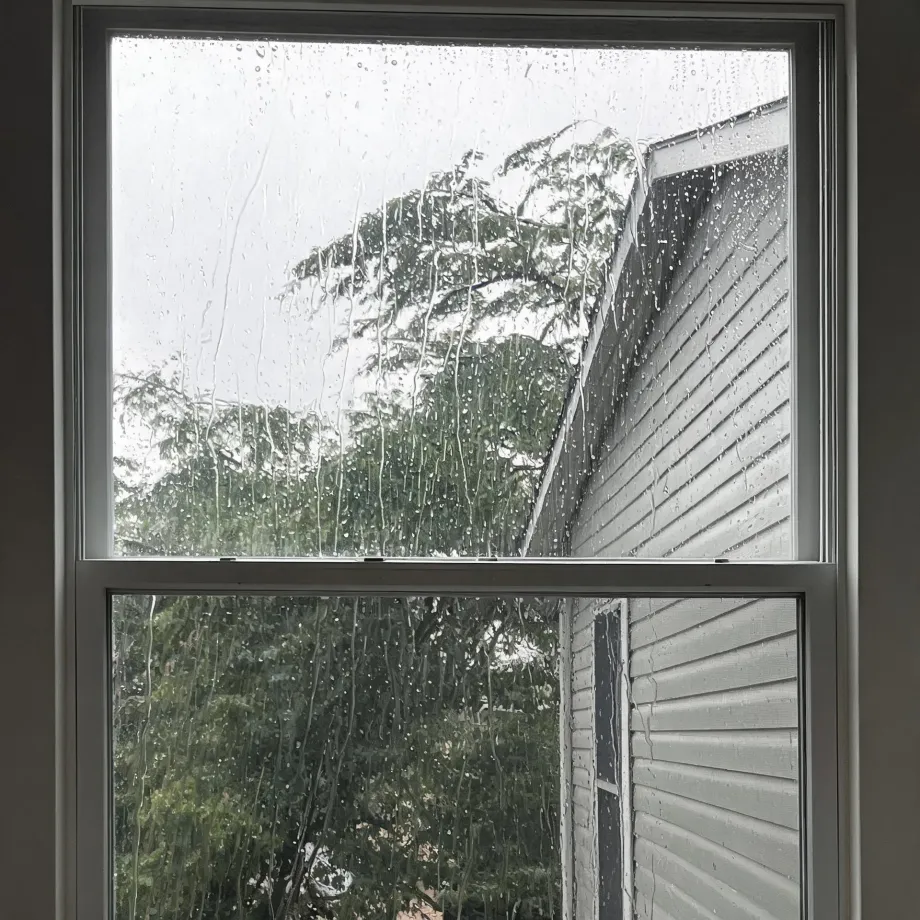
Sizing a mini-split in Columbus County starts with what the system will actually be asked to carry. 110 severe weather events were recorded in Columbus County, North Carolina between 2015 and 2024. At that rate, severe weather is a standing condition of operating here, not a rare interruption, and a unit sized to theoretical averages runs undersized against the real load. A contractor quoting an install factors in that sustained demand when selecting capacity and placing the outdoor unit, because a system that fits the catalog but not the climate starts falling behind from the first hard season.
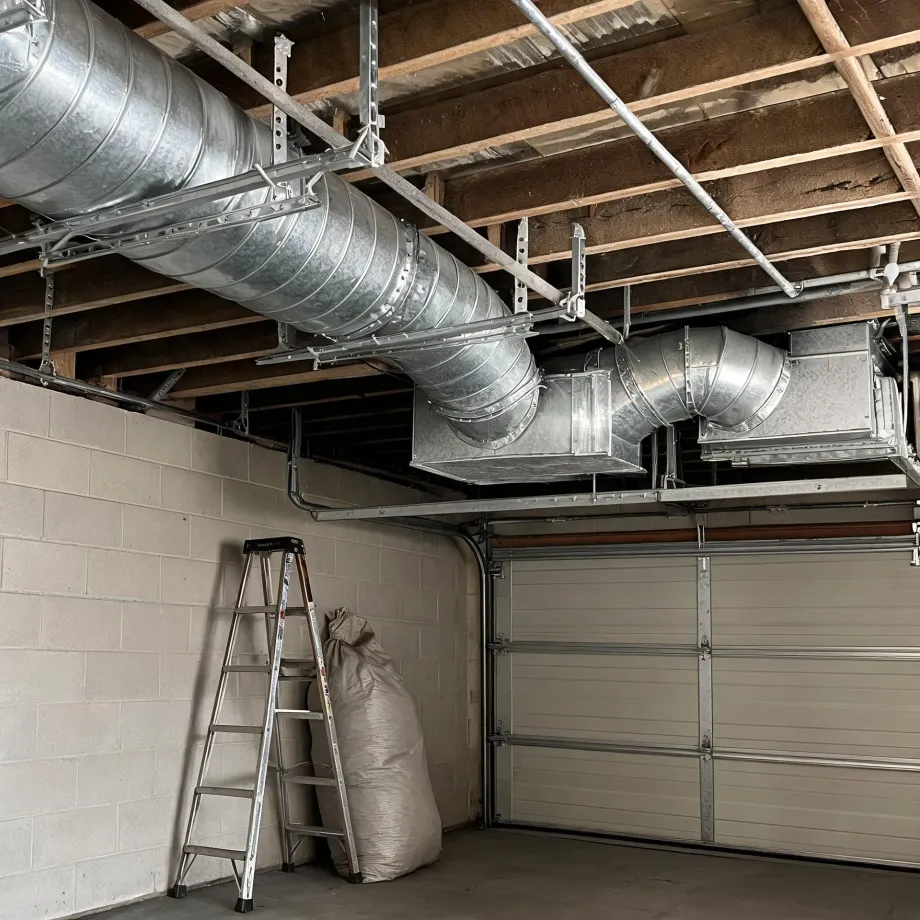
The electrical panel is what decides how a mini-split installation goes in much of Columbus County, and whether the existing service can carry the new load without an upgrade is a question the contractor answers before pricing anything else. Half the homes in Columbus County, North Carolina were built in 1982 or earlier (2020-2024 ACS 5-year). Wiring put in for the equipment of that era was not sized for what runs today, and a panel that looked adequate for the old setup can fall short once a modern unit is on the circuit. The ductwork question does not apply to a ductless system, so what remains is the electrical, and that is where the real assessment sits.
The Mini-split Components Involved in an HVAC Installation
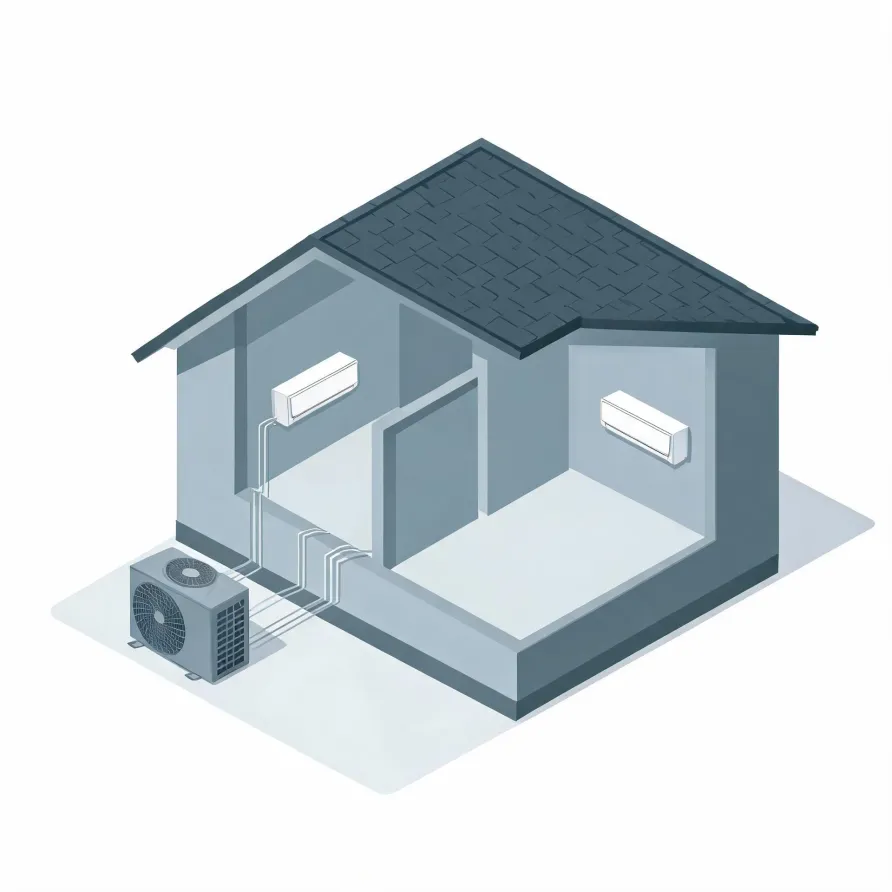
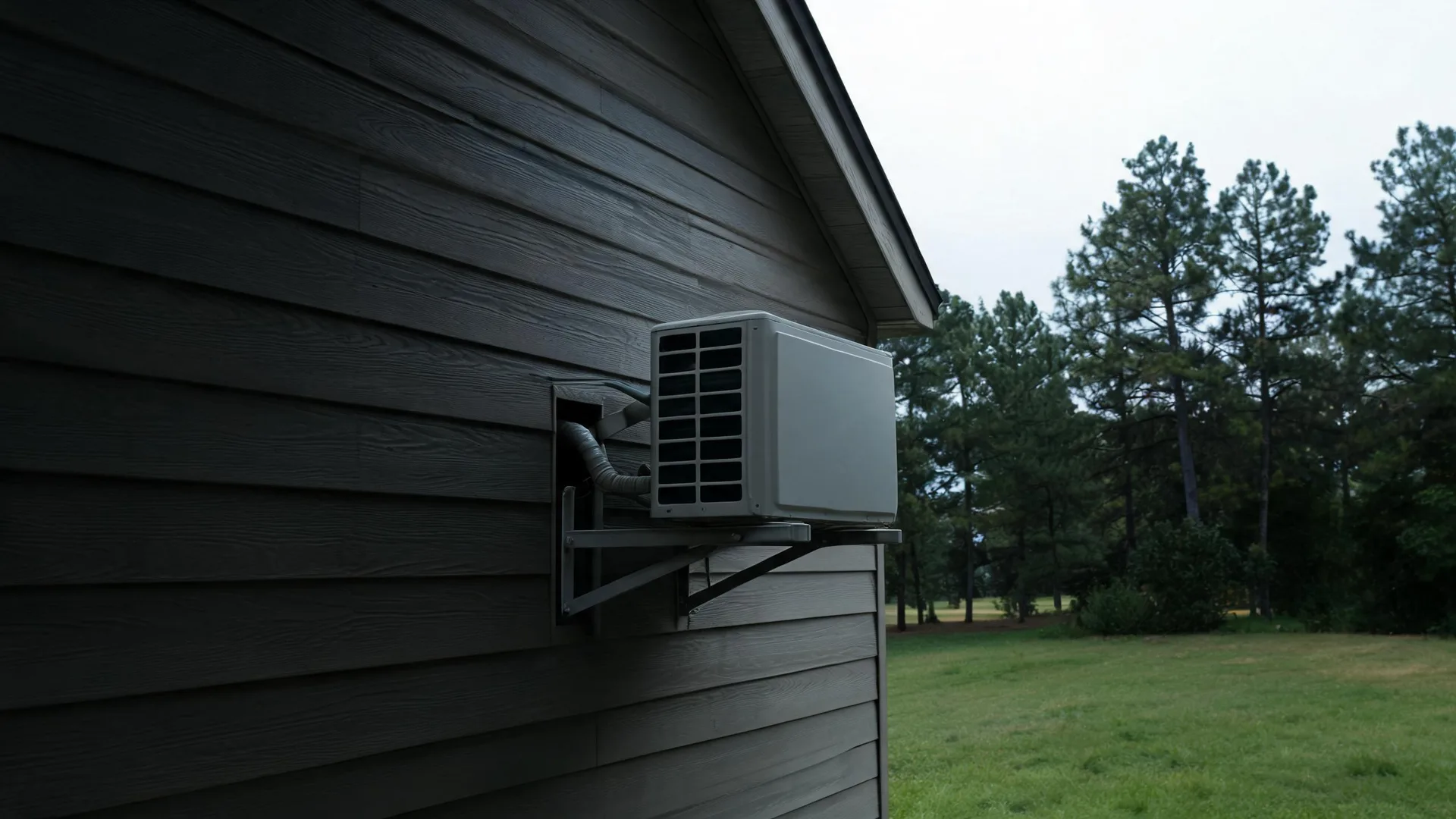
The indoor air handler is what a homeowner sees first. It mounts high on a wall inside the room and delivers conditioned air directly into that space. The outdoor condensing unit sits on a pad or bracket outside the house and houses the compressor and the coil that drives the whole system.
A refrigerant line set runs through a small opening in the wall to connect the two units, carrying refrigerant between them. A condensate drain line runs alongside it, carrying moisture out of the indoor unit. A dedicated electrical line feeds the outdoor unit from the panel.
The drawing shows a typical layout, and a licensed contractor determines exactly how each component is positioned and routed for this particular house.
Find a contractor in Columbus CountyColumbus County, NC, by the numbers
110 severe weather events were recorded in Columbus County, North Carolina between 2015 and 2024.
NOAA National Centers for Environmental Information, Storm Events Database, bulk CSV export, events 2015-01-01 through 2024-12-31.Half the homes in Columbus County, North Carolina were built in 1982 or earlier (2020-2024 ACS 5-year).
U.S. Census Bureau, 2020-2024 American Community Survey 5-Year EstimatesColumbus County, North Carolina holds 23,563 housing units (2020-2024 ACS 5-year).
U.S. Census Bureau, 2020-2024 American Community Survey 5-Year EstimatesOwners occupy 71.1% of the occupied homes in Columbus County, North Carolina (2020-2024 ACS 5-year).
U.S. Census Bureau, 2020-2024 American Community Survey 5-Year EstimatesCodes & Standards Covering Mini-Split Work in Columbus County, North Carolina2 sourced rules and standards
Licensing and Legal Requirements in Columbus County, North Carolina
North Carolina issues Class I heating licenses covering all systems in all structures, and Class II licenses covering heating systems in single-family detached residential dwellings.
North Carolina requires a license before any person or firm may engage in, or offer to engage in, the business of heating contracting.
Severe Weather Events in Columbus County
Weather patterns shape how hard heating and cooling equipment has to work over its lifetime. A mini-split sized and installed for local conditions handles that workload better than one specified for somewhere else.
110 severe weather events, 2015–2024. Source: NOAA National Centers for Environmental Information, Storm Events Database.