Tell us about the job
Takes about a minute. No obligation.
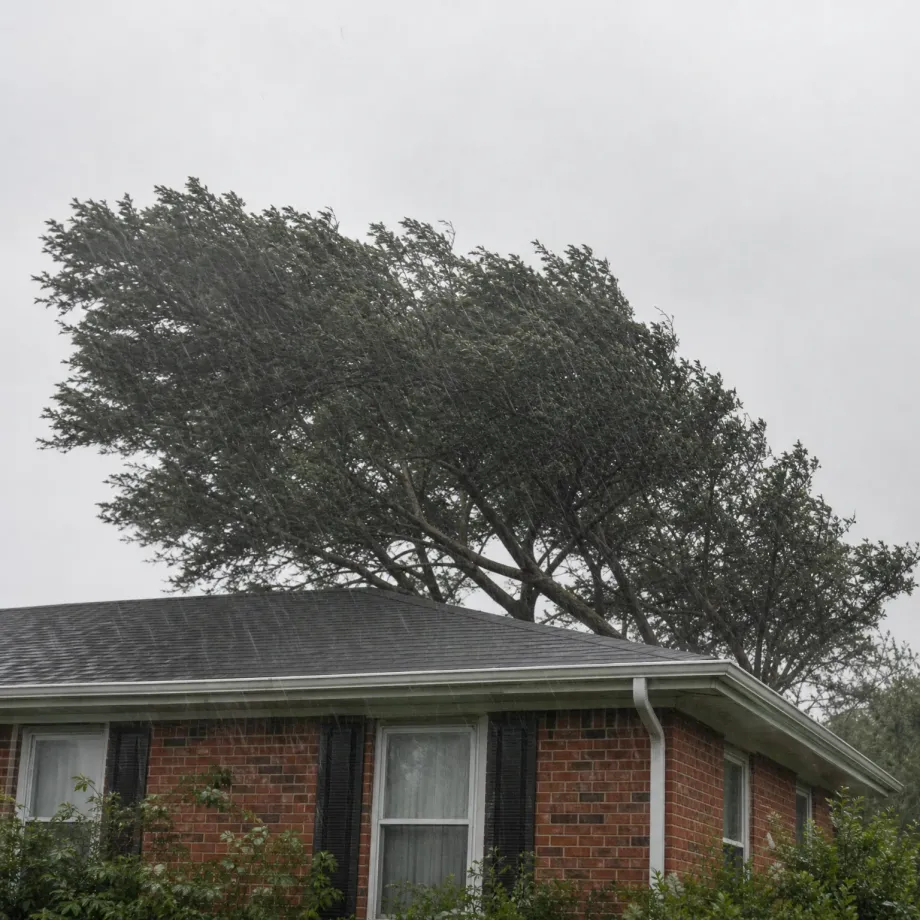
A contractor sizing or installing a mini-split in Hoke County has to work out what the local climate actually demands before settling on equipment or a placement plan. 61 severe weather events were recorded in Hoke County, North Carolina between 2015 and 2024. At that rate, severe weather is a real but infrequent presence, not something every system here is grinding against season after season. That means a homeowner evaluating a failing unit should expect the contractor to look hard at how the original system was sized and installed, because those variables explain far more about what went wrong than the weather record does. A correctly sized and properly installed mini-split should handle what this county throws at it.
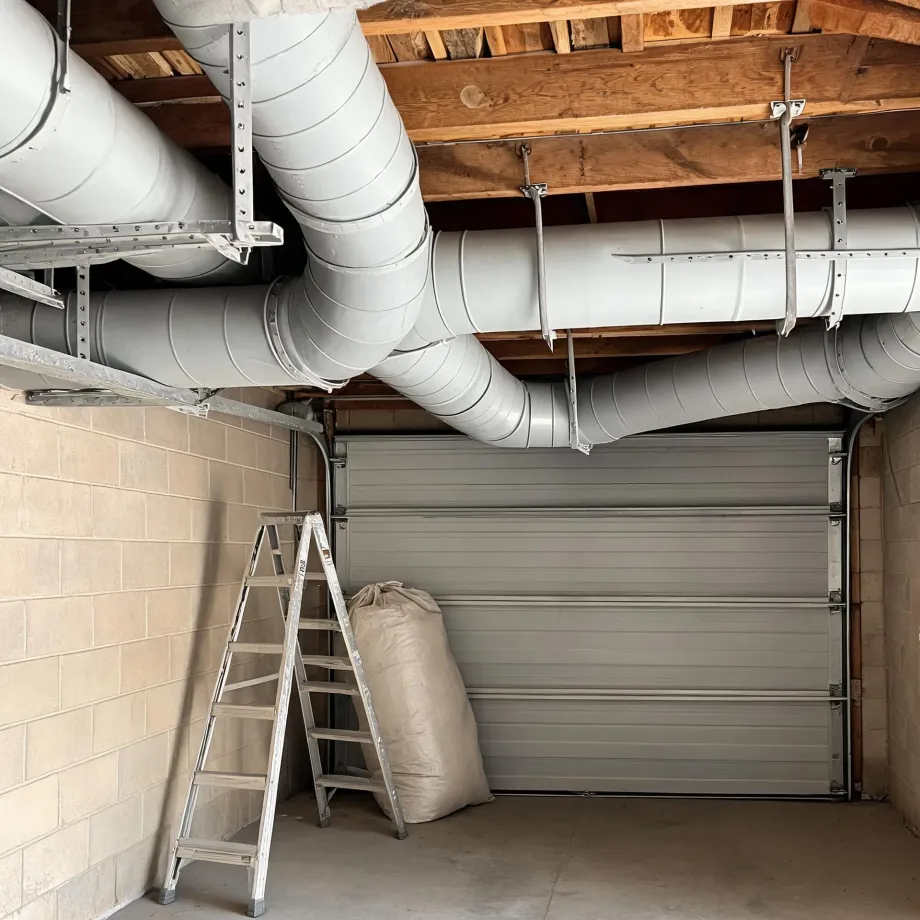
The electrical panel a house was built with shapes what a mini-split installation runs to more directly than the unit itself. Half the homes in Hoke County, North Carolina were built in 2000 or earlier (2020-2024 ACS 5-year). Wiring put in for a different generation of equipment gets measured before any line set goes in, and if the service can carry the new load, the job moves. If the panel falls short, the scope changes before a contractor touches anything else.
What a Mini-split Installation Covers in Your Home
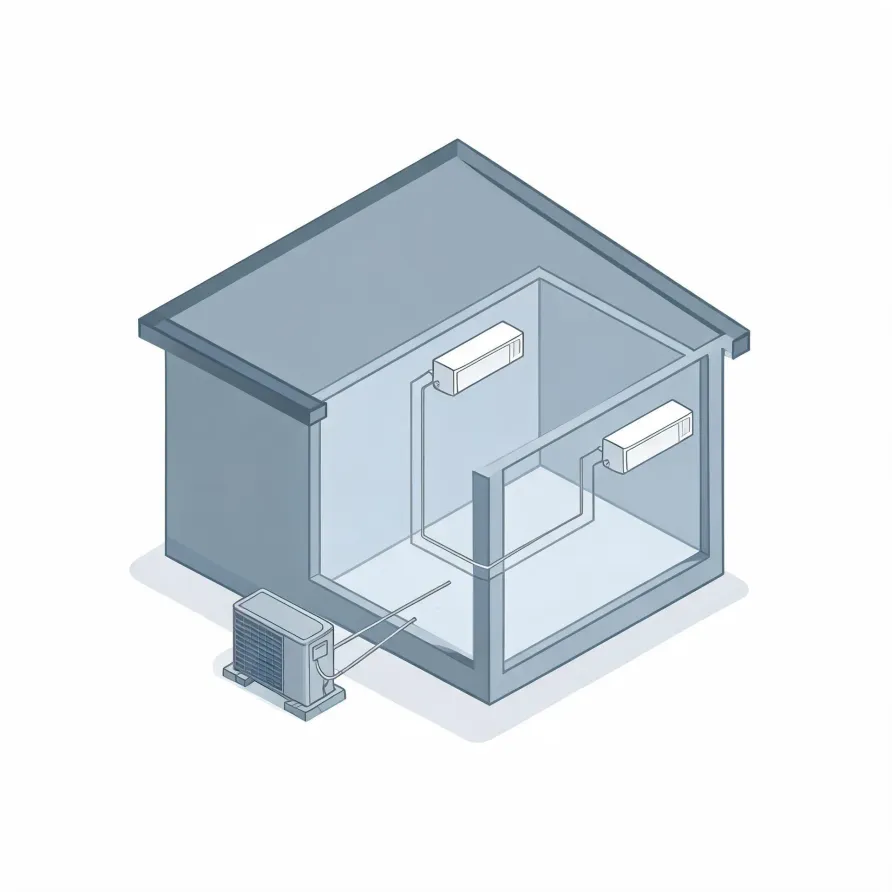
The indoor air handler mounts high on a wall inside the room being conditioned, and it is the piece most homeowners notice first. The outdoor unit sits on a pad or bracket outside the house and holds the compressor and condenser coil. Together these two units do the work of moving conditioned air into the space.
A refrigerant line set runs between the indoor and outdoor units through a small opening in the wall, carrying the connection that makes the system function as one. A condensate drain line runs from the indoor unit to the outside, and a control wire ties the two units together electrically.
The drawing shows the standard layout of these components, and a licensed contractor determines exactly how each one is positioned and routed for your specific home.
Find a contractor in Hoke CountyHoke County, by the numbers
61 severe weather events were recorded in Hoke County, North Carolina between 2015 and 2024.
NOAA National Centers for Environmental Information, Storm Events Database, bulk CSV export, events 2015-01-01 through 2024-12-31.Half the homes in Hoke County, North Carolina were built in 2000 or earlier (2020-2024 ACS 5-year).
U.S. Census Bureau, 2020-2024 American Community Survey 5-Year EstimatesHoke County, North Carolina holds 20,921 housing units (2020-2024 ACS 5-year).
U.S. Census Bureau, 2020-2024 American Community Survey 5-Year EstimatesOwners occupy 73.0% of the occupied homes in Hoke County, North Carolina (2020-2024 ACS 5-year).
U.S. Census Bureau, 2020-2024 American Community Survey 5-Year EstimatesRules & Standards Covering Mini-Split Installation in Hoke County, North Carolina2 sourced rules and standards
Licensing Rules for Hoke County, North Carolina
North Carolina issues Class I heating licenses covering all systems in all structures, and Class II licenses covering heating systems in single-family detached residential dwellings.
North Carolina requires a license before any person or firm may engage in, or offer to engage in, the business of heating contracting.
Severe Weather Events in Hoke County
Heating and cooling equipment carries the load that local weather puts on it, and Hoke County has its own weather profile. A mini-split sized and installed for those conditions will run differently than one specified for somewhere else.
61 severe weather events, 2015–2024. Source: NOAA National Centers for Environmental Information, Storm Events Database.