Tell us about the job
Takes about a minute. No obligation.
Sizing a mini-split for a home in Scotland County starts with what the house demands, not with bracing for constant punishment from outside. 70 severe weather events were recorded in Scotland County, North Carolina between 2015 and 2024. At that rate, severe weather is a real but occasional factor in the life of a system here. A contractor will focus on how well the unit is matched to the space, how the lines are run, and whether the install puts the equipment in a position to handle normal seasonal load. Those decisions drive how the system performs over years, and they are local questions that depend on the specific home.
The electrical panel in a house built for older technology was not designed around the draw a mini-split puts on it. Half the homes in Scotland County, North Carolina were built in 1982 or earlier (2020-2024 ACS 5-year). That gap between when the house was wired and what a contractor is now connecting to it is what decides whether the install is straightforward or whether the panel work runs longer than the equipment itself. A contractor has to read the actual service capacity before the unit selection is settled.
The Parts of a Mini-Split System Involved in an HVAC Installation
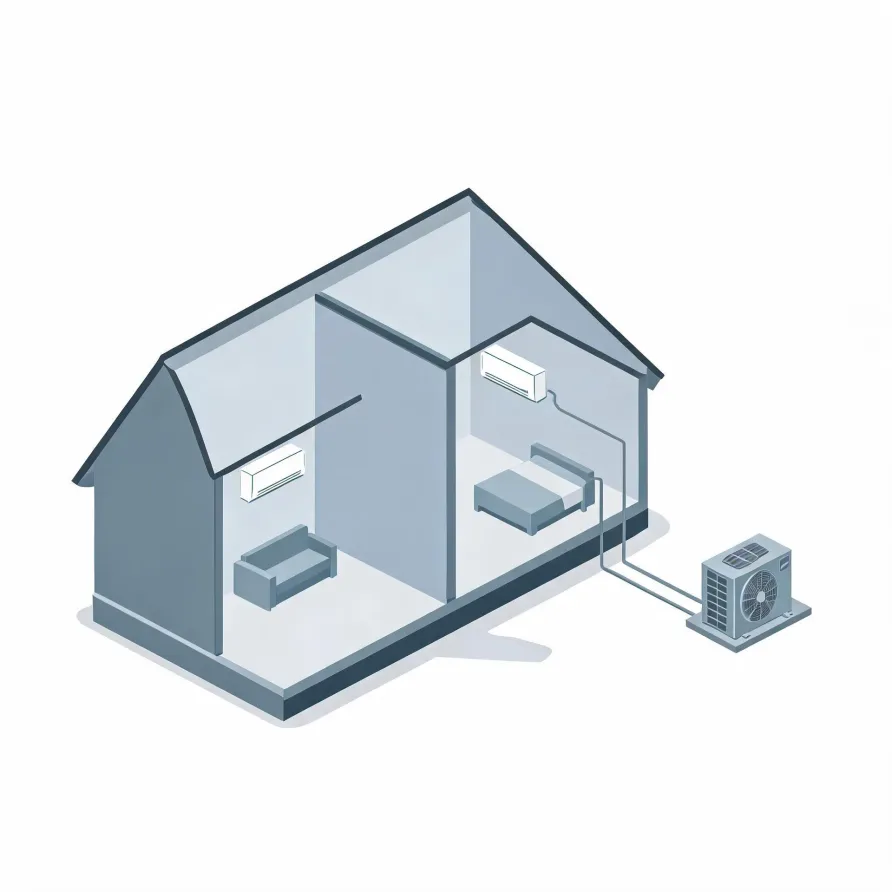
The indoor air handler mounts high on a wall inside the room and is the piece a homeowner sees every day. It draws room air across its coil and delivers conditioned air back into the space. One home can have several of these units, each serving a different room or zone.
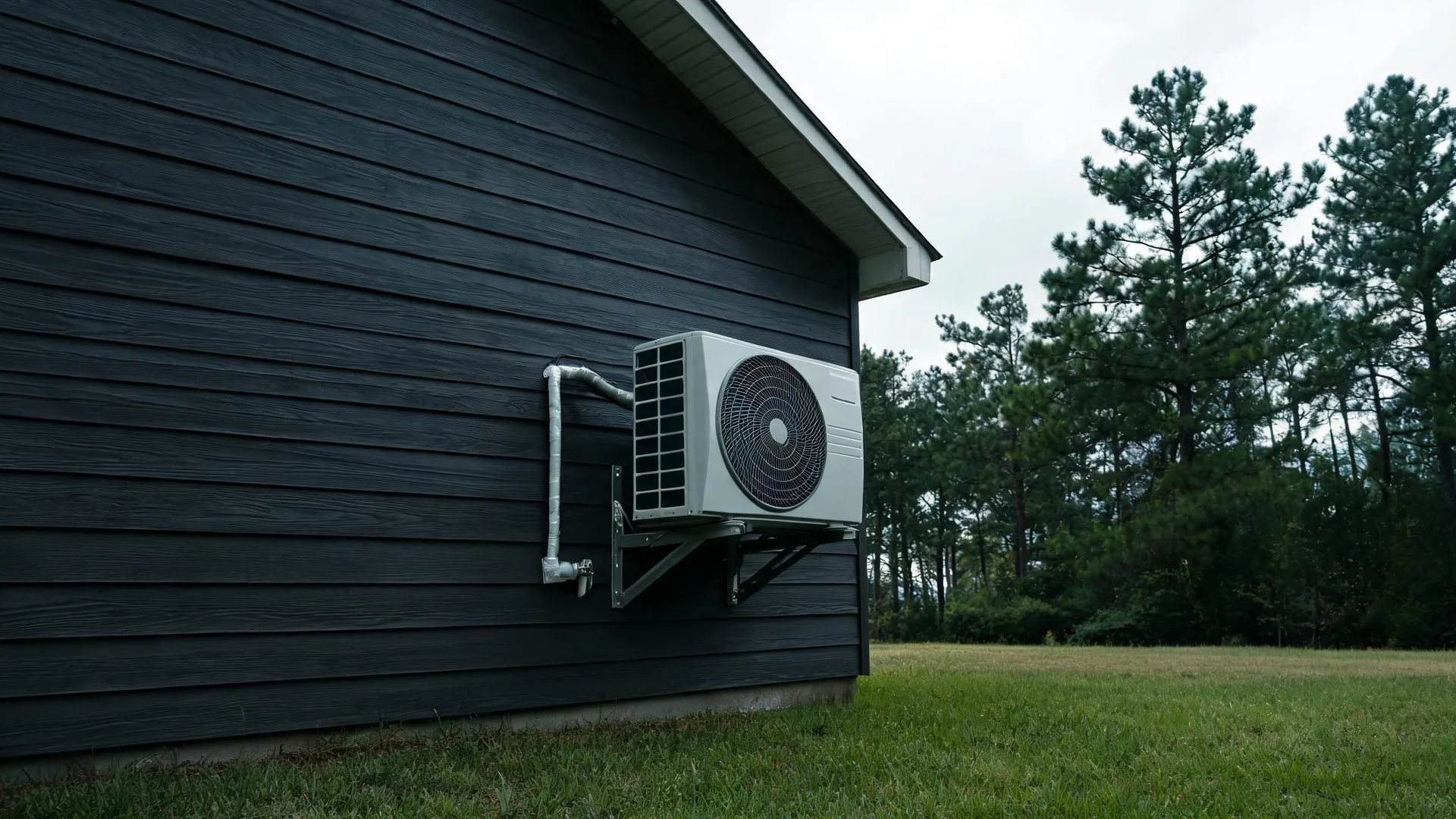
The outdoor condenser unit sits on a pad or bracket outside the house and holds the compressor and the main coil that exchanges heat with the outside air. A refrigerant line set runs through a small penetration in the wall to connect the two units, and a condensate drain line carries moisture from the indoor handler to the outside.
The drawing shows a typical layout, and a licensed contractor determines exactly how the components are configured for this particular house.
Find a contractor in Scotland CountyScotland County, NC, by the numbers
70 severe weather events were recorded in Scotland County, North Carolina between 2015 and 2024.
NOAA National Centers for Environmental Information, Storm Events Database, bulk CSV export, events 2015-01-01 through 2024-12-31.Half the homes in Scotland County, North Carolina were built in 1982 or earlier (2020-2024 ACS 5-year).
U.S. Census Bureau, 2020-2024 American Community Survey 5-Year EstimatesScotland County, North Carolina holds 14,441 housing units (2020-2024 ACS 5-year).
U.S. Census Bureau, 2020-2024 American Community Survey 5-Year EstimatesOwners occupy 61.8% of the occupied homes in Scotland County, North Carolina (2020-2024 ACS 5-year).
U.S. Census Bureau, 2020-2024 American Community Survey 5-Year EstimatesCodes & Standards Governing Mini-Split Work in Scotland County, North Carolina2 sourced rules & standards
Licensing and Legal Requirements in Scotland County, North Carolina
North Carolina issues Class I heating licenses covering all systems in all structures, and Class II licenses covering heating systems in single-family detached residential dwellings.
North Carolina requires a license before any person or firm may engage in, or offer to engage in, the business of heating contracting.
Severe Weather Events in Scotland County
Scotland County's climate puts real demands on heating and cooling equipment, and those demands vary with how hard the weather runs in a given year. A mini-split sized and installed for local conditions handles those swings better than one spec'd to a generic standard.
70 severe weather events, 2015–2024. Source: NOAA National Centers for Environmental Information, Storm Events Database.