Tell us about the job
Takes about a minute. No obligation.
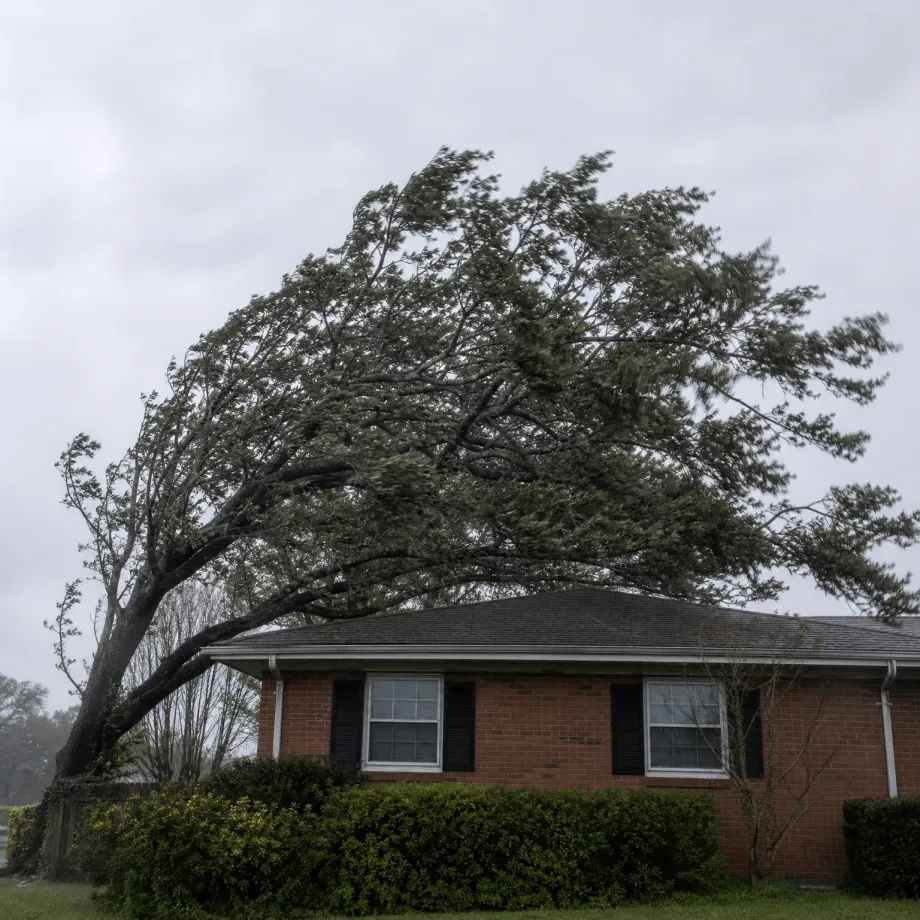
A contractor quoting a mini-split install in Washington County has to decide how much the local weather record actually drives the sizing conversation. 50 severe weather events were recorded in Washington County, North Carolina between 2015 and 2024. At that rate, severe weather here is something a system encounters periodically, not a grinding baseline condition. That matters for installation because it shifts the weight of the job toward getting the refrigerant charge, line set routing, and mount position right from day one. Those decisions set the efficiency floor for the life of the equipment, and in a county where weather alone is unlikely to explain early wear, a careless install has nowhere to hide.
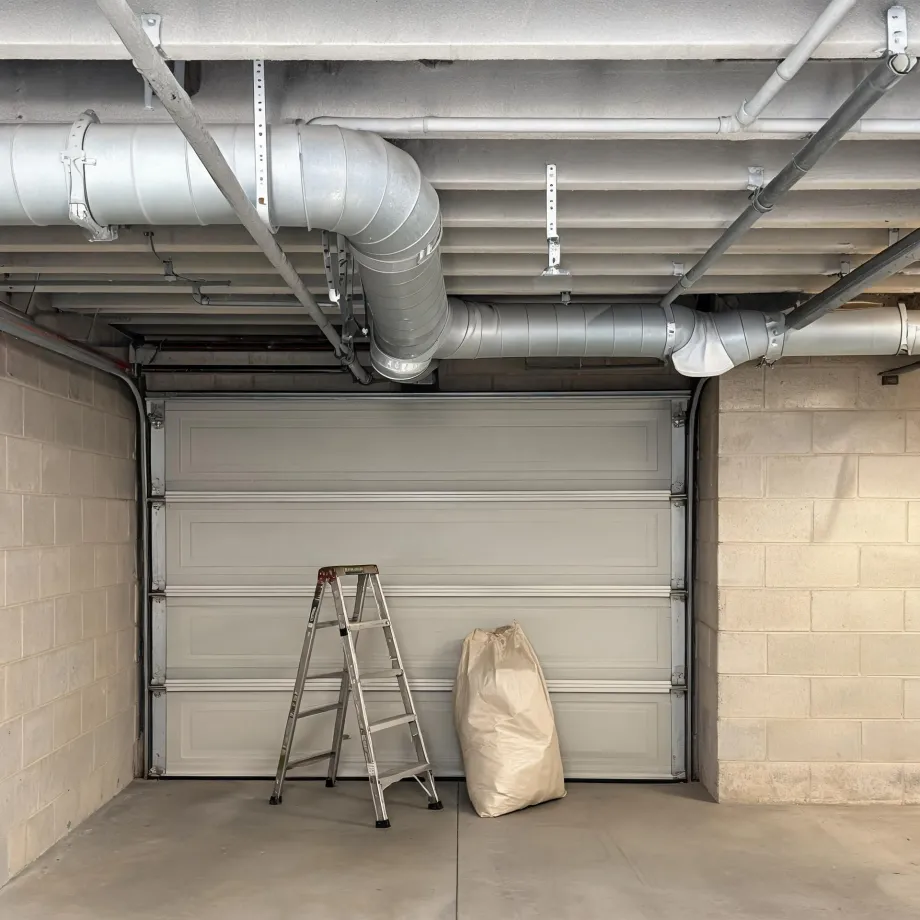
Electrical panels in houses this old were sized for what was standard when the house went up, and mini-splits draw differently than what those panels were originally designed around. Half the homes in Washington County, North Carolina were built in 1975 or earlier (2020-2024 ACS 5-year). A contractor quoting a mini-split installation has to open the panel and read what is actually there before committing to a scope, because a panel that looks adequate on paper may require an upgrade once the unit's draw is added. The ductwork question matters less here, since mini-splits are ductless by design, but the electrical question is real and the answer lives in the box on the wall.
The Mini-Split Components an HVAC Installation Covers
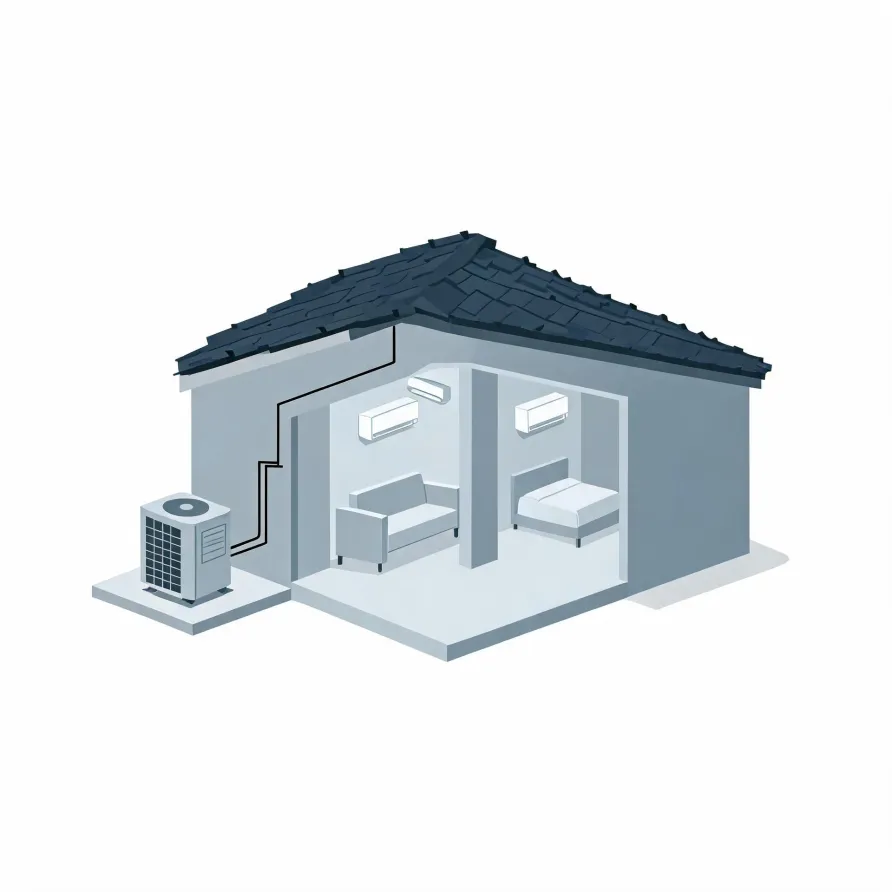
The indoor air handler mounts high on a wall inside the room, delivering conditioned air directly into the living space. Outside the house, the outdoor unit houses the compressor and the condenser coil and does the heavy mechanical work of the system. These two units are the core of what a contractor puts in place.
A refrigerant line set runs between the indoor and outdoor units through a small opening in the wall, carrying refrigerant back and forth between them. A condensate drain line also runs from the indoor handler to the outside, removing the moisture the unit pulls from the air.
The drawing shows the general layout of these components, and a licensed contractor determines exactly how each one applies to your home.
Find a contractor in Washington CountyWashington County by the Numbers
50 severe weather events were recorded in Washington County, North Carolina between 2015 and 2024.
NOAA National Centers for Environmental Information, Storm Events Database, bulk CSV export, events 2015-01-01 through 2024-12-31.Half the homes in Washington County, North Carolina were built in 1975 or earlier (2020-2024 ACS 5-year).
U.S. Census Bureau, 2020-2024 American Community Survey 5-Year EstimatesWashington County, North Carolina holds 6,040 housing units (2020-2024 ACS 5-year).
U.S. Census Bureau, 2020-2024 American Community Survey 5-Year EstimatesOwners occupy 68.0% of the occupied homes in Washington County, North Carolina (2020-2024 ACS 5-year).
U.S. Census Bureau, 2020-2024 American Community Survey 5-Year EstimatesCodes & Standards Governing Mini-Split Work in Washington County, North Carolina2 sourced rules and standards
Licensing and Legal Requirements in Washington County, North Carolina
North Carolina issues Class I heating licenses covering all systems in all structures, and Class II licenses covering heating systems in single-family detached residential dwellings.
North Carolina requires a license before any person or firm may engage in, or offer to engage in, the business of heating contracting.
Severe Weather Events in Washington County
How hard a climate pushes heating and cooling equipment shapes what gets installed and how it needs to perform. That workload is local, and the weather record for this area is part of what informs a mini-split installation here.
50 severe weather events, 2015–2024. Source: NOAA National Centers for Environmental Information, Storm Events Database.