Why your mini split won't turn on in a North Carolina winter
Send the request today and let a mini split pro reach out to you.
Cold snap hits, you go to turn on the mini split, and nothing happens. No fan, no light on the indoor unit, maybe a blinking light that doesn't mean anything to you. In a North Carolina winter that matters, because a lot of homes here heat with electricity, and your mini split might be the only thing standing between you and a cold house.
A mini split that won't start in winter can come down to a few different things. It could be the outdoor unit iced over and not defrosting the way it should. It could be a tripped breaker, a bad control board, or a sensor that's telling the system something is wrong even when the real problem is smaller than that. You won't know which one it is by looking at it, and that's fine. That's not your job.
Your job, right now, is deciding whether to spend the next hour calling around to find someone who works on mini splits, explaining the same problem three or four times to three or four different companies, and then trying to figure out which quote actually makes sense. Or you fill out the form on this page once.
Once you send it, the search is done. You're not the one tracking down a contractor anymore, not the one waiting on hold, not the one re-explaining what your unit was doing when it quit. That part becomes someone else's problem to solve, and it stays solved once a licensed contractor takes it from here.
You still have to get the system fixed. That part takes the time it takes. But finding the person to do it, the part that eats your afternoon and your patience, that's the part that stops being yours the moment you hit send.
A mini split that won't turn on in cold weather usually comes down to one of a few things. If the outdoor unit is caked in ice or frost, the system may have locked itself out until that clears. If the indoor unit shows no light at all, check the breaker first, since a tripped breaker from a power blip is common after a cold snap and easy to miss. If the remote or thermostat doesn't respond, the batteries or the control board may have failed. Some units also won't start heating until the outdoor temperature rises above a certain point, so on the coldest mornings it can look dead when it's actually just waiting. Since you're relying on this for heat, a unit that won't respond needs a look before the next cold night, not after.
Why cold makes it lock out
A mini split pulls heat out of outside air even when that air is near freezing, and the outdoor unit runs a defrost cycle to clear frost off its coil. If the coil ices up faster than the unit can defrost it, the system shuts itself down rather than keep running against a blocked coil. That is a protection step, not a failure on its own. Once the ice melts off, most units reset and try again. If yours doesn't, something is keeping the defrost cycle from finishing, and that is a fault a licensed contractor can read off the unit's board.
Check the breaker before anything else
An indoor unit with no light and no response is almost always an electrical problem before it's a refrigerant or control board problem. Mini splits run on a dedicated breaker, separate from your other circuits, and a tripped breaker cuts power to the whole system with no warning on the thermostat or remote. Flip it back and see if it holds. If it trips again right away, something downstream is drawing too much current, and that's not something to keep resetting on your own. A breaker that won't hold is a job for someone who can test the circuit.
Power costs 14.00 cents per kilowatt-hour statewide
At 14 cents a kilowatt-hour, running a mini split for heat all winter adds up fastest when it's cycling on and off trying to clear ice instead of actually heating your house. A unit that's locked out isn't using power to warm you, just to fight the frost.
EIA-861 2025 statewide residential average
Running the way it should
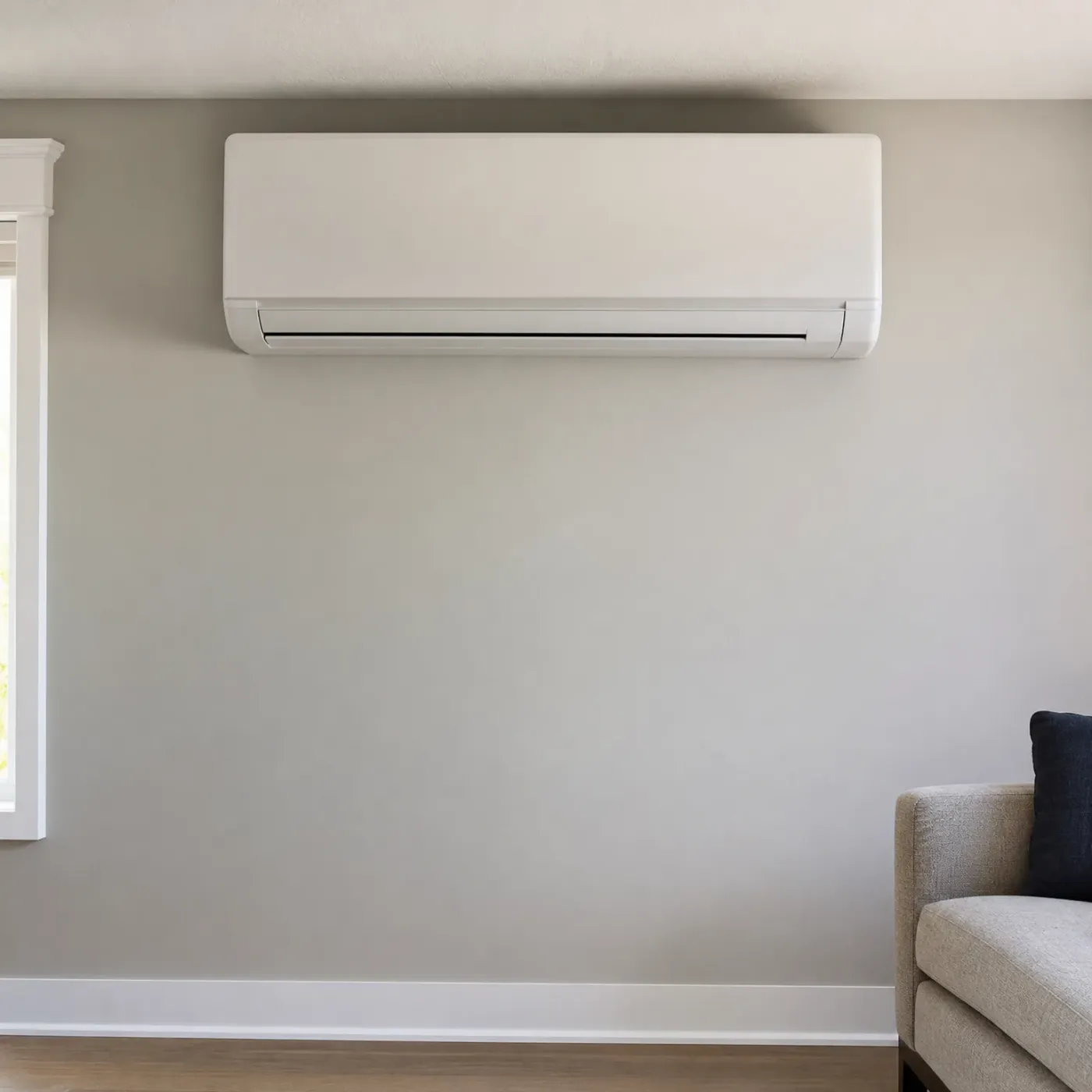
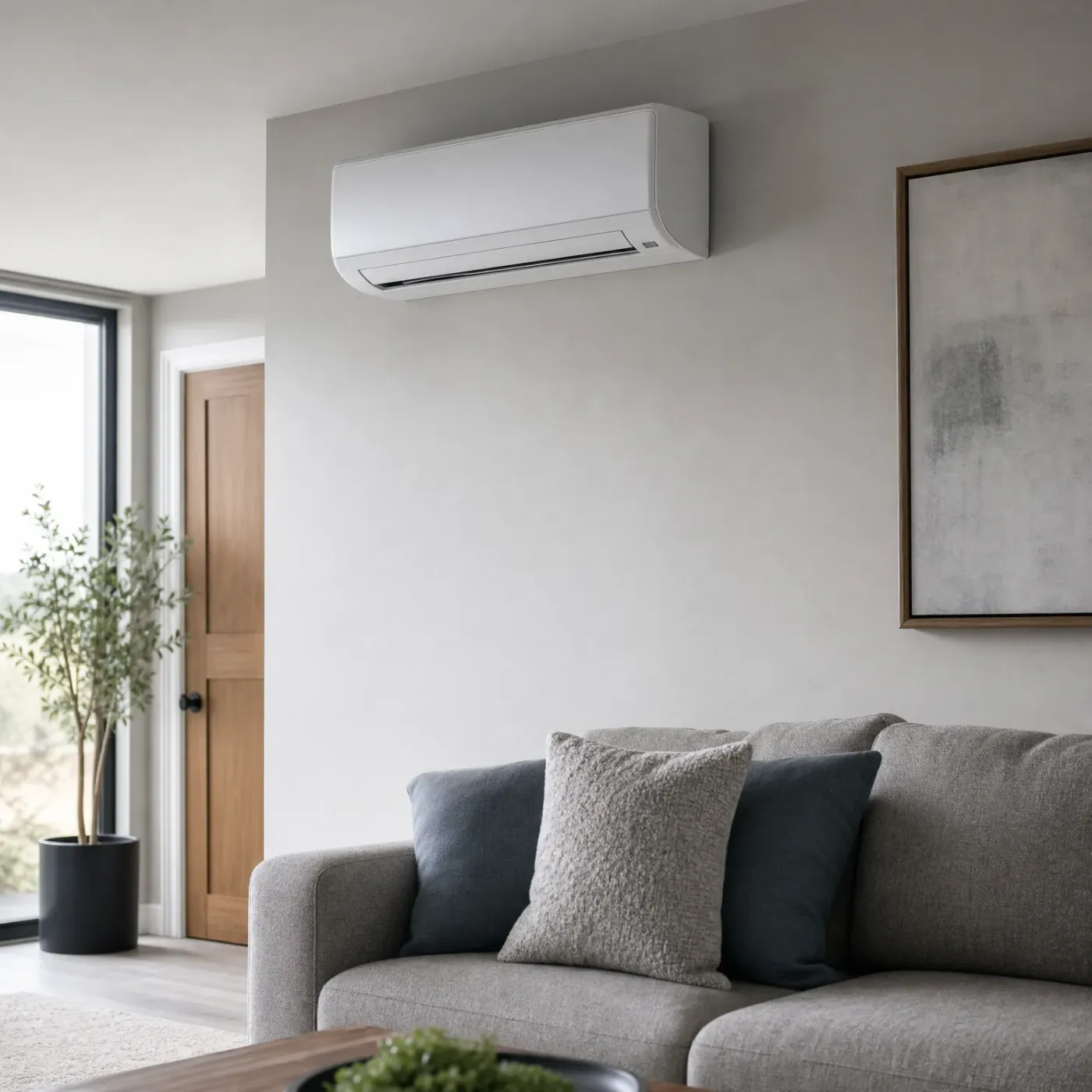
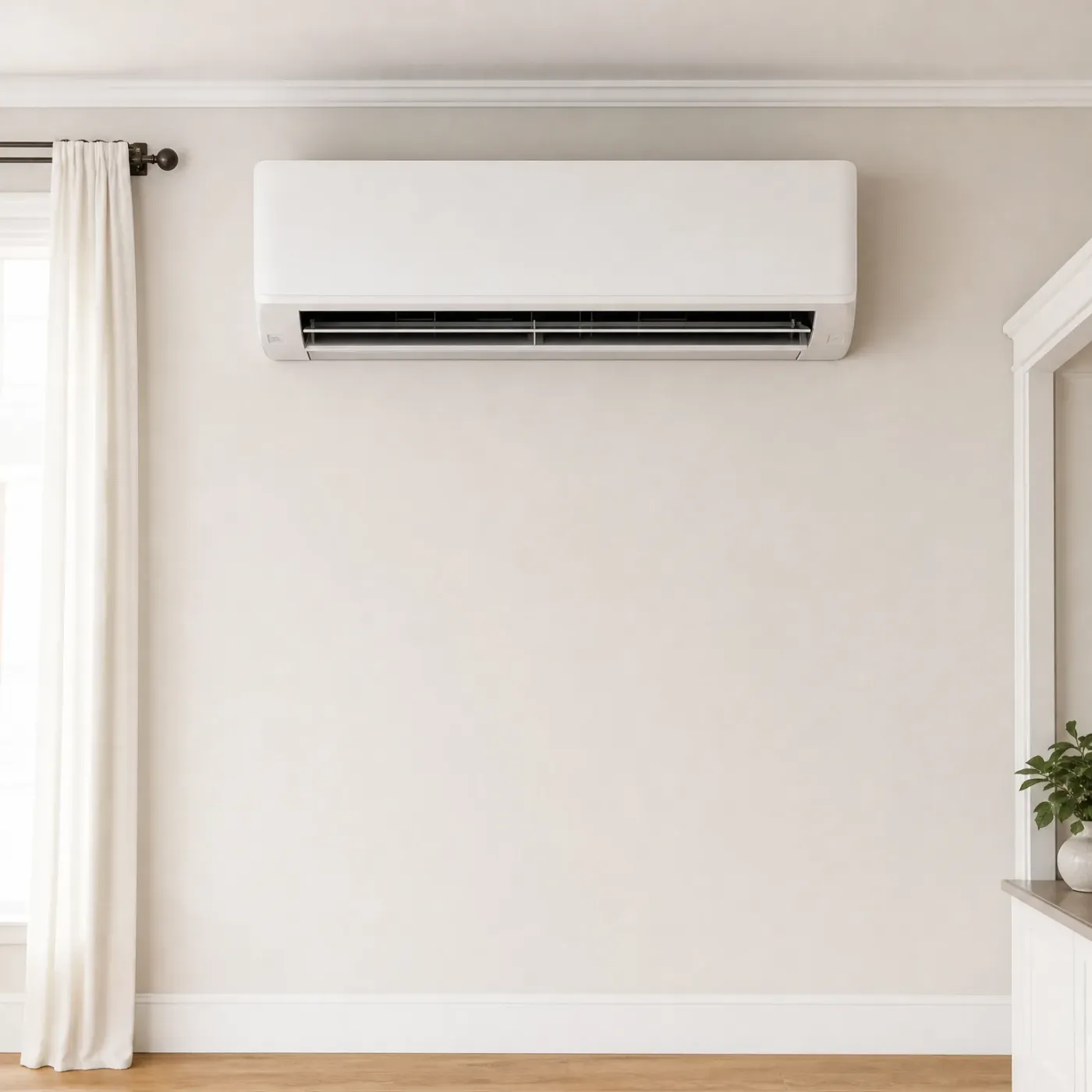
The indoor unit shows a steady light, the fan moves air you can feel from across the room, and the room actually warms up. Outside, the coil stays mostly clear, with maybe a thin layer of frost that disappears on its own within the hour.
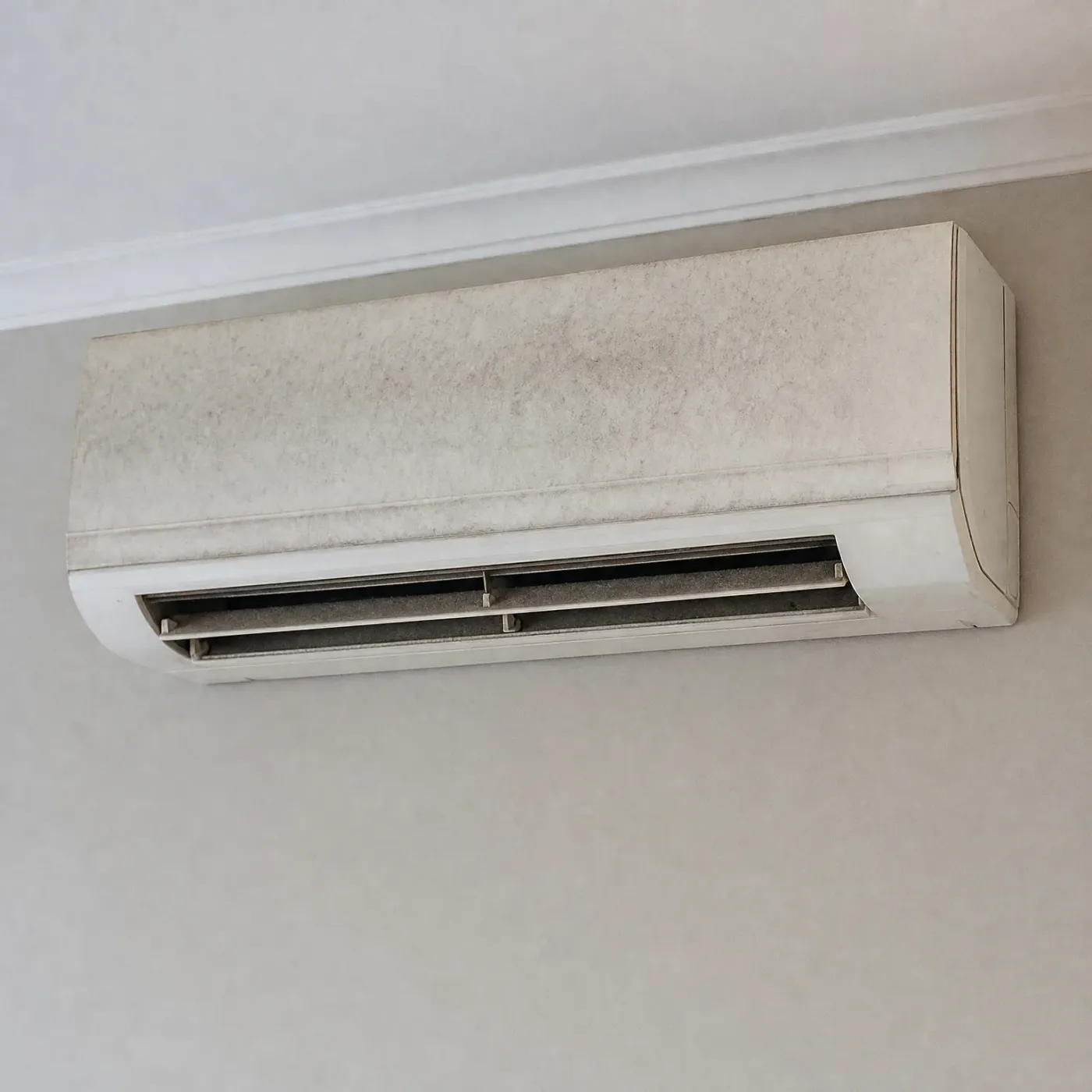
Caked up and locked out
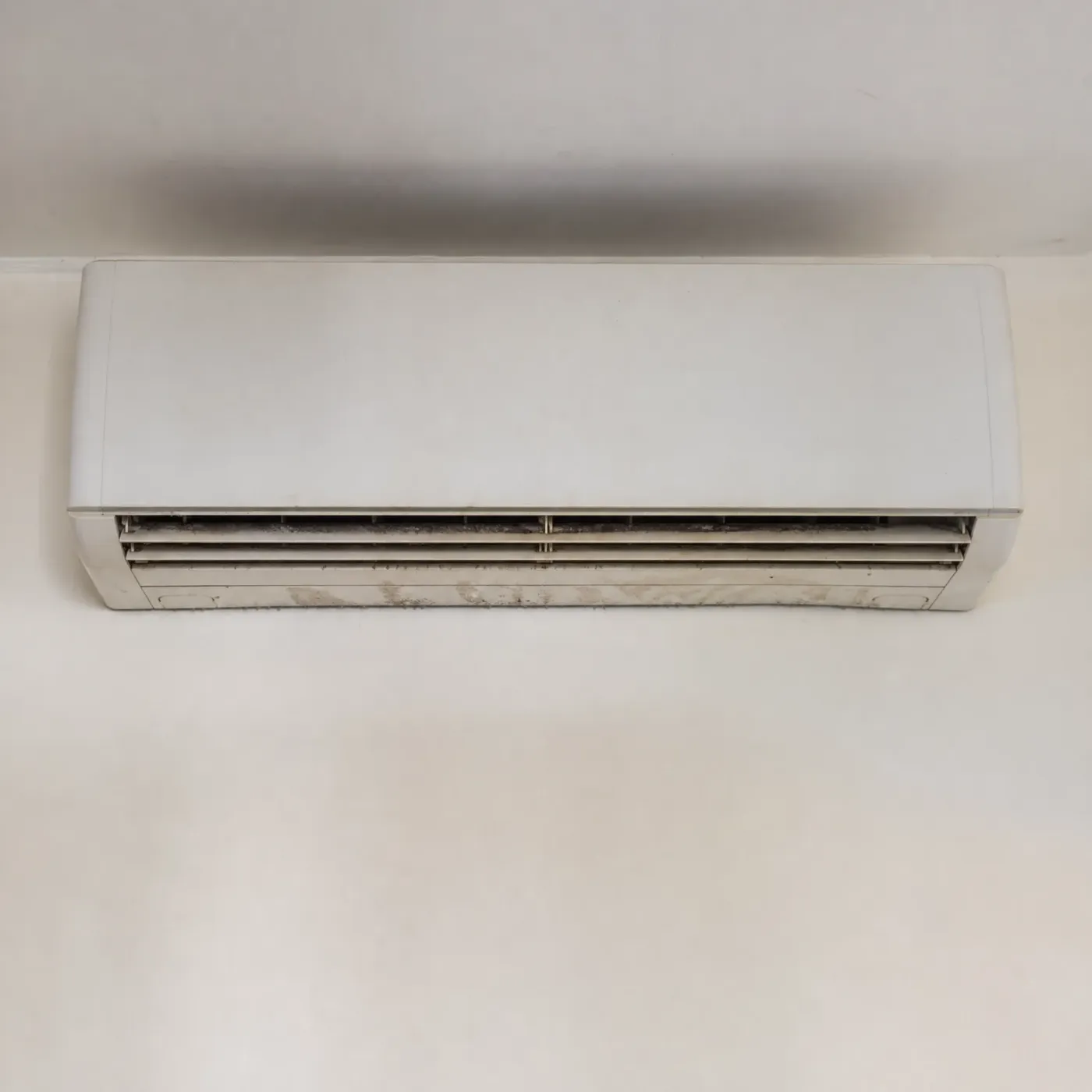
Dirt and a dark film sit along the vents and the lower casing, built up over time. A unit left like this struggles to shed frost fast enough in a North Carolina cold snap, and that's often when it shuts itself down instead of warming the room.
Before you get your mini split repairAfter you get your mini split repair
Send one request and you're done looking
Describe what your mini split is doing once, in one form.
Get the mini split repair search off your mind today.
Check the breaker first, since a tripped breaker gives the same dead, no-light indoor unit you'd see from a bigger problem.
Look at the outdoor unit for a solid block of ice over the coil, which can hold the system locked out until it melts or defrosts on its own.
Clear snow or ice away from the outdoor unit's intake and discharge sides so it has room to pull in and push out air.
Check if the remote has fresh batteries, since a dead remote can look exactly like a unit that won't power on.
Leave the system off and give it time if it's mid-defrost, since some lockouts clear once the coil is clear again.
Call a contractor
A blinking light on the indoor unit is a fault code specific to your system, and a contractor can read it instead of guessing.
If the breaker keeps tripping after you reset it, that points to an electrical fault inside the unit that needs diagnosis, not another reset.
A coil that won't clear itself even after hours of defrosting may mean a failed defrost sensor or a stuck reversing valve.
Low refrigerant charge can keep a system from running its defrost cycle properly, and that's not something you can check or add yourself.
Getting it looked at now, while it's a lockout and not a failure, is the kind of small problem worth catching before it grows.
What a dead unit costs you
If your mini split is your main heat and it won't come on, you're running space heaters or whatever backup you have while you wait, and that shows up on the bill right along with the cold. A thermostat that won't hold a temperature because the system keeps cycling and locking out does the same thing, just slower. Either way you're paying for heat you aren't getting, and the house still doesn't feel right.
What keeps not starting puts at risk
A unit that locks out once and clears on its own is normal in cold weather. One that won't restart, or restarts and shuts off again within the hour, is telling you the defrost cycle isn't keeping up or something else is wrong underneath that. Left alone through a hard freeze, ice can sit on the coil and fins longer than it should, and a unit that can't get warm air moving isn't doing anything for the pipes or the rooms it's supposed to be heating.
What the remote is actually telling the outdoor unit to do
Press the button on the indoor unit's remote and nothing happens outside right away. The remote talks to the indoor head, the indoor head talks to the outdoor unit over a thin signal wire, and the outdoor unit decides whether it's allowed to start. If the board outside senses the coil is too cold or still iced, it won't send power to the compressor no matter how many times you press that button. That's the system protecting the compressor, not ignoring you.
This is also why swapping remote batteries or holding the button longer never fixes a lockout. The remote already did its job the first time. Figuring out which board, sensor, or wire is actually refusing to respond takes someone who can open the outdoor unit and test it, not just stand in front of it pressing buttons. That's the part you'd otherwise spend time finding on your own, calling around for someone who works on mini splits specifically and explaining the same blinking light twice before anyone looks at it.
Summer here isn't just hot, it's heavy. NOAA puts the average summer dew point across North Carolina at 67°F, which is the sticky, can't-shake-it kind of air. Your mini split works harder pulling that moisture out of the house all summer, and that wear doesn't just disappear when the weather turns cold. A coil or drain line that's been straining since June can carry a problem into winter, showing up as a system that won't start on the first freezing morning.
NASA POWER T2MDEW county cells weighted by homes
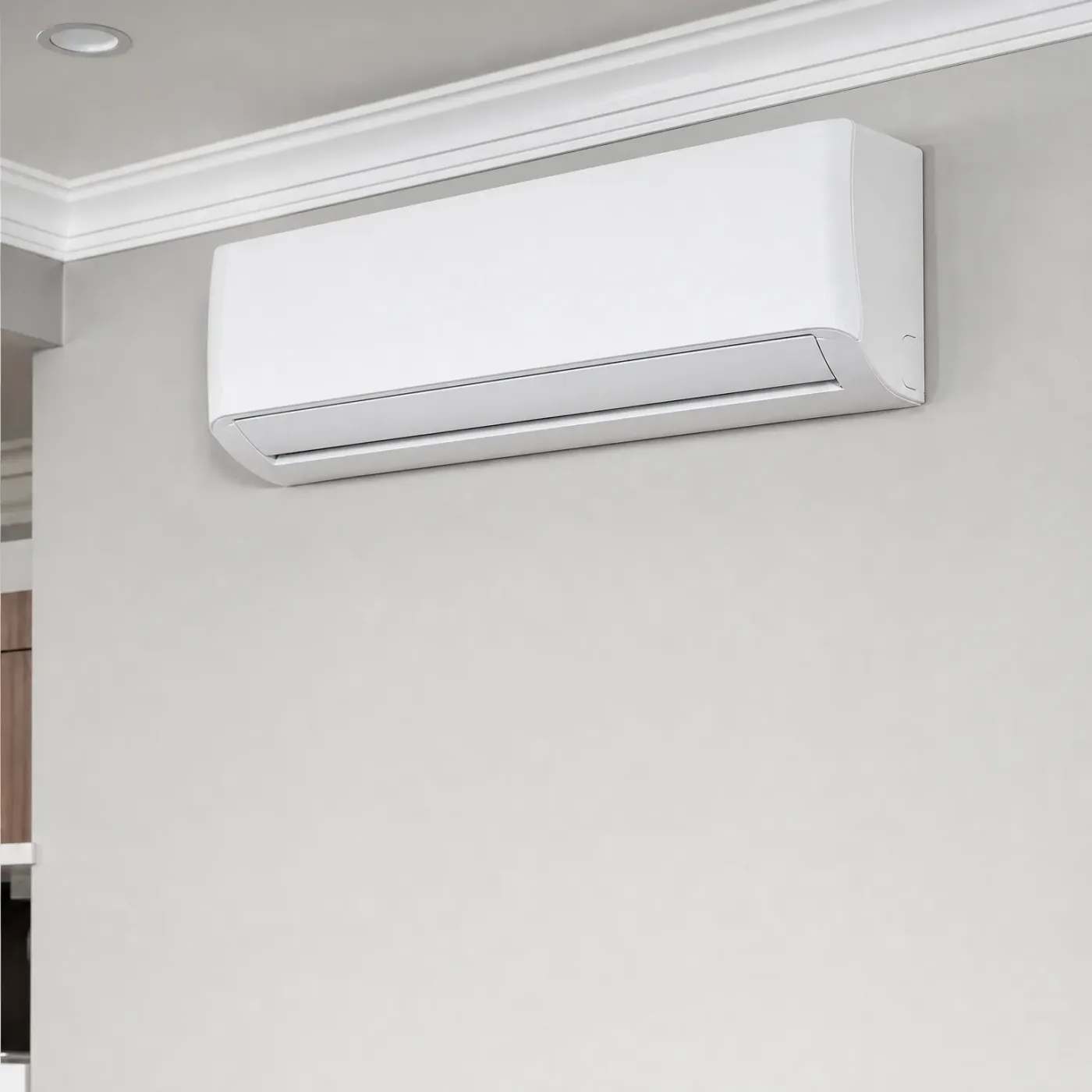
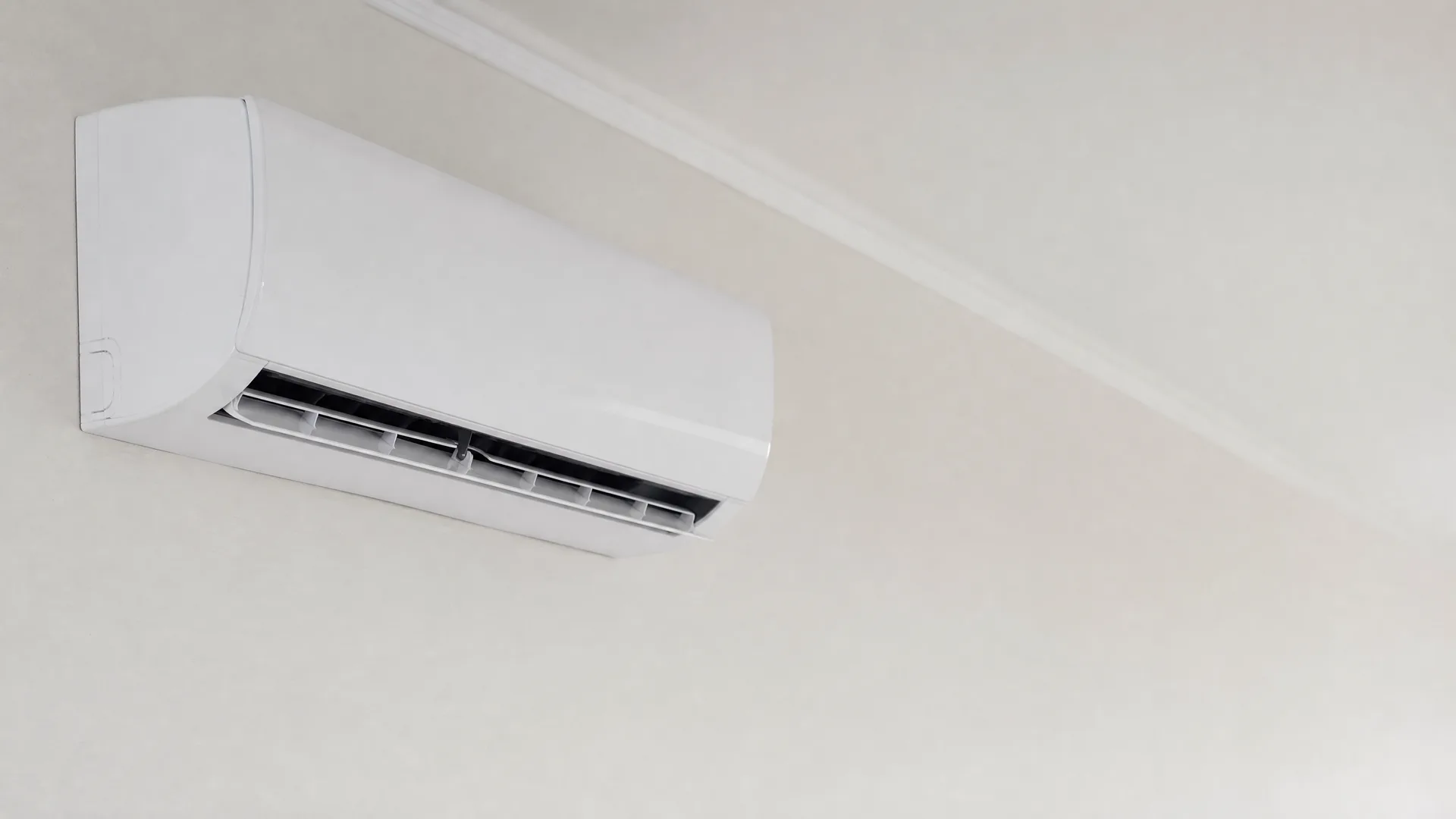
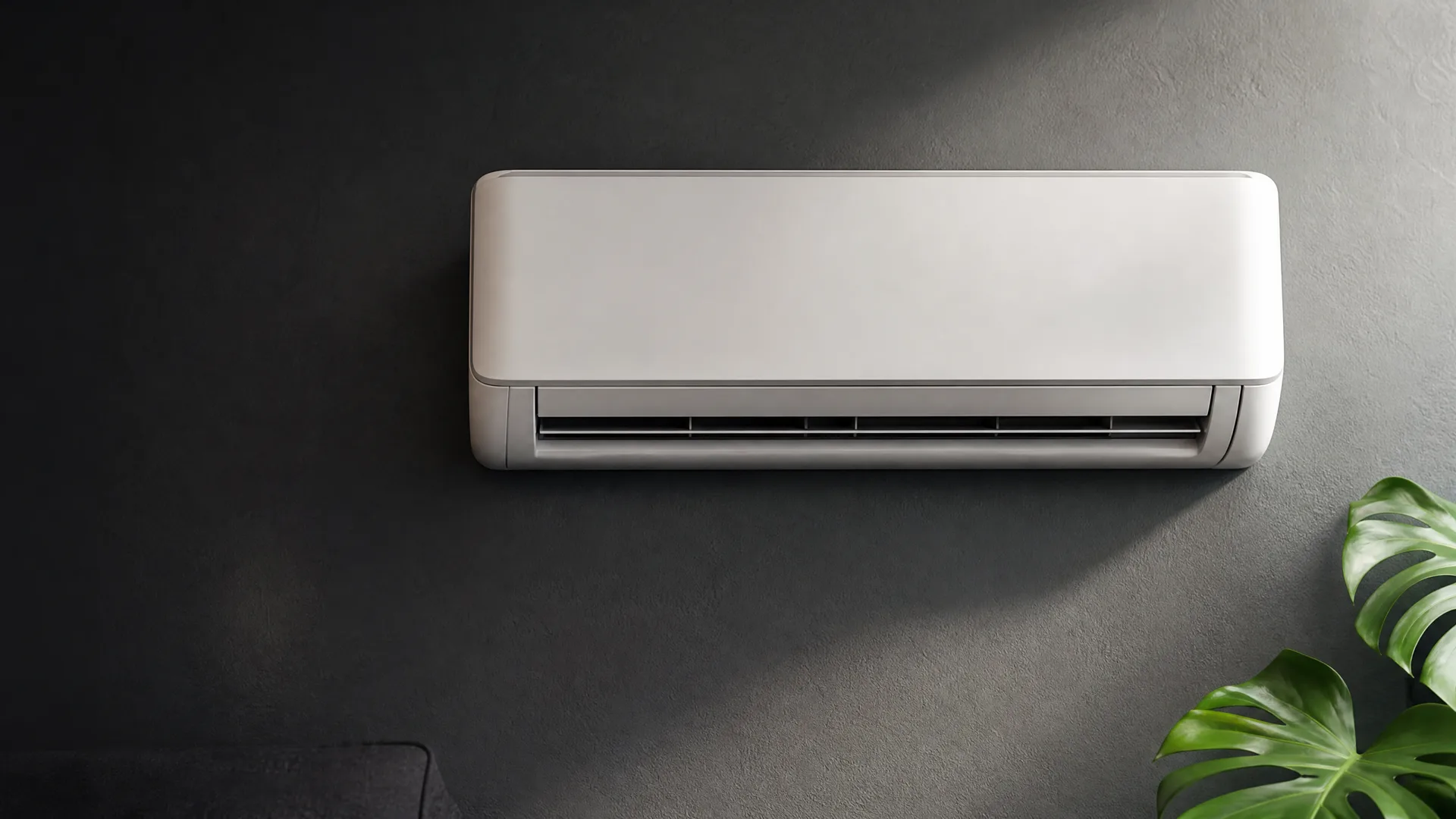
A mini split kept clear and serviced holds its heat and its airflow steady even when the coil outside sees frost.
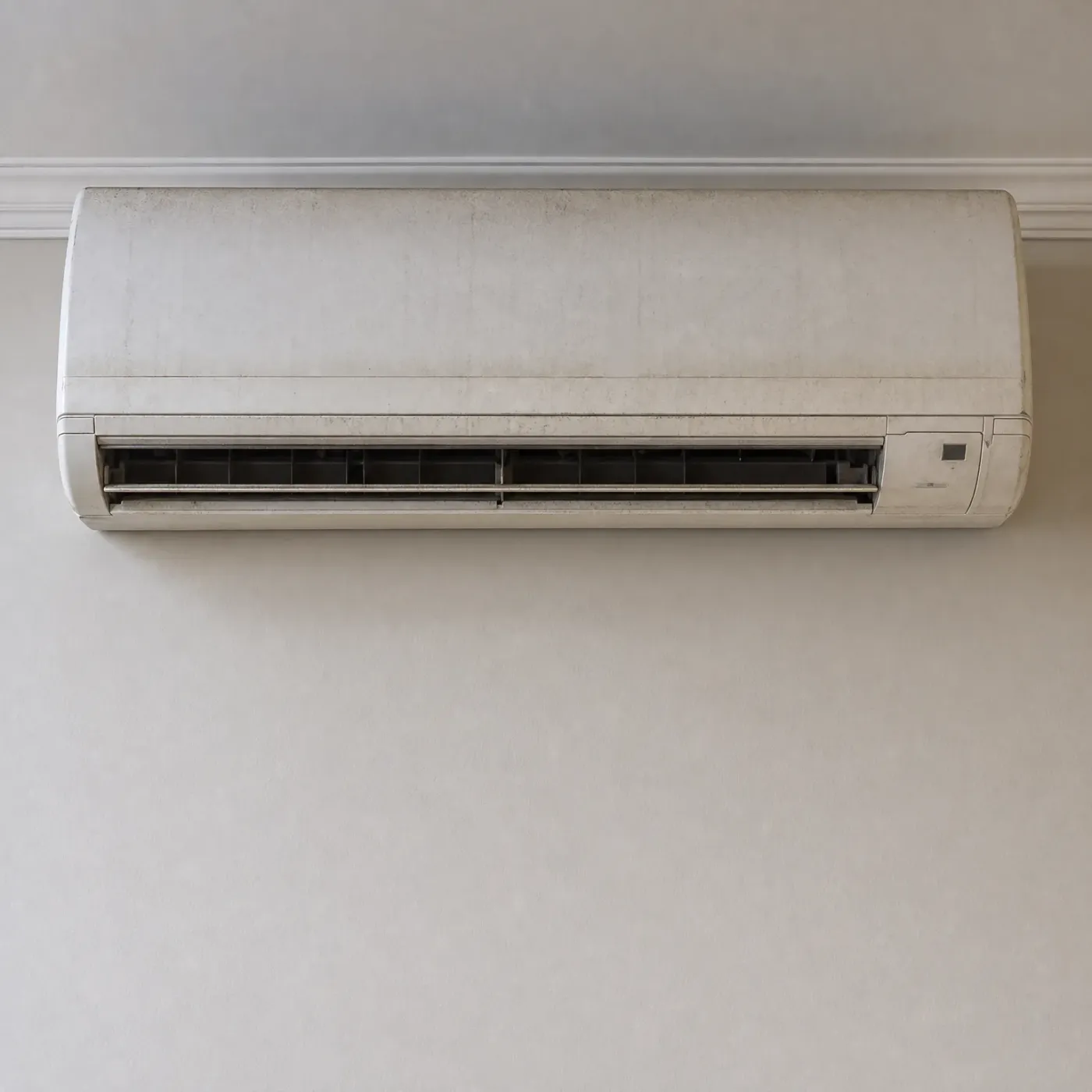
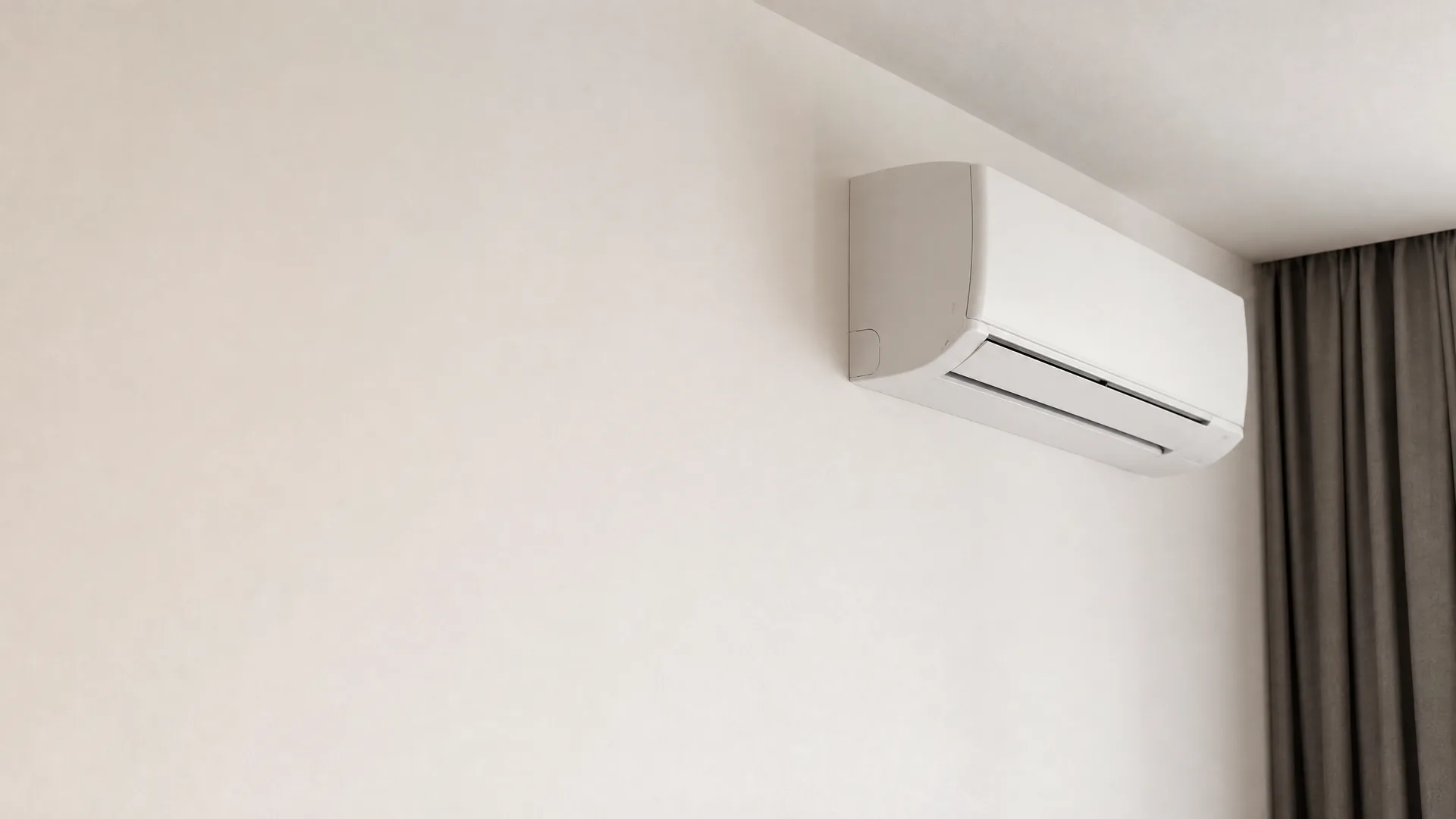
A mini split this dusty is losing airflow at the indoor coil, and that same neglect is often what's behind a lockout outside.
Where this leaves you
A dead indoor unit usually traces back to a tripped breaker, an ice-locked outdoor coil, or a signal problem between the two.
Frost that clears on its own in the defrost cycle is normal; a solid ice block that doesn't melt means the unit shut itself down.
Electric heat means a mini split that won't start is a heating problem and a power problem at the same time.
The fix depends on which of those three causes it is, and that takes someone looking at both units, not just the remote.
A repair gets it back to holding steady heat instead of cycling on ice it can't clear.
A mini split that won't turn on is one of three things: a tripped breaker, ice on the outdoor coil that never cleared, or a signal that isn't getting from the indoor head to the outdoor unit. Each one looks almost the same from where you're standing, a dead indoor unit and a cold house, but they're not the same repair, and guessing wrong wastes the one thing you don't have in a cold snap, which is time. With electric heat, a unit that's stuck down isn't a side issue. It's your heat, gone, until someone sorts out which of the three it is.
That's the part that's hard to do alone. You can check the breaker and look at the outdoor coil yourself, and you should, but if neither tells you anything, the next step is usually a call, then another call, then explaining the blinking light and the ice and the dead fan to two or three different people before you even get a quote. That's the work that actually eats the day.
Once you send the request, that part is done. You're not the one calling around anymore, not the one repeating yourself to every contractor who picks up. Someone qualified gets the details you already worked out, the breaker, the ice, the silence outside, and takes it from there. What you're left with is a mini split that holds heat on its own again, running on electricity instead of fighting ice it can't clear.