

Why your mini split leaks water in a North Carolina winter

Step 1 of 3: Equipment

A mini split that leaks water in winter is usually running in defrost mode. When it's cold outside, the outdoor unit's coil can frost over, and the system briefly reverses itself to melt that frost off. That meltwater is supposed to drain outside through the condensate line, but if that line is clogged, cracked, or frozen itself, the water backs up and shows up inside instead, often as a drip near the indoor unit or a puddle on the floor below it. It can also mean the condensate pump has failed, or the line was never pitched correctly to drain downhill in the first place. On a system that's run fine for years, a sudden leak usually points to a blockage building up slowly rather than a new problem with the unit itself. Either way, it's not something that clears up on its own, and water finding its way into a wall or floor over a North Carolina winter is worth getting ahead of.

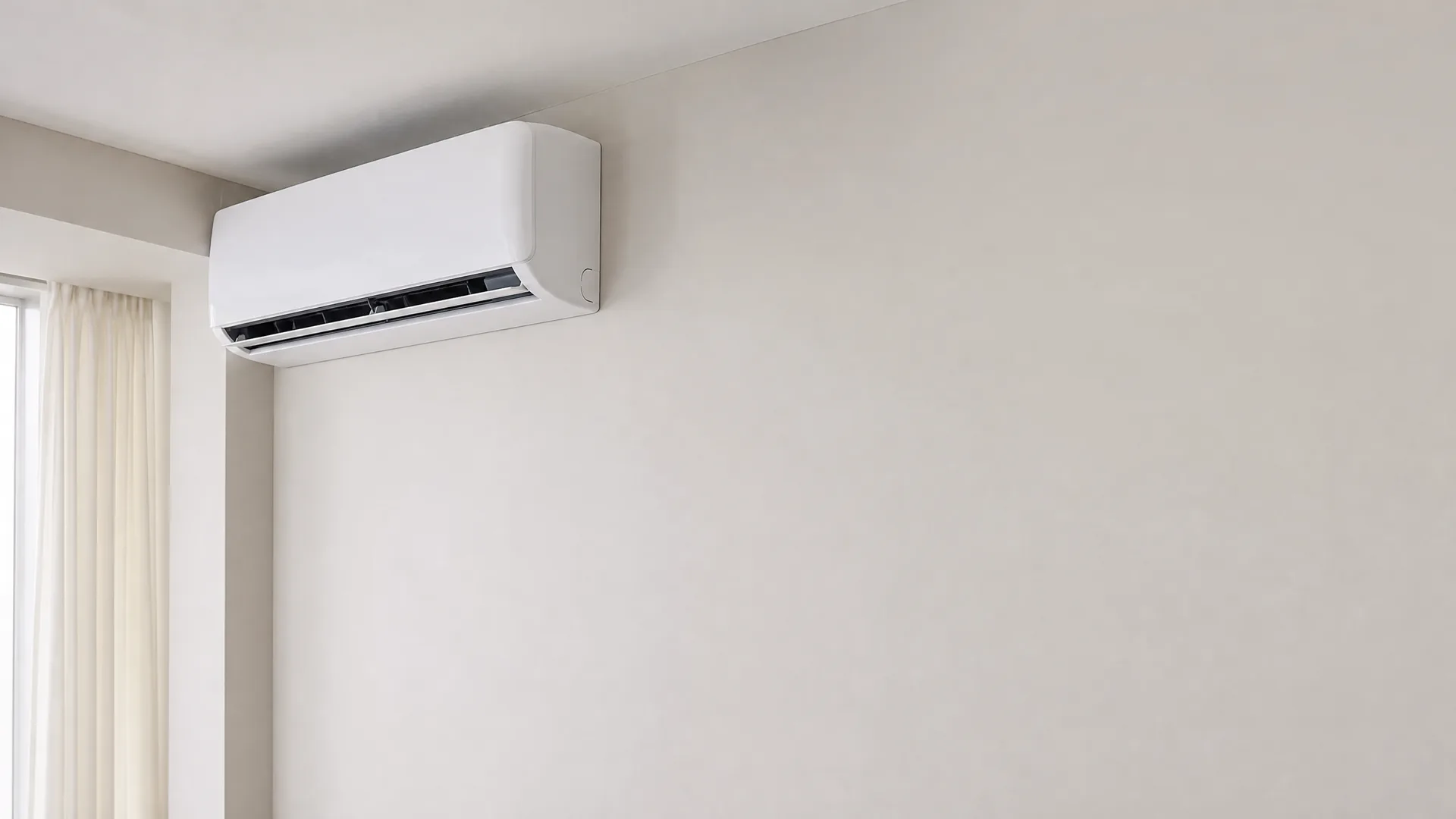
A white wall-mounted mini-split air conditioner near the ceiling of a room with plain beige walls and a pale curtain at the left edge.

Where the water actually goes

The indoor unit has its own drain pan under the coil, with a line that runs the condensate outside or to a drain. If that line has a sag, a clog of algae, or a kink from being pinched behind a wall, water backs up into the pan and spills over. Outside, the base pan under the outdoor unit can do the same thing when defrost meltwater has nowhere to go.

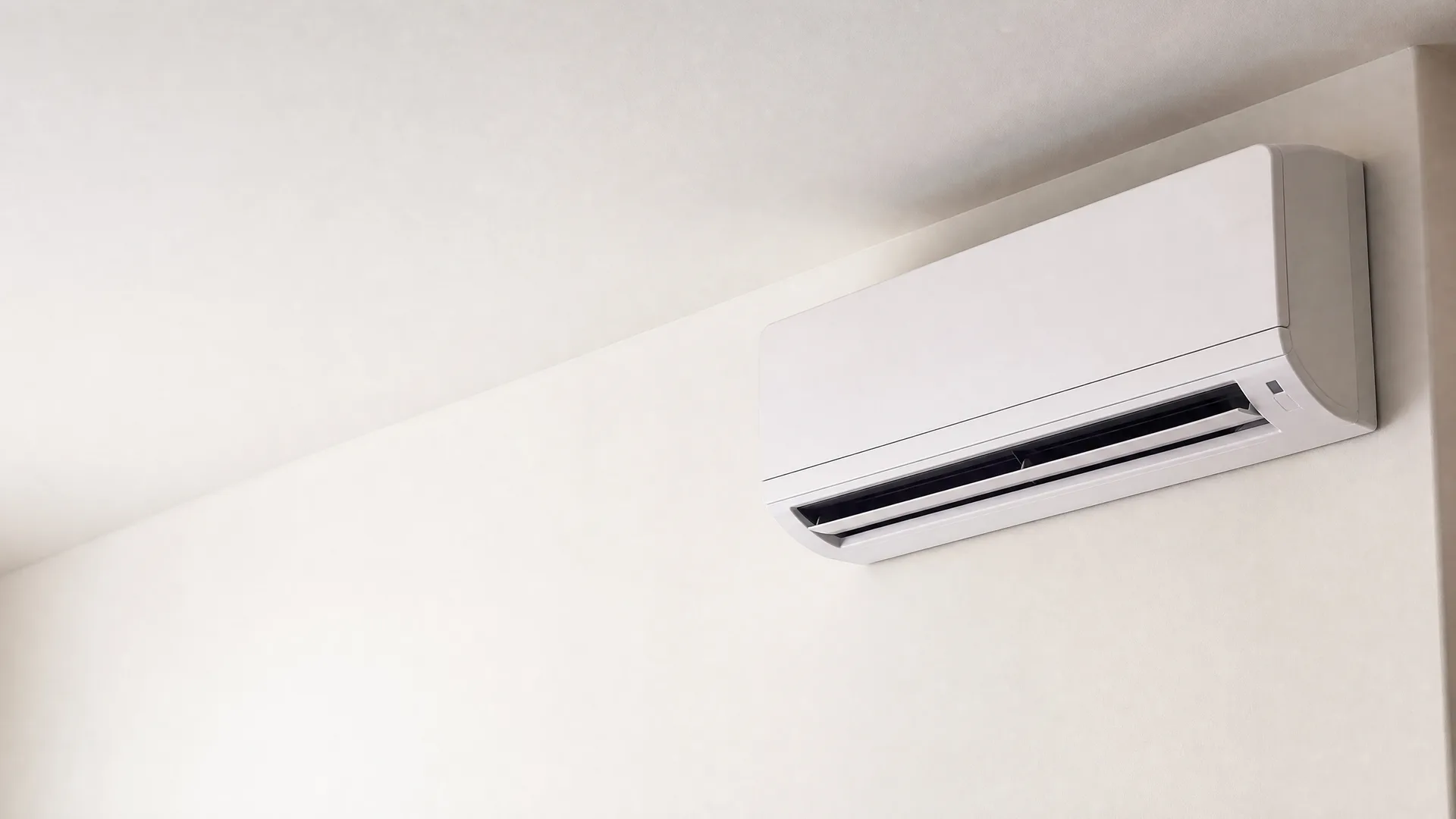
A white wall-mounted mini-split air conditioner indoor unit installed near the ceiling on a plain off-white interior wall.

Why cold makes it worse

Below freezing, water that would normally drain away can turn to ice in the line or in the base pan instead. Ice blocks the path the next batch of meltwater needs, so it backs up and finds another way out, often along the wall or down through the ceiling below the indoor unit. A base pan heater, if the outdoor unit has one, is meant to stop this from happening.

Indoor Drain or Outdoor Defrost

Indoor Drain Line

  • The clog or kink is inside the drain line or the pan under the indoor coil, so the leak shows up on your floor or ceiling, not outside.
  • Water usually drips steadily or pools under the indoor unit, and it can show up any time the system runs, not just on cold mornings.
  • Algae or dust buildup inside the line is common in North Carolina's muggy summers, and it can carry over and cause problems once winter defrost cycles start.
  • A contractor clears the line, checks the pan for cracks, and confirms the drain still slopes the right way to carry water out.
  • This is usually the quicker fix once someone's looked at it, since the line and pan are reachable without touching the outdoor unit.

Outdoor Defrost Drainage

  • The water is meltwater from the outdoor coil's defrost cycle, and it's pooling or freezing around the base pan instead of draining away.
  • You'll mostly notice this on cold nights when the system runs its defrost cycle, with water or ice showing up around the outdoor unit itself.
  • A base pan heater that's failed, or a drain hole that's blocked by ice or debris, keeps the meltwater from getting out before it refreezes.
  • A contractor checks the base pan drain, the heater if the unit has one, and whether the unit is sitting level enough to drain on its own.
  • This one can take longer to track down, since ice has to melt or be cleared before anyone can see exactly where the water is getting stuck.
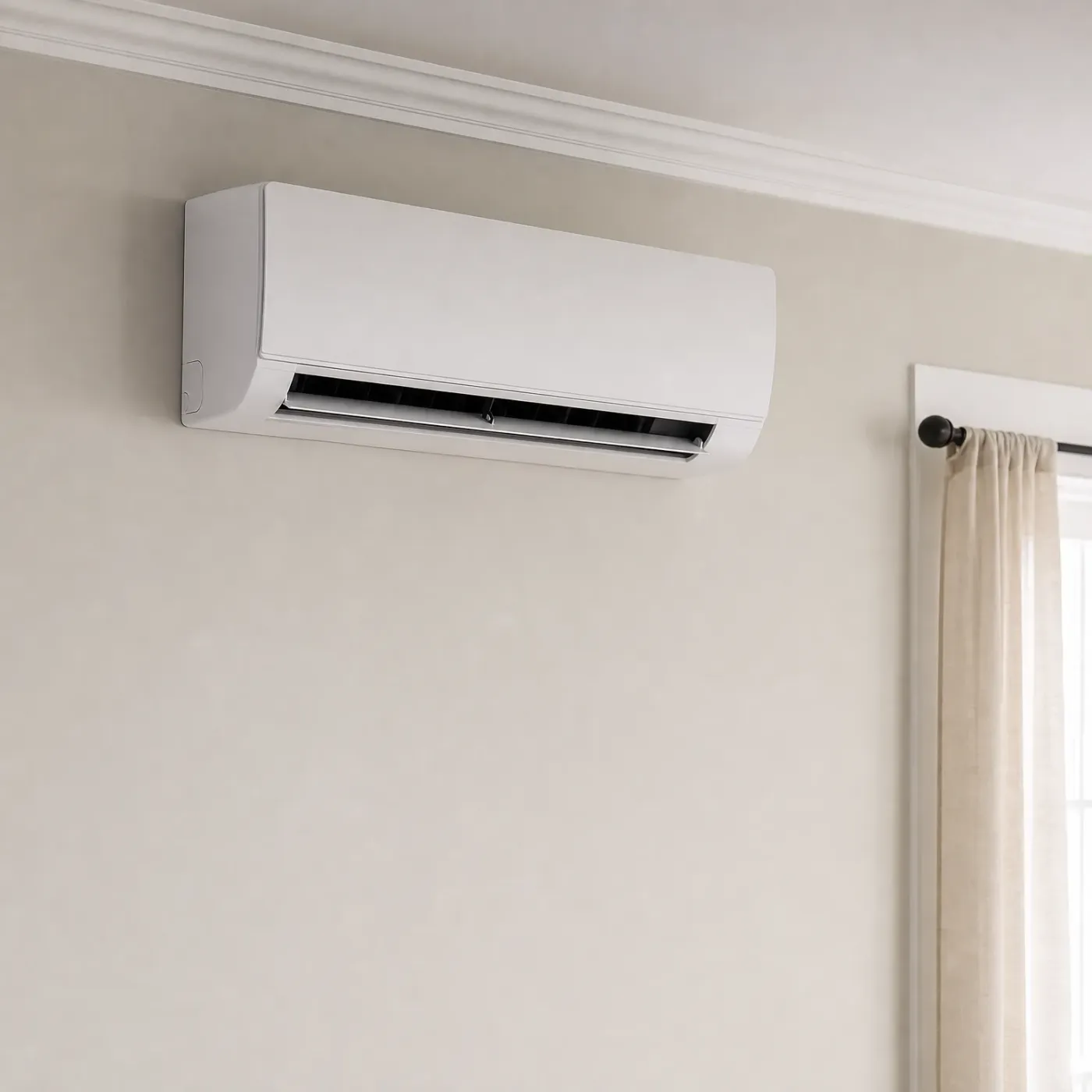
A white wall-mounted mini-split air conditioner installed high on a beige interior wall below crown molding, with a window and light curtain on a black rod at right.

Running clean, draining right

This is what a mini split looks like when the drain line is doing its job. No streaking under the unit, no stain on the wall below it. Air moves through a clean coil and the water that forms on it leaves the house the way it's supposed to.
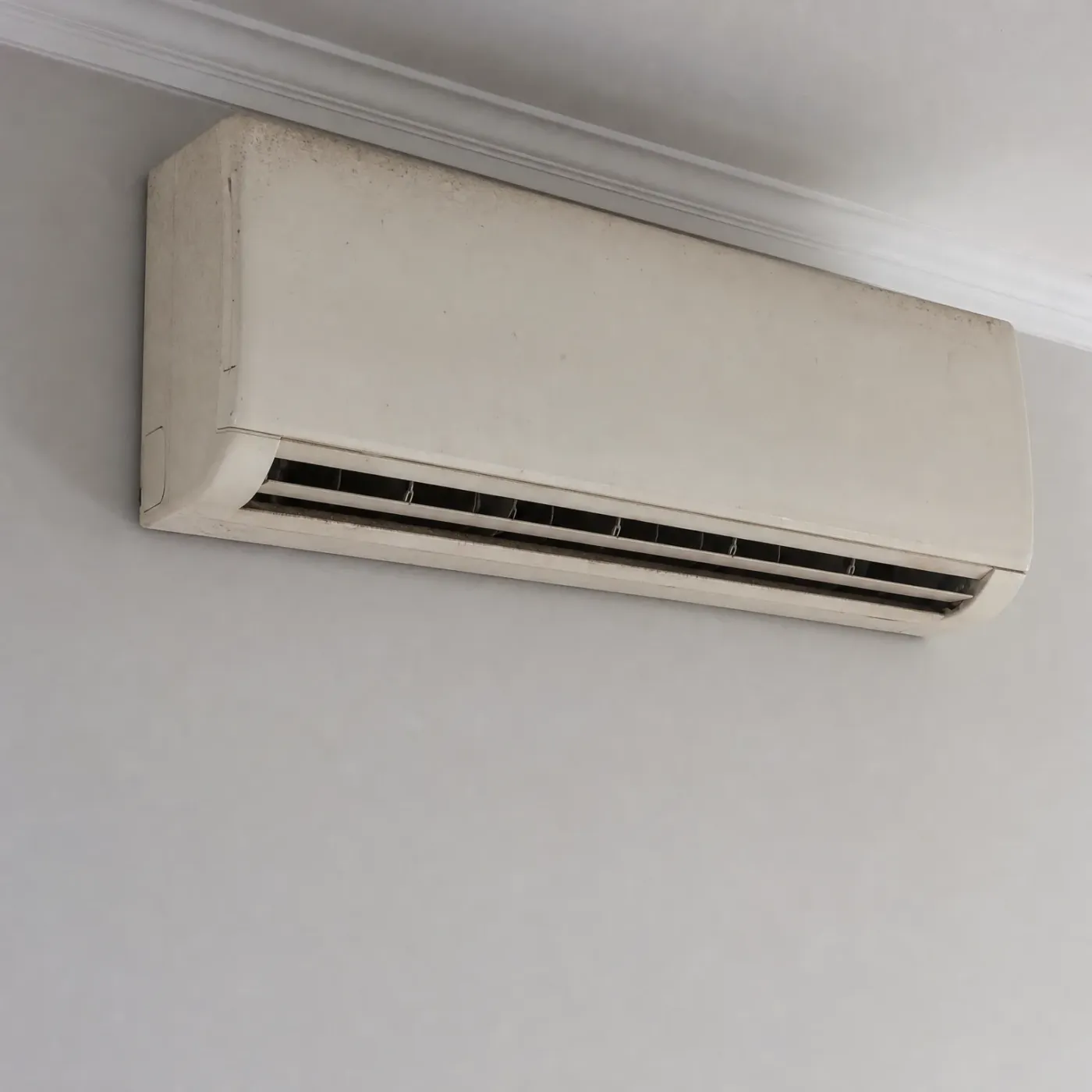

A wall-mounted mini-split air conditioner indoor unit with a dusty off-white casing and dark lower vent, installed high on a plain light-colored wall below a ceiling molding.

Dust is where water starts collecting

A casing this dusty usually means the filter behind it is loaded too. A dirty coil ices over faster in a North Carolina cold snap, and more ice means more meltwater than the drain line was built to carry. That's often where the leak starts.

A woman with dark hair in a bun reclines on a sofa with her eyes closed, wrapped in a cream fleece blanket, a closed blue hardcover book resting in front of her, with a lit lamp and a vase of dried flowers in the background.
A smiling bearded man in a navy sweater sits at a candlelit dinner table with a glass of red wine, a bowl of salad, and plates of food in the foreground.

Hand off the mini split problem

A mini split that keeps leaking through a North Carolina winter is not something to watch for another week. Every defrost cycle makes more water, and if that line is clogged or the pan has cracked, it has to go somewhere, usually down your wall or across your floor. Figuring out whether it's the indoor drain, the outdoor unit, or something in how the system was installed takes someone who can get up to the unit and look. That's not a call you want to make five times to five different companies, explaining the same drip on the ceiling each time and waiting on quotes to compare. Send the request once and that search is off your plate. Power here runs the heat in most homes through the winter, and a mini split that's working harder than it should while also leaking is worth sorting out now rather than letting it run that way until spring.

What a winter leak costs your walls

Every defrost cycle sends more water through that drain line, and if it's not draining outside the way it should, it's landing somewhere in your house. A few cycles a day, every cold snap from December through February, adds up to real volume. That water finds drywall, baseboards, the subfloor under the indoor unit. Stains show up first, usually a yellow-brown ring on the ceiling or wall below where the unit is mounted. Left alone through a few more cold nights, drywall softens and the wood behind it starts to hold moisture it shouldn't. None of that gets better on its own, and none of it dries out between defrost cycles once the line is actually blocked.

What you'll notice before the stain does

Most people catch this by sound or smell before they see a stain. A faint musty smell near the indoor unit, especially when it's running, often means water has been sitting somewhere in the wall or under the pan longer than a day or two. You might hear a drip at night when the house is quiet and the heat kicks into a defrost cycle. If you check the wall-mounted unit and see dark streaking just below it, or a damp spot on the carpet or floor underneath, that's the drain line or the pan telling you it's not keeping up anymore.

A smiling man in a dark navy sweater sits on a light sofa in a living room, with a glass bowl of popcorn on a wooden coffee table and bookshelves behind him.
A smiling man in a dark green sweater sits on a tan leather sofa in a dimly lit living room, with a bowl of popcorn in the foreground and a kitchen area blurred behind him.
A smiling middle-aged man in a dark shirt sits on a gray sofa in a living room, with a bowl of popcorn on a side table and shelves, a window and kitchen area behind him.
A smiling bearded man in a dark gray t-shirt sits on a gray couch in a living room, with a large glass bowl of popcorn on a wooden table in the foreground.

Leak stops on its own once it warms up

If the dripping only shows up during a hard freeze and quits a day later, the line may just be iced shut. It can still be worth a look before the next cold snap.

Fill out one form

Leak keeps showing up, cold snap or not

If water keeps landing on your floor or wall after the weather breaks, the line or pan has a real clog or crack. That calls for someone to open it up and find where it's backing up.

Fill out one form

Power costs 14.00 cents per kilowatt-hour statewide

At 14 cents a kilowatt-hour, running a mini split on heat through a North Carolina winter isn't what strains your budget. But a clogged drain line still means a repair call on top of what you're already paying to heat the house, not instead of it.

EIA-861 2025 statewide residential average

Where this leaves you

  • A mini split dripping water in a North Carolina winter is almost always defrost water that isn't draining outside the way it's supposed to.
  • The fix depends on where the clog or crack sits: the outdoor drain path, the indoor line, or the pan itself.
  • A leak that stops once the cold snap passes can still point to a line that's partly blocked and due to freeze shut again.
  • A leak that keeps showing up regardless of temperature usually means a kink, a clog, or a cracked pan that needs a hands-on fix.
  • Left alone, every defrost cycle adds more water to whatever path it's taking into your walls or ceiling.
  • Finding a licensed contractor, explaining the leak, and comparing quotes is the part you can skip once you send the form.

A mini split leaking in a North Carolina winter almost always comes down to defrost water that can't get outside anymore. That water has to go somewhere, and where it ends up on your floor or wall tells you whether the problem is the outdoor drain path, the indoor line, or a cracked pan under the coil. If the dripping only shows up during a hard freeze and stops once things warm up, the line is likely still open enough to drain most of the time but narrow enough to ice shut under the wrong conditions. That's worth a look before the next cold snap, not after it's frozen shut again. If water keeps showing up no matter what the temperature is doing, that's not ice. That's a clog, a kink, or a crack that sits there every day, filling the pan and spilling over the same way each time the system runs. Either way, the leak won't fix itself, and every defrost cycle between now and spring is more water finding that same path into your house. What changes once you send the form is the part that has nothing to do with the leak itself: you're not searching for who handles mini splits around here, not calling three places to ask if they even service your system, not explaining the same drip and the same stain on the wall over and over, not sitting on quotes trying to sort out who actually knows this unit. That part is off your plate. The leak still needs a licensed contractor's hands on it, but finding one stops being your job.

A lit ceramic table lamp with a linen shade sits on a round wooden side table with a small vase of greenery and a dark shallow bowl, beside a beige upholstered sofa with a cushion and knit throw, below a framed artwork on a pale wall.
Corner of a beige linen sofa with a large woven cushion and a fringed knit throw, beside a potted leafy tree in a woven basket against a neutral wall.
Sunlit interior corner with a wood-framed armchair with beige cushions and a striped pillow, a leafy plant in a tall ceramic pot, a window with wood sill showing green foliage outside, and dark wood flooring.
A lit black path light beside a stone walkway leading to a dark front door of a white clapboard house, with shrubs and flowering plants in the bed at dusk.
A covered porch at dusk with a wooden front door, a lit lantern wall sconce on gray horizontal siding, a black rocking chair with a cream throw, a potted white flowering plant, a coir doormat, and a window showing a lit interior lamp.

It's off your list after this

Describe your mini split job once, to one pro.

Skip the search

It costs nothing to send, and you don't have to hire anyone.