 Find a pro near me
Why your mini split blows cold air in North Carolina
Tell a local repair pro what your mini split is doing.
Your mini split is running, the fan is moving air, but the air coming out feels cold when it should feel warm, or it just will not warm the room. That is not normal wear. Something specific is wrong, and in a North Carolina winter you do not want to spend days figuring out what.
A mini split that blows cold air in heat mode usually points to one of a handful of causes: a refrigerant leak, a stuck reversing valve, a frozen outdoor coil, or a control board that is not telling the system to switch modes. Each of those needs someone who can get a gauge on the line set or get into the board, not a guess.
Most homes in North Carolina heat with electricity, and a mini split that is not actually heating means you are paying for a system that is doing nothing for you while the house gets colder. Power here runs at a typical rate, so this is not a case where the bill masks the problem. You will likely notice it fast, in the room temperature and in what you are paying for heat that is not arriving.
This is also a system you depend on through sticky North Carolina summers, so whatever is wrong with the switch between heating and cooling is worth finding now, not after it fails you in July too.
You do not need to diagnose this yourself. Once you send the details through this page, the search for a contractor is no longer something you have to carry. A licensed contractor who works on mini splits in your area will get in touch with you directly, already knowing what you have told them, so the first conversation is about your system and your house, not a cold start. From there, finding out whether this is a refrigerant issue, a valve issue, or something electrical is in their hands, not yours.
Why is my mini split blowing cold air instead of heat?
You turn the mini split to heat and the air coming out is cold, or barely warm, and the room is not catching up. In a North Carolina winter that is more than annoying, since a lot of homes here heat with electricity and this unit may be doing real work to keep a room comfortable. Before it gets worse, you want to know if this is something simple or something that needs a tech out.
A refrigerant or defrost problem is keeping it from switching into heat mode
A mini split makes heat by reversing the flow of refrigerant through a valve, and if that valve is stuck or the refrigerant charge is low, the system stays in cooling mode or can't move enough heat to warm the air. It can also be stuck in a defrost cycle, which runs cold air on purpose to clear ice off the outdoor coil, but a unit that never comes out of defrost has a sensor or control problem, not a normal cycle. Either way, the fix is diagnostic work a homeowner can't do from inside the house. Left alone, a low charge tends to get worse, not better, and the unit works harder on electric heat you are already paying for.
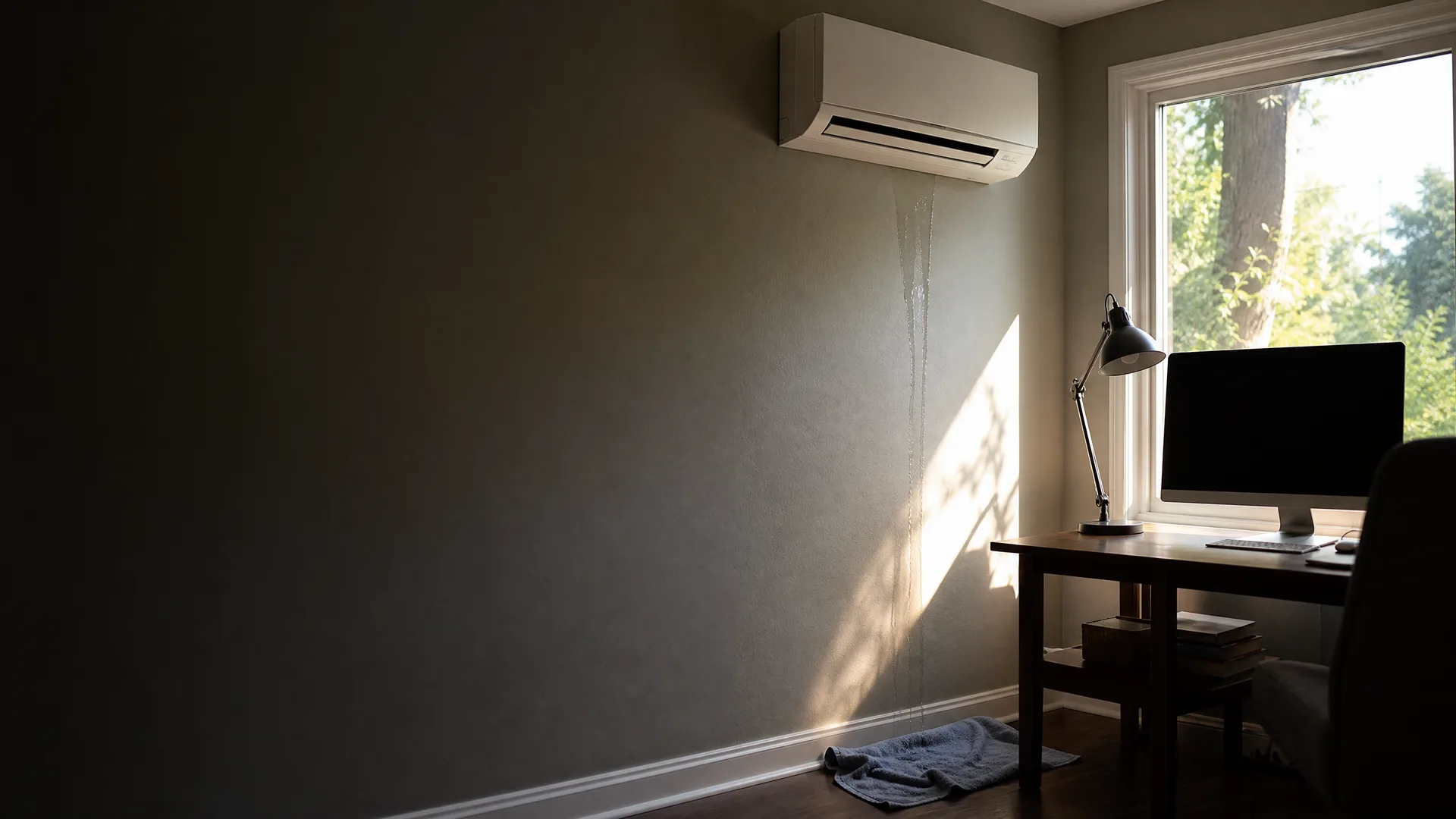
You're at the desk around two in the afternoon, working, and you notice the wall under the indoor unit has a dark streak running down it. You put a hand on it. Wet. There's already a towel balled up on the floor below, soaked through from the last time this happened. Outside it's the kind of sticky North Carolina afternoon where the unit should be working hard, and it is, you can hear it. You stand there for a minute, looking at the line on the drywall, figuring out how far up it goes and whether it reached the outlet behind your desk. Then you go get a dry towel and put it down next to the wet one.
The right pro for this job
A mini split blowing cold air on heat mode almost always comes down to the reversing valve stuck in the wrong position, a refrigerant charge that's dropped, or a defrost cycle that isn't ending the way it should. None of those clear up on their own, and running the system while it's stuck only adds strain on the compressor. With most homes here relying on electric heat, a unit that can't warm the room is a problem you feel the same day, not something to watch for a week. Finding a contractor who works on your brand of mini split, has the gauges to check the charge, and can get to your house takes time most people don't have when the bedroom is cold at night. Handing that search off now means you stop chasing phone numbers and start waiting on a call instead, with the actual fix moving forward without you having to manage it.
The reversing valve switches flow
Inside the outdoor unit, a reversing valve decides whether the system pulls heat from outside air or moves heat out of the house. When you switch to heat, that valve shifts position so refrigerant runs the opposite direction. If it sticks halfway, part of the system stays in cooling mode no matter what the thermostat says. A stuck valve will not fix itself with time or a reset.
Defrost cycles run in winter
Below a certain outdoor temperature, frost builds on the outdoor coil, and the system briefly reverses itself to melt it off. During that short period the indoor unit blows cool air on purpose, usually for a few minutes at a time. That is normal in a North Carolina winter when temperatures sit near freezing overnight. If defrost mode starts but never ends, or runs far longer than it should, the control board or a sensor is the likely reason.
Is this just your house, or is the system failing?
You've probably already checked the obvious things. The remote is set to heat, the temperature is turned up past room temp, and the breaker hasn't tripped. The outdoor unit is running, maybe you can hear it from inside. The indoor fan is blowing, you can feel air moving across your hand under the unit. It's just cold air, or air that never gets past lukewarm no matter how long you wait. If you've gone back to check on it three or four times over the last hour and the room hasn't warmed at all, that's not a thermostat lag or a room that takes a while to heat. With electric heat as the main source in a lot of North Carolina homes, a mini split that won't actually warm the house means you're paying to run equipment that isn't doing the job.




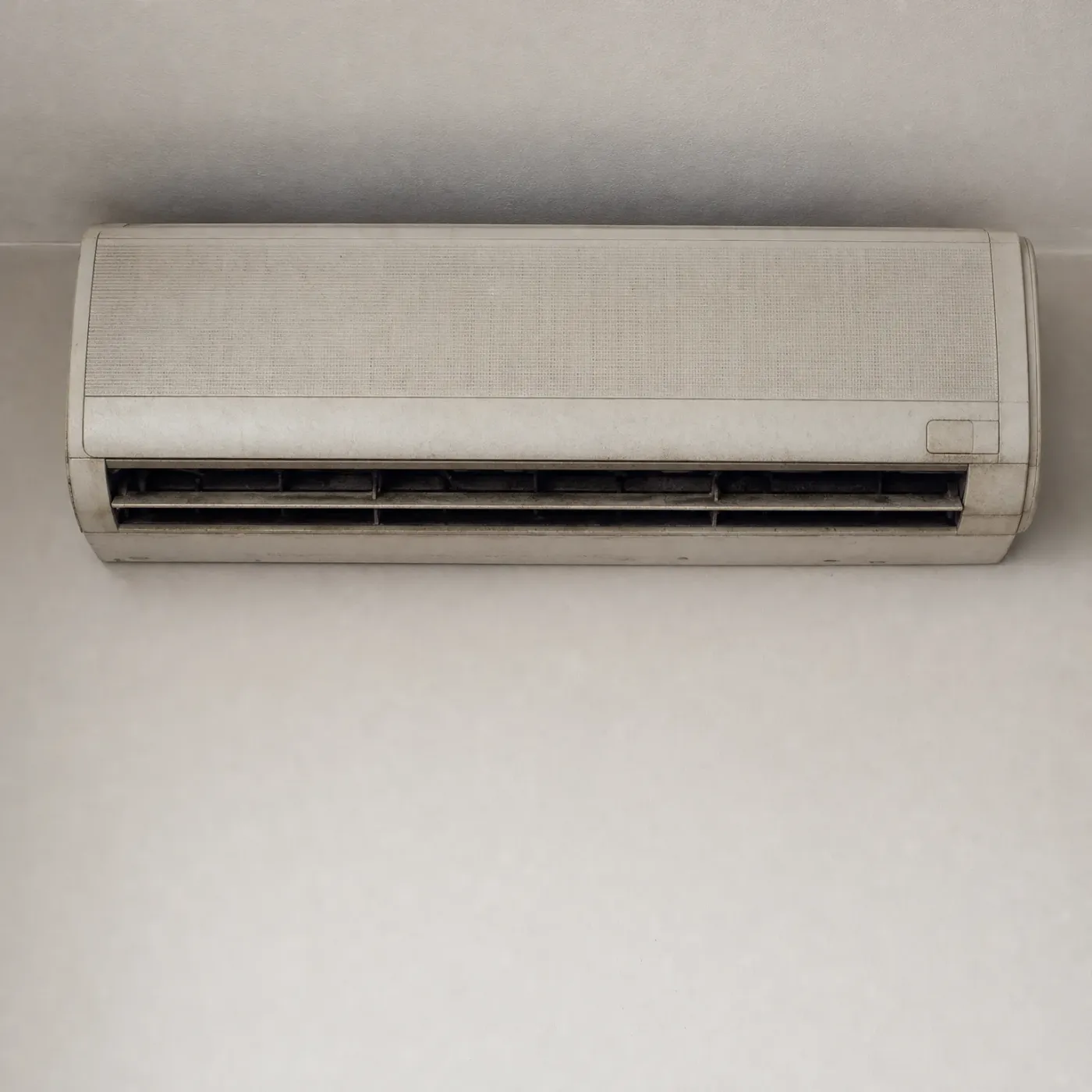

Heat mode calls the reversing valve to shift position.
Refrigerant reverses direction, pulling heat from outside air.
The outdoor coil absorbs heat even in cold air.
Compressed refrigerant carries that heat to the indoor coil.
Power costs 14.00 cents per kilowatt-hour statewide
At 14 cents a kilowatt-hour, a mini split stuck blowing cold air isn't just a comfort problem. It's drawing power to run a compressor and fan that aren't heating anything, while your home falls back on whatever backup heat it has. The longer that valve or charge issue sits, the more it shows up on the bill.
EIA-861 2025 statewide residential average


A mini split that blows cold air on heat mode has a specific cause: a stuck reversing valve, low refrigerant, or a defrost cycle that won't let go. It won't fix itself, and running it while you wait only adds to the power bill without warming the house. You already caught this before it turned into a bigger repair, which is the right instinct with a system you depend on all winter. The part left is getting someone out to look at the valve, check the charge, and see how the unit is actually cycling. Once you send the form, that search is off your plate. You're not left checking back or chasing a callback yourself. Someone who works on these systems gets your details and takes it from there, so you can stop thinking about the dark streak on the wall and the towel on the floor, and let a contractor sort out what the valve and the charge are actually doing.
Matched to your mini split job
One request and the search for a pro is handled.