 Get matched
What a mini split tune-up covers in North Carolina
Describe your mini split job, and a local pro who handles it gets in touch.
A mini split tune-up covers the indoor head and the outdoor unit both. The filters get pulled and washed, the coil gets checked for dirt and mold, the blower wheel gets looked at, and the condensate drain gets cleared so it isn't backing up into your wall. Outside, the condenser coil gets cleaned, the refrigerant lines get checked, and the electrical connections get tested. That's the short version. What it actually finds in your unit depends on how it's been run and where it's mounted.
North Carolina summers put a mini split through real work. A unit that's dirty or low on refrigerant going into July will run longer to do less, and in muggy air that shows up fast as a system that won't quite pull the humidity down even when the room feels cool enough.
Most homes here lean on electric heat, and a mini split's heat pump side is doing that job all winter too. A tune-up in the fall catches the same kind of buildup before it costs you on the heating side, not just cooling.
You don't have to figure out which of this your unit needs. Once you fill out the form, that becomes someone else's job, not yours. You'll be matched with a contractor who works on mini splits in your area, and they'll reach out to go over what your specific system needs, whether that's a straightforward cleaning or something closer to a repair found during the visit.
That's the point of starting here. You're not committing to a service list sight unseen. You're getting a contractor who knows these systems and knows what North Carolina summers and winters do to them, looking at your unit specifically before anything gets decided.
Fill out the form below and let someone who does this for a living take it from there.
What does a mini split tune-up actually include?
You want to know if a mini split tune-up is worth scheduling or just something a contractor says to sell a visit. Your system runs most of the year here, cooling through the sticky summer and carrying a good share of the heating load too, so you want to know what the appointment actually involves before you put it on the calendar.
It's a full check of both units, not just a filter rinse
A mini split that only gets its filters cleaned still runs on a dirty coil, a low refrigerant charge, or a drain line that's starting to clog. The tune-up catches those because a mini split does both jobs here, cooling you through a muggy summer and heating through the winter, with no second system to fall back on. The contractor checks refrigerant pressure, tests that the head is actually pulling the temperature down it's set to, and looks over the electrical connections at the outdoor unit. For a system carrying both seasons on its own, catching a problem in spring before summer humidity hits it, or in fall before the heating months, matters more than it would on a system that only runs half the year.


Is your mini split actually due for a look
You might notice the head blowing air that feels less cold than it used to, or the room taking longer to come down in July. Maybe there's a musty smell when it kicks on, which usually means the coil or the drain needs attention. Water pooling under the indoor unit or dripping down the wall means the condensate drain is clogged, and that can stain or soften the wall it's mounted on if it keeps backing up. A dirty filter makes the whole system work harder to move the same amount of air, and that shows up on your bill before it shows up as a breakdown. If the outdoor unit sounds like it's straining or icing over, that's worth having someone check before winter heat relies on it.
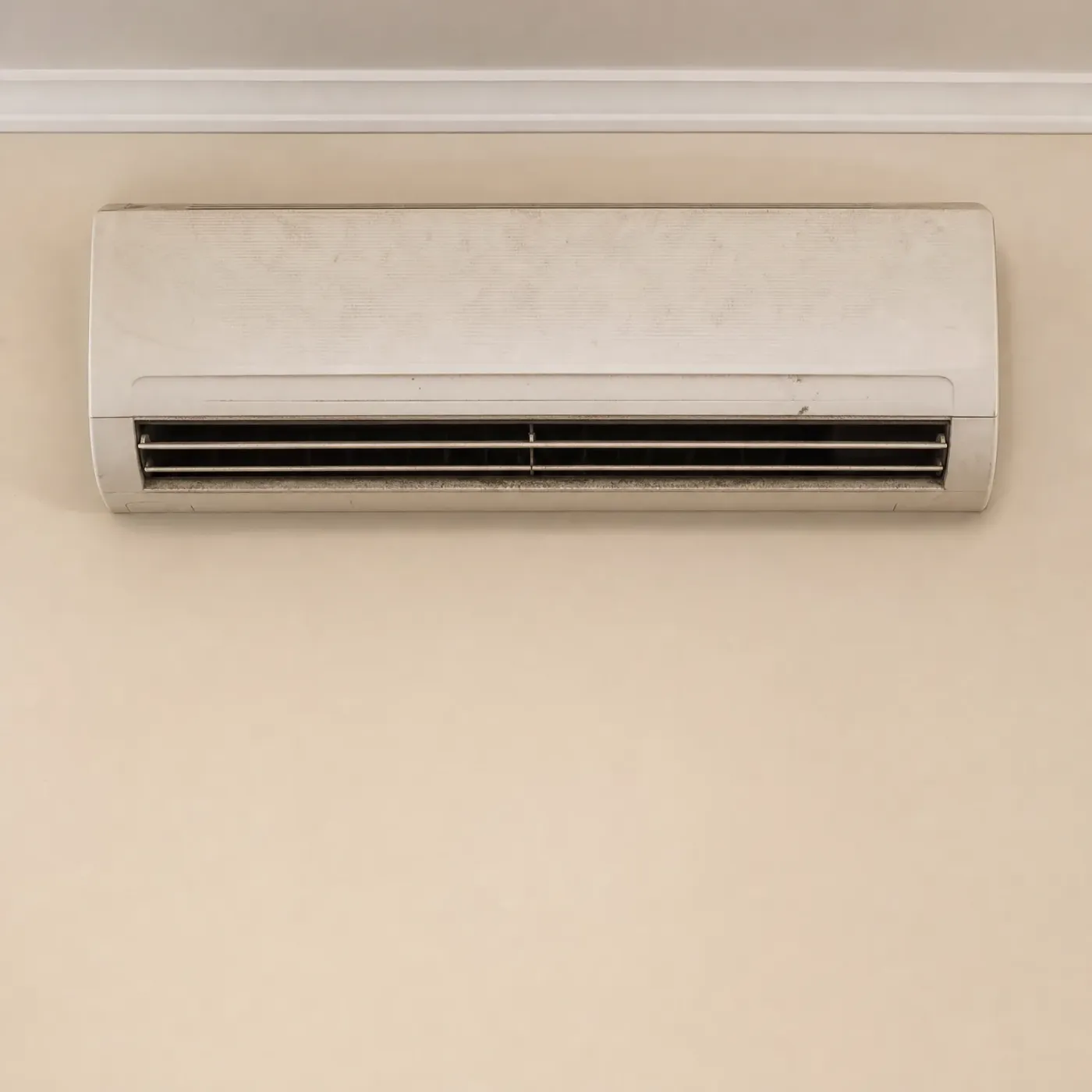

A local pro for your mini split maintenance
Once you send the form, finding a pro is off your list.
Say what's going on with your mini split, and a pro who works on them reaches out.
Sending the form costs nothing.




A tune-up starts outside, at the unit sitting against your house. Refrigerant pressure gets checked there, because a system running low on charge will still blow air, just not cold air, no matter how clean the filter is. The coil fins on that outdoor unit catch pollen and dirt all year, and once they're clogged the compressor has to work harder to move the same amount of heat. Back inside, the head comes apart enough to get at the blower wheel, since dust sitting on it unevenly can throw it off balance and you'll hear that as a rattle. Every wire connection at both ends gets tightened, because a loose one is a common reason a system just quits mid-cycle. If your model drains through a pump instead of gravity, that pump gets run to confirm it's actually pushing water out and not just humming while water backs up. Last comes the line set, the insulated tubing connecting the two halves of your system. Gaps in that insulation waste energy and can cause the line to sweat right where it runs through your wall.
Inside a mini split tune-up visit
- A tech checks refrigerant pressure at the outdoor unit, since a mini split that's low on charge loses cooling even with a clean filter.
- The outdoor unit's coil fins get checked for dirt and pollen buildup, which block airflow and make the compressor work harder.
- Electrical connections at both the indoor head and outdoor unit get tightened, since loose wiring is a common cause of a system cutting out.
- The blower wheel inside the head gets inspected for dust buildup, which can throw it off balance and cause a rattling noise.
- The condensate pump or drain line, if your system uses one, gets tested to confirm it's actually moving water out instead of letting it pool.
- Line set insulation running between the indoor and outdoor units gets checked for gaps, since exposed line loses efficiency and can sweat.
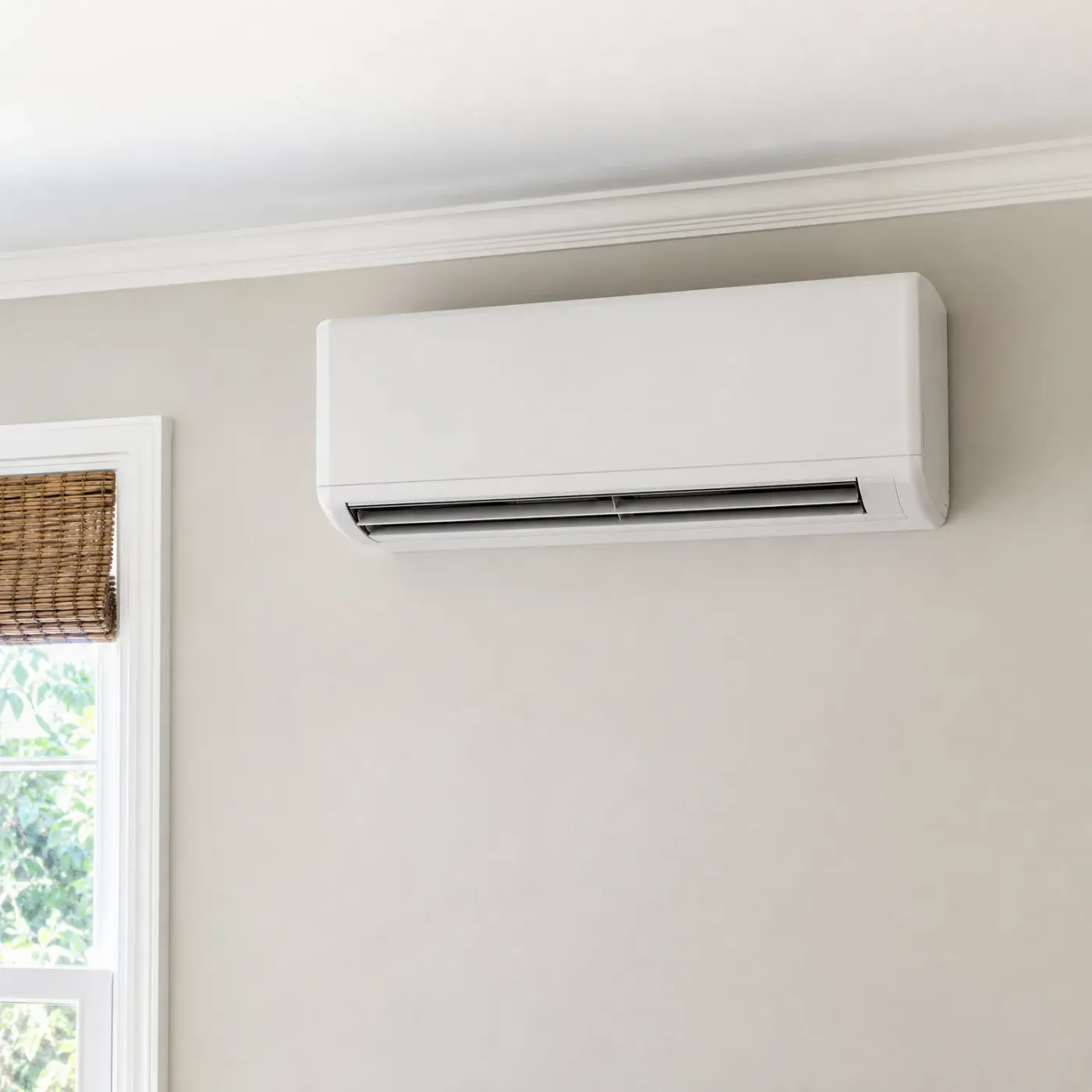
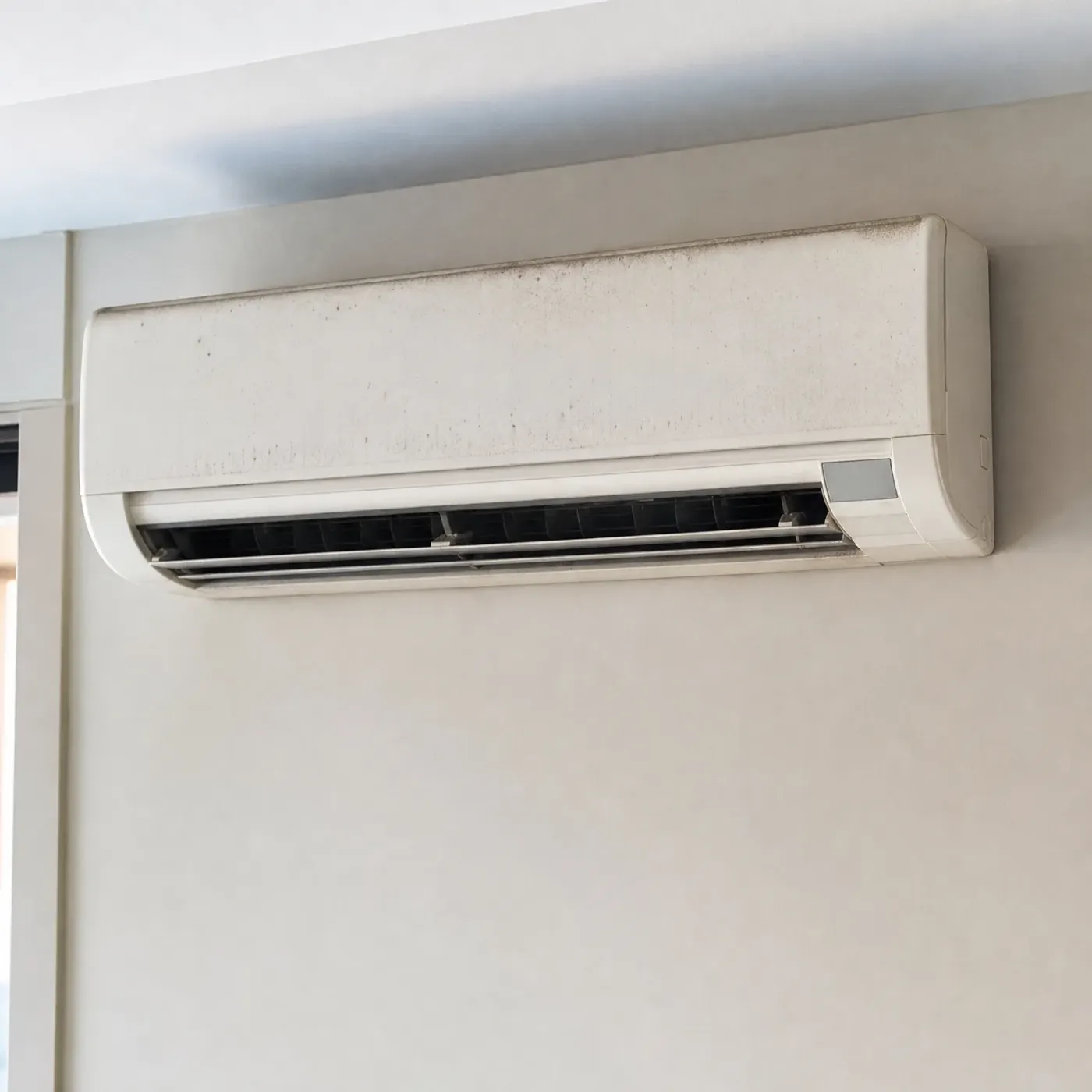
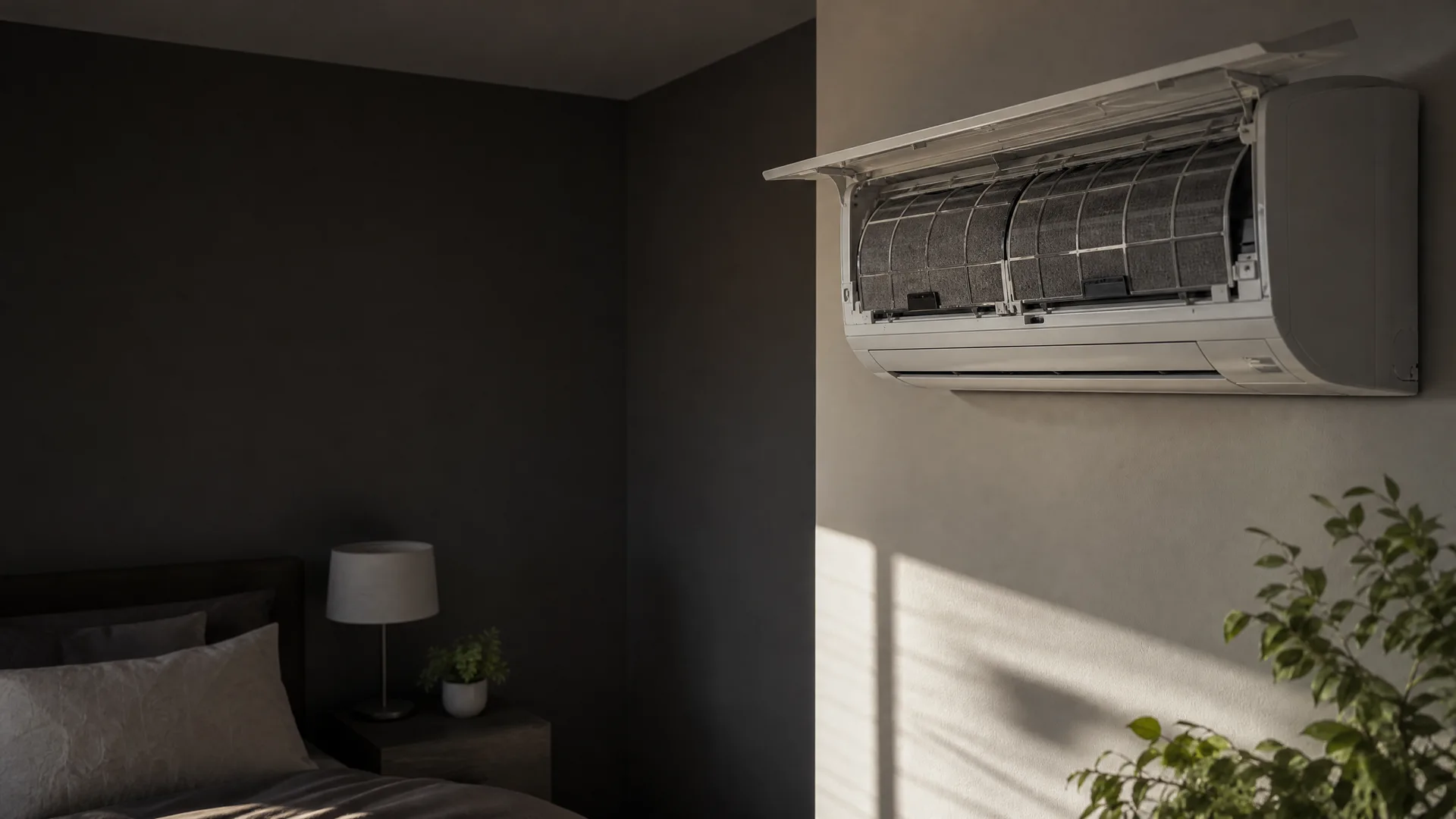
You pop the cover off the indoor head to see what's going on, and the filter screen is grey with dust. It's a mild spring afternoon, the kind where the mini split barely has to work, but this room still feels stuffy. You pull the filter out and hold it up to the window light. You can't see through it. Behind it, the coil looks dull, like it's wearing the same film. You weren't planning to deal with this today. You just wanted to open a window and noticed the unit running anyway, so you lifted the cover to check. Now you're standing there with a dirty filter in your hand, thinking about July.
Power costs 14.00 cents per kilowatt-hour statewide
At 14 cents a kilowatt-hour, a mini split that's lost airflow or is low on charge runs longer to hit the same temperature, and you pay for every extra minute. Since you're heating with electricity, that cost follows you year round, not just in summer.
EIA-861 2025 statewide residential average

What a dirty mini split costs you at home
If the filter's clogged and the coil's dirty, you'll feel it in the room before you see it on the bill. The head runs longer to pull the same humidity out of the air, so July evenings stay stickier than they should, and the thermostat setting that used to feel right stops working. A blocked condensate drain is worse, because that water has to go somewhere, and if it's not draining outside it's finding the wall behind the unit or the ceiling below it.
None of that is something you want to track down on your own, and you don't have to. Once you send the request, a contractor who works on mini splits in your area gets matched to your job and reaches out to you. You're not the one calling around trying to find somebody who knows this equipment. That part is off your plate the moment the form goes in.


A dew point of 67°F is what makes a North Carolina summer feel heavy even when the thermometer isn't that high. A mini split pulls moisture out of the air as it cools, and that's harder work than dropping temperature alone. When the coil's dirty or the charge is low, it can't keep up with air that wet, so the room cools but still feels damp. You'll notice it as a clammy feeling even with the unit running, or the head cycling on and off without the room ever feeling dry.
NASA POWER T2MDEW county cells weighted by homes
A mini split tune-up means the filters get washed, the coil gets cleaned, the drain gets cleared, and the charge gets checked, so the head cools the room without straining and the bill reflects that. That's the whole answer. If your system is blowing weak air, taking too long to cool a room, or smelling musty when it kicks on, that's what maintenance is for. You don't have to figure out which of those problems you have or find someone who works on mini splits in your part of North Carolina. Send the form and that search is off your plate. A contractor who handles this equipment gets your information and reaches out to you directly. You go back to your day, and the next time that room feels sticky in July, someone's already looking into why.

Get the right pro for your mini split
After you send the request, you're done searching.