Tell us about the job
Takes about a minute. No obligation.
A contractor pulling the cover off a mini-split in Mecklenburg County has to account for what the system has been running against before they can say why something failed. 178 severe weather events were recorded in Mecklenburg County, North Carolina between 2015 and 2024. At that rate, severe weather is a standing condition here, and the stress it puts on capacitors, coils, and refrigerant lines adds up over years of service. If a compressor is struggling or a unit has stopped cooling, the repair scope follows from what that load has done to specific parts, not from a general assumption that the install was wrong or the refrigerant leaked.
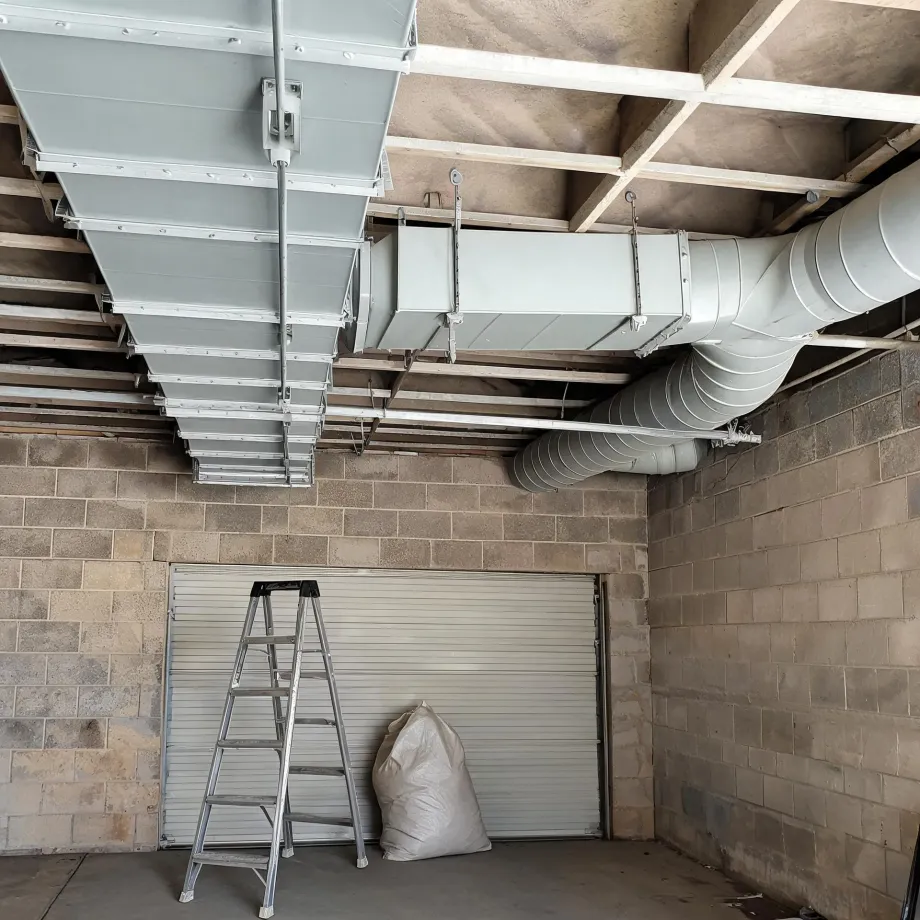
Stock built around the time mini-splits began entering the residential market carries something useful: the wiring and wall construction in these houses were not designed for a different era of equipment and then patched over. Half the homes in Mecklenburg County, North Carolina were built in 1997 or earlier (2020-2024 ACS 5-year). That means a contractor opening a failed unit here is not sorting through layers of adaptation. What they find inside the system, the condition of the refrigerant circuit, the state of the control board, whether the part that failed is still in production, is what actually decides the repair. The house is unlikely to be the reason the unit stopped working.
The Parts of a Mini-split a Contractor Checks During Repair
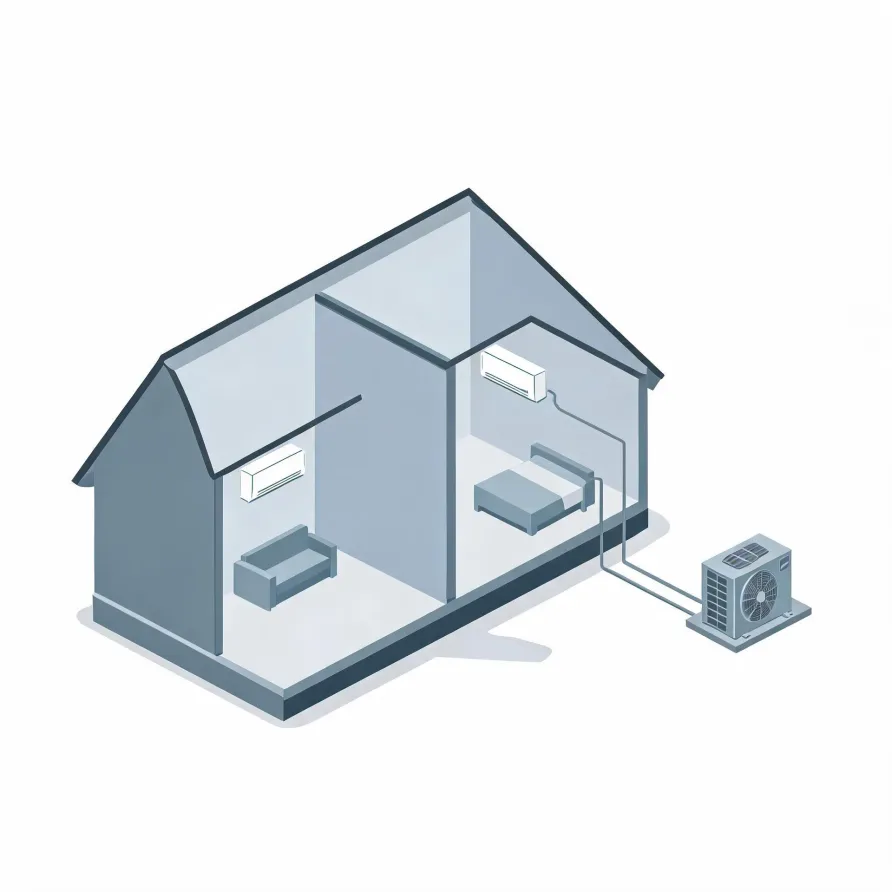
The indoor air handler is usually the first place a contractor looks. It mounts high on an interior wall, pulls room air across a coil, and pushes conditioned air back out. When airflow drops, odd smells appear, or the unit stops responding, the handler's coil, fan motor, or control board is often where the fault sits.
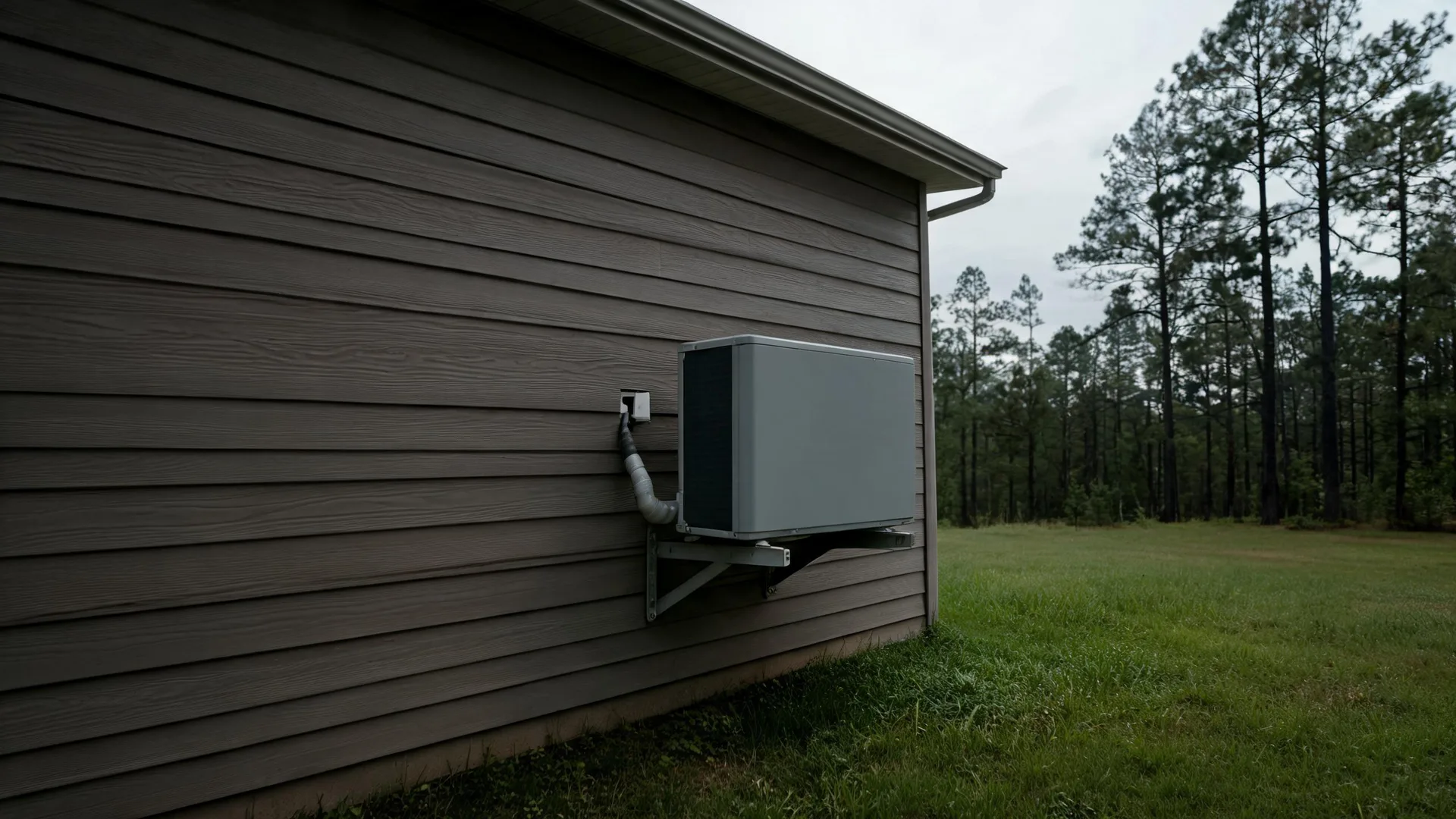
Outside, the condenser unit holds the compressor and the refrigerant controls that drive the whole system. A refrigerant line set runs through the wall to connect the two units, and a condensate drain line carries moisture away from the indoor side. A fault in the compressor, a refrigerant leak along the line set, or a blocked drain can each produce symptoms that show up inside the house.
The drawing shows the general layout of a mini-split system, and a licensed contractor determines which components and connections apply to your specific installation.
Find a contractor in Mecklenburg CountyMecklenburg County by the numbers
178 severe weather events were recorded in Mecklenburg County, North Carolina between 2015 and 2024.
NOAA National Centers for Environmental Information, Storm Events Database, bulk CSV export, events 2015-01-01 through 2024-12-31.Half the homes in Mecklenburg County, North Carolina were built in 1997 or earlier (2020-2024 ACS 5-year).
U.S. Census Bureau, 2020-2024 American Community Survey 5-Year EstimatesMecklenburg County, North Carolina holds 503,071 housing units (2020-2024 ACS 5-year).
U.S. Census Bureau, 2020-2024 American Community Survey 5-Year EstimatesOwners occupy 55.1% of the occupied homes in Mecklenburg County, North Carolina (2020-2024 ACS 5-year).
U.S. Census Bureau, 2020-2024 American Community Survey 5-Year EstimatesCodes & Standards Governing Mini-Split Repair in Mecklenburg County, North Carolina2 sourced rules & standards
Licensing and Legal Requirements in Mecklenburg County, North Carolina
North Carolina issues Class I heating licenses covering all systems in all structures, and Class II licenses covering heating systems in single-family detached residential dwellings.
North Carolina requires a license before any person or firm may engage in, or offer to engage in, the business of heating contracting.
Severe Weather Events in Mecklenburg County
Weather puts real hours on heating and cooling equipment. Mecklenburg's climate means mini-split systems here face conditions that don't show up in a national spec sheet, and that workload shapes how often repairs become necessary.
178 severe weather events, 2015–2024. Source: NOAA National Centers for Environmental Information, Storm Events Database.