Tell us about the job
Takes about a minute. No obligation.
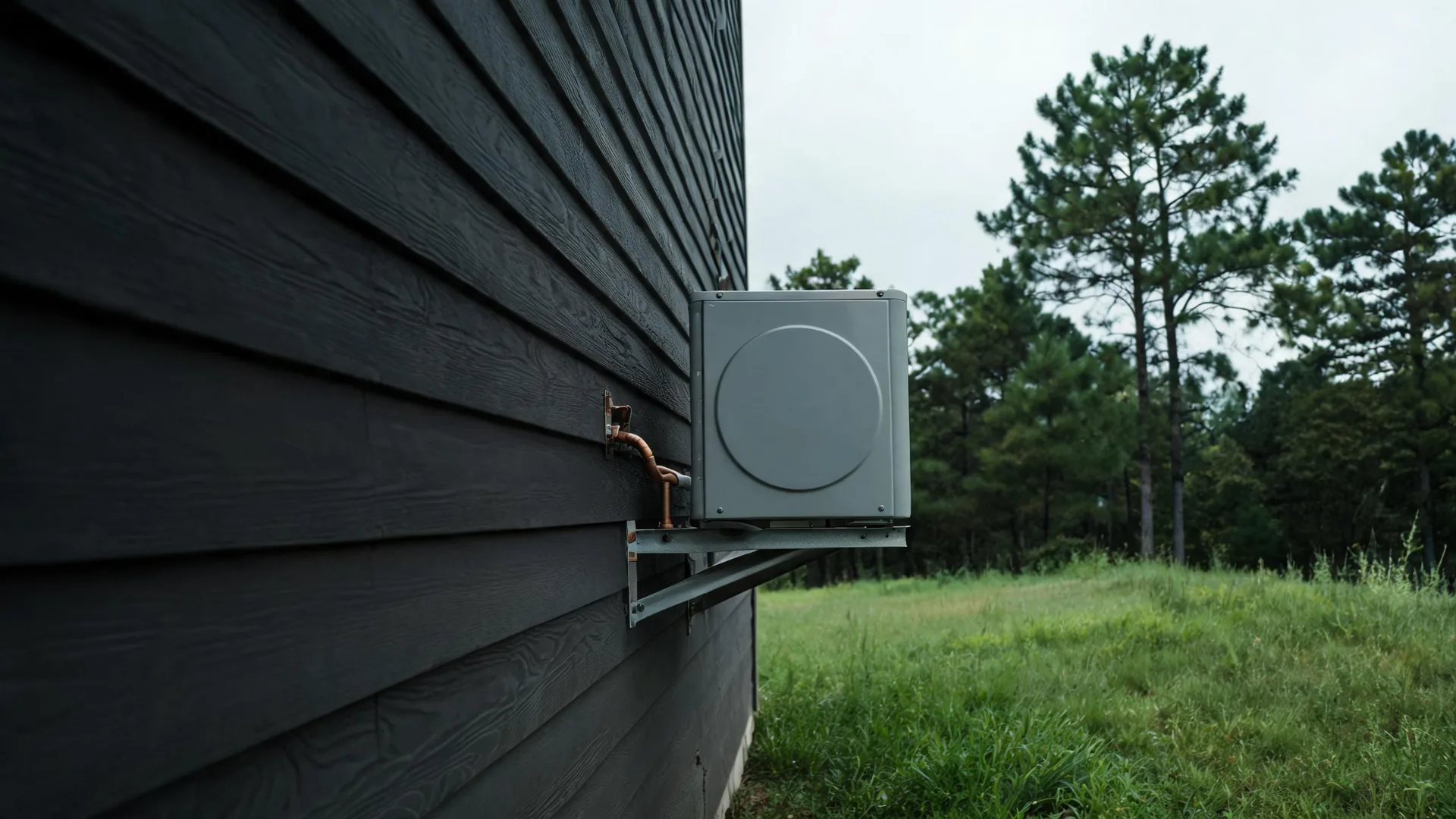
A contractor quoting a mini-split install in Wake County has to account for what the outdoor unit will face year after year, not just what the house needs today. 458 severe weather events were recorded in Wake County, North Carolina between 2015 and 2024. At that rate, severe weather shapes the load the equipment is built into from the first day it runs. A poorly sited condenser or an exposed line set that might survive mild conditions will be stressed here on a regular basis. Sizing for the structure is only part of the job; the install itself has to hold up against weather that arrives with real frequency.
Electrical panels in houses of this vintage were sized for the loads those houses were expected to carry at the time they were built. Half the homes in Wake County, North Carolina were built in 2000 or earlier (2020-2024 ACS 5-year). A mini-split runs on its own dedicated circuit, and what a contractor has to determine before any equipment is ordered is whether the existing panel has room for it. If the breaker capacity is there, the installation moves forward without touching the electrical. If it is not, adding a sub-panel or upgrading service becomes part of the job and changes what the project costs.
What a Mini-split Installation Covers
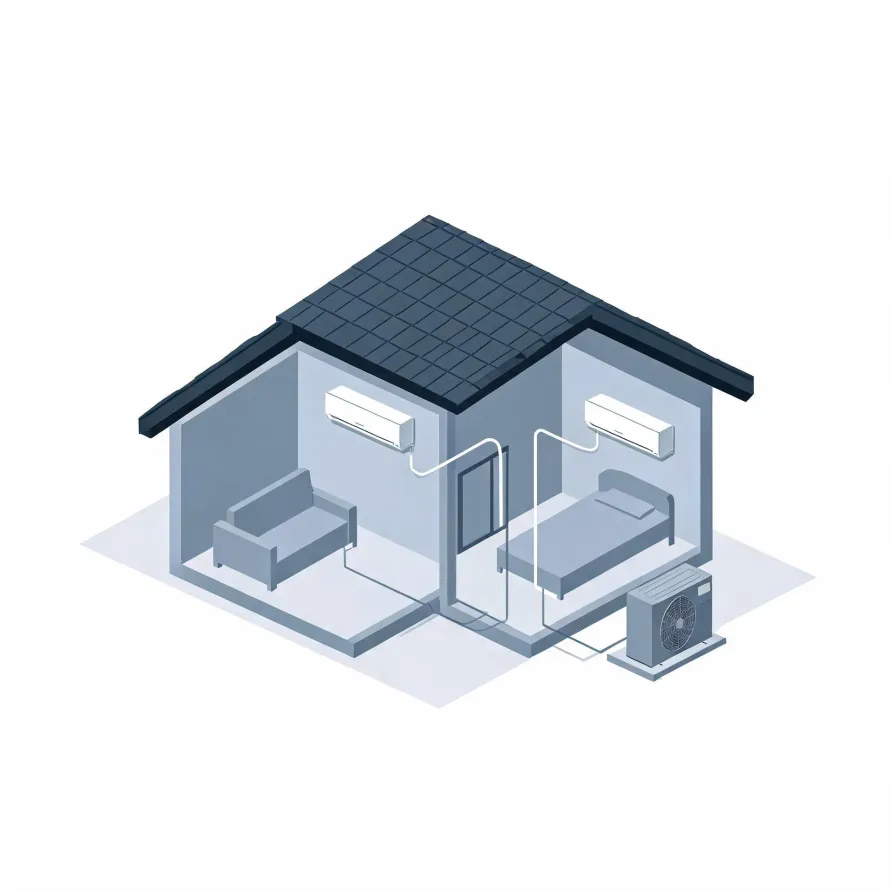
The indoor air handler mounts high on an interior wall, inside the room being conditioned. That is the unit a homeowner sees and feels every day. Outside the house, the compressor unit sits on the ground or on a bracket and does the mechanical work that drives the whole system.
A short bundle of refrigerant lines, a condensate drain line, and a power cable runs through a small opening in the wall to connect the two units. A contractor also mounts the wiring connections and the wall control, or pairs the system with a wireless remote, depending on what the setup calls for.
The drawing alongside this text shows the general layout of a mini-split system, and a licensed contractor determines exactly how each piece applies to your home.
Find a contractor in Wake CountyWake County, by the numbers
458 severe weather events were recorded in Wake County, North Carolina between 2015 and 2024.
NOAA National Centers for Environmental Information, Storm Events Database, bulk CSV export, events 2015-01-01 through 2024-12-31.Half the homes in Wake County, North Carolina were built in 2000 or earlier (2020-2024 ACS 5-year).
U.S. Census Bureau, 2020-2024 American Community Survey 5-Year EstimatesWake County, North Carolina holds 496,047 housing units (2020-2024 ACS 5-year).
U.S. Census Bureau, 2020-2024 American Community Survey 5-Year EstimatesOwners occupy 64.1% of the occupied homes in Wake County, North Carolina (2020-2024 ACS 5-year).
U.S. Census Bureau, 2020-2024 American Community Survey 5-Year EstimatesCodes & Standards Governing Mini-Split Work in Wake County, North Carolina2 sourced rules and standards
Licensing and Legal Requirements in Wake County, North Carolina
North Carolina issues Class I heating licenses covering all systems in all structures, and Class II licenses covering heating systems in single-family detached residential dwellings.
North Carolina requires a license before any person or firm may engage in, or offer to engage in, the business of heating contracting.
Severe Weather Events in Wake County
Weather patterns in Wake County shape how hard heating and cooling equipment has to work and how long it lasts. A mini-split sized and installed for local conditions holds up better than one that was not.
458 severe weather events, 2015–2024. Source: NOAA National Centers for Environmental Information, Storm Events Database.