Tell us about the job
Takes about a minute. No obligation.
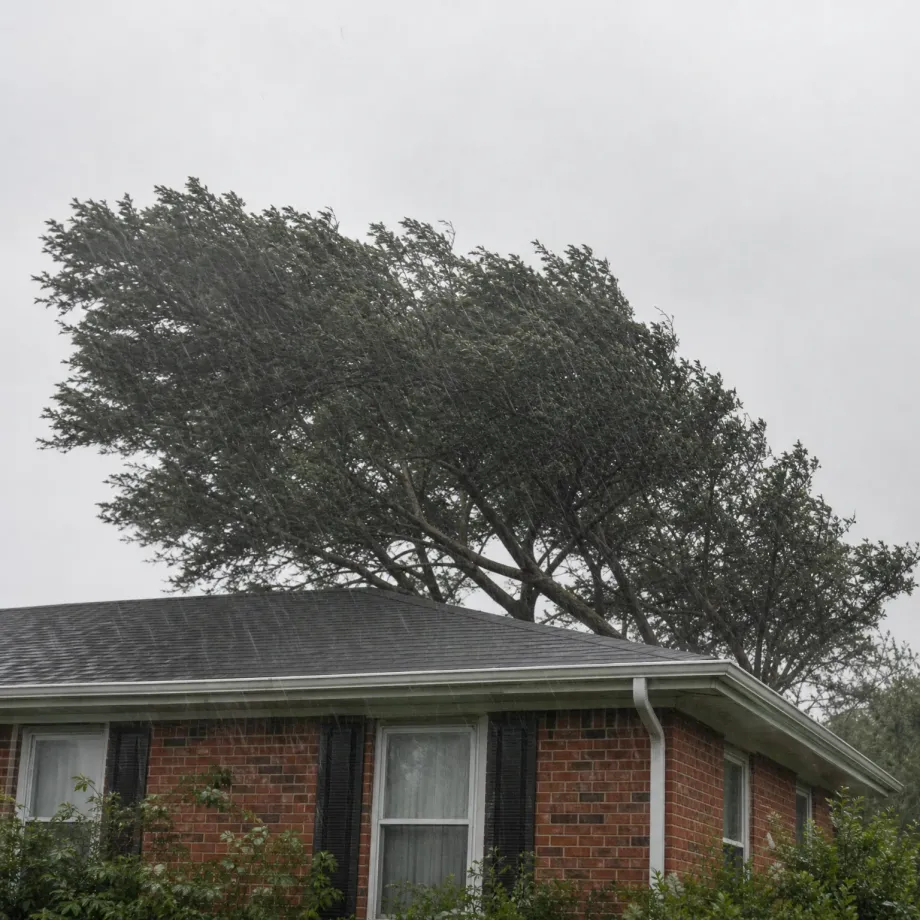
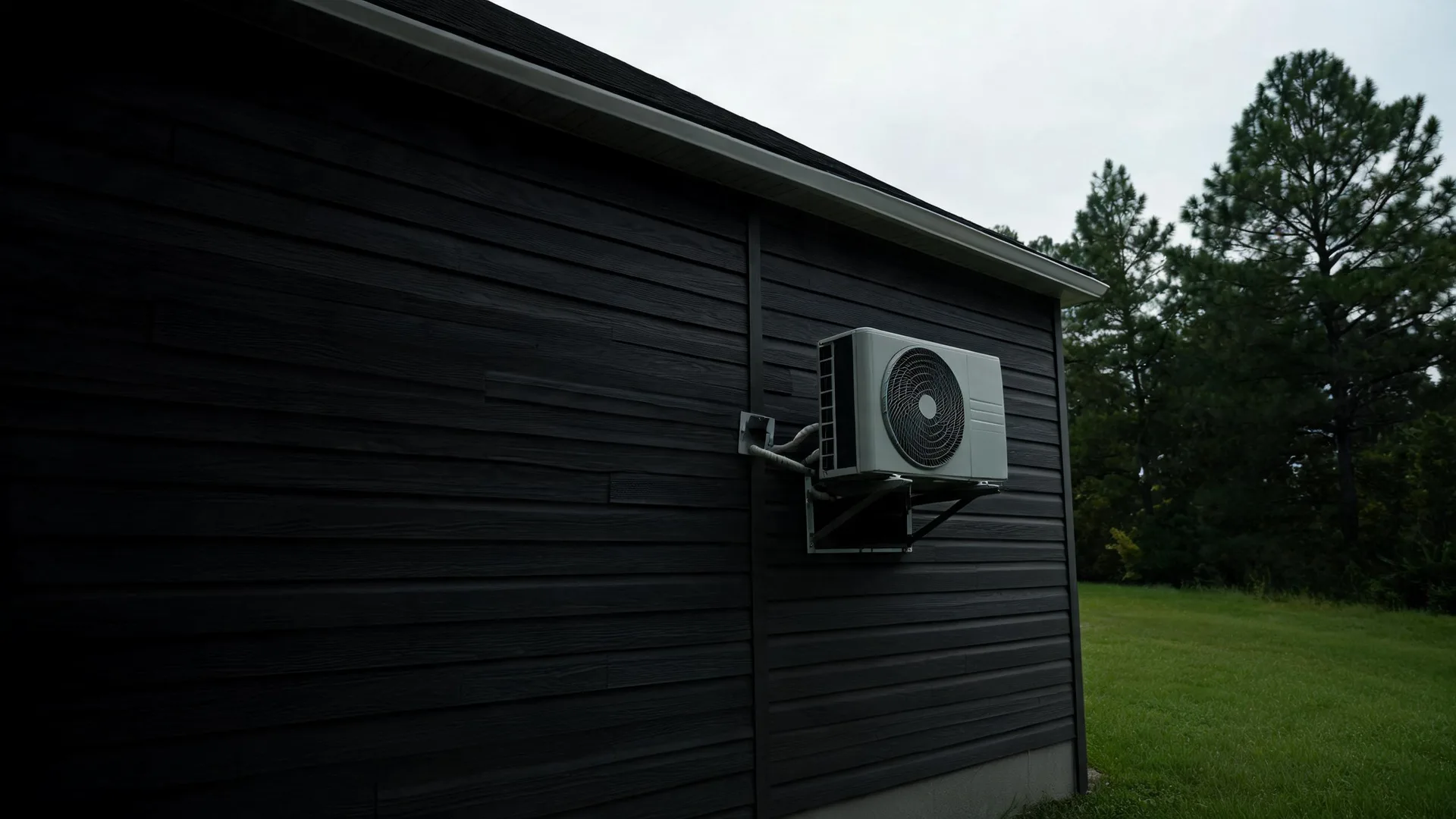
A contractor quoting a mini-split installation in Lincoln County has to account for what this area's climate actually demands of a system, not just the square footage it will serve. 82 severe weather events were recorded in Lincoln County, North Carolina between 2015 and 2024. At that rate, severe weather is a standing feature of the operating environment, not a rare interruption, so the decisions a contractor makes at install time carry real weight. Refrigerant line routing, outdoor unit placement, and mounting hardware all behave differently when the system will face regular weather stress. A unit placed and sealed well at installation holds up under those conditions; one that was not will show the gaps early.
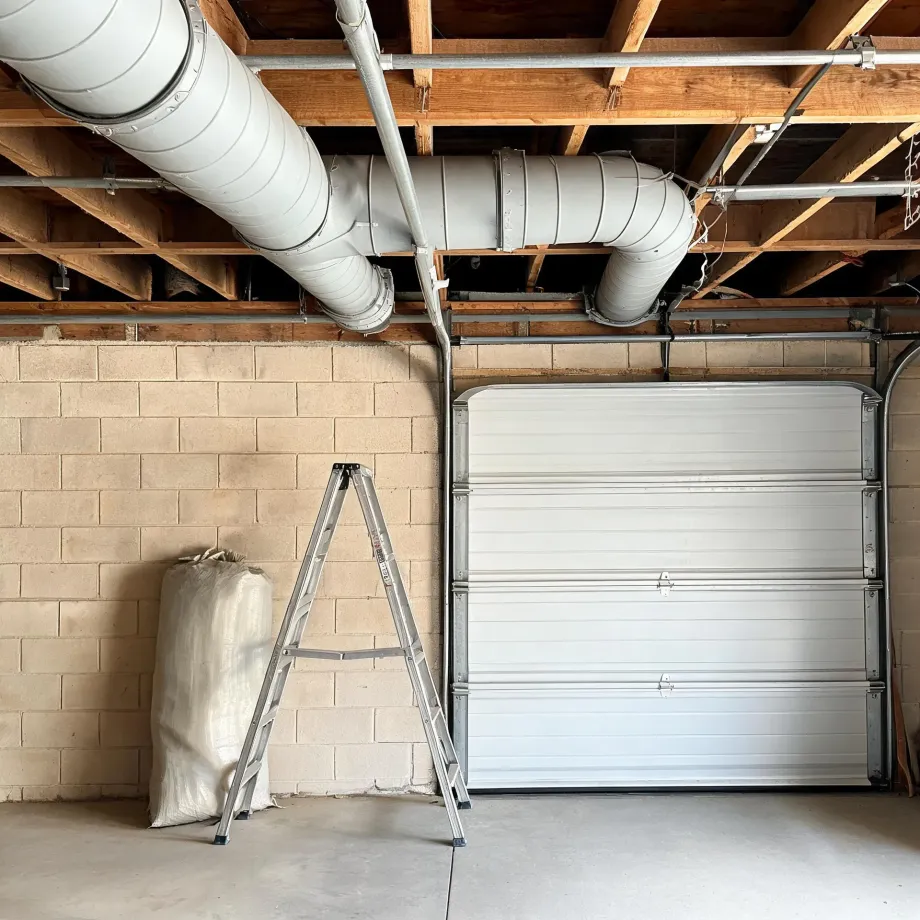
The electrical service in a house built for the mid-nineties was sized around assumptions that have since changed. Half the homes in Lincoln County, North Carolina were built in 1994 or earlier (2020-2024 ACS 5-year). A mini-split does not need ductwork, which removes one unknown, but it does need dedicated circuits, and what is already in the panel decides how much of that work is straightforward and how much requires a licensed electrician to run new service before the unit goes in. A contractor quoting the job prices the panel alongside the equipment.
The Mini-split Parts Involved in an HVAC Installation
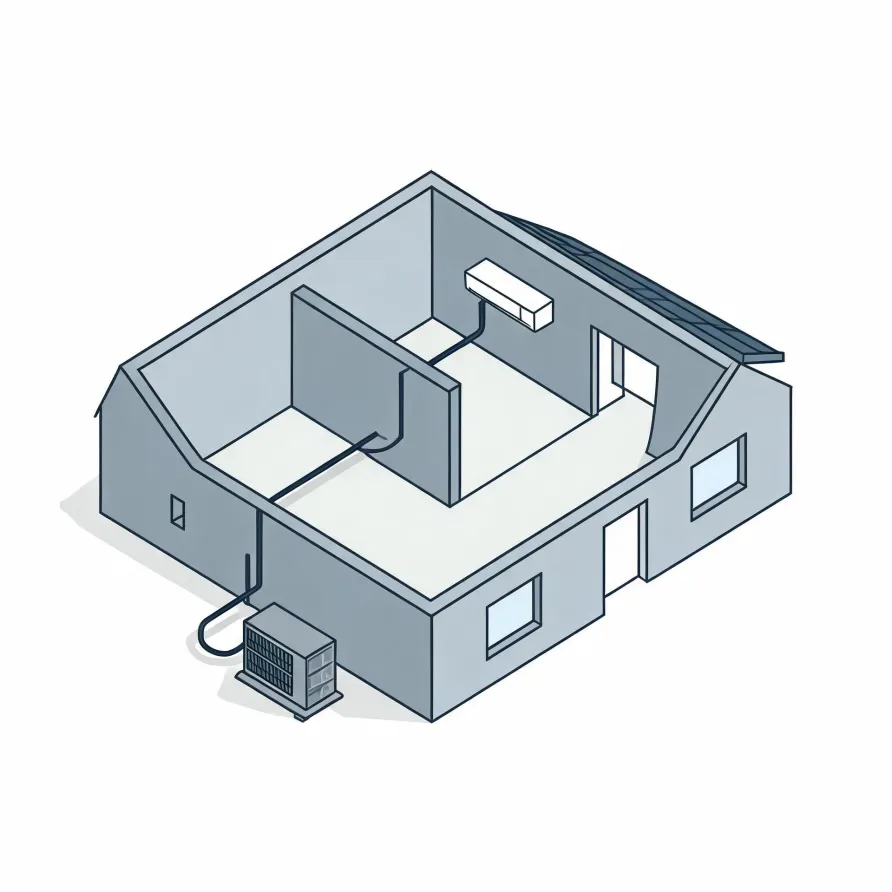
The indoor air handler mounts high on an interior wall, inside the room being conditioned, and delivers treated air directly into that space. The outdoor unit sits on the ground or on a wall bracket outside the house and holds the compressor and condenser coil, which do the heavy mechanical work of the system.
A refrigerant line set runs through a small hole in the wall to connect the two units, carrying refrigerant between them, and a condensate drain line runs from the indoor handler to the outside to remove moisture pulled from the air. A disconnect box mounts on the exterior wall near the outdoor unit and gives a licensed electrician a safe shutoff point for that circuit.
The drawing shows a typical layout, and a licensed contractor determines what applies to the specific setup of your home.
Find a contractor in Lincoln CountyLincoln County, NC, by the numbers
82 severe weather events were recorded in Lincoln County, North Carolina between 2015 and 2024.
NOAA National Centers for Environmental Information, Storm Events Database, bulk CSV export, events 2015-01-01 through 2024-12-31.Half the homes in Lincoln County, North Carolina were built in 1994 or earlier (2020-2024 ACS 5-year).
U.S. Census Bureau, 2020-2024 American Community Survey 5-Year EstimatesLincoln County, North Carolina holds 39,504 housing units (2020-2024 ACS 5-year).
U.S. Census Bureau, 2020-2024 American Community Survey 5-Year EstimatesOwners occupy 78.9% of the occupied homes in Lincoln County, North Carolina (2020-2024 ACS 5-year).
U.S. Census Bureau, 2020-2024 American Community Survey 5-Year EstimatesCodes & Standards Governing Mini-Split Work in Lincoln County, North Carolina2 sourced rules and standards
Licensing Rules for Lincoln County, North Carolina
North Carolina issues Class I heating licenses covering all systems in all structures, and Class II licenses covering heating systems in single-family detached residential dwellings.
North Carolina requires a license before any person or firm may engage in, or offer to engage in, the business of heating contracting.
Severe Weather Events in Lincoln County
Local weather puts real load on heating and cooling equipment, and how hard a system works over its life is shaped by what the climate actually does here. A mini-split sized and installed for Lincoln County conditions handles that load without running harder than it should.
82 severe weather events, 2015–2024. Source: NOAA National Centers for Environmental Information, Storm Events Database.