Tell us about the job
Takes about a minute. No obligation.
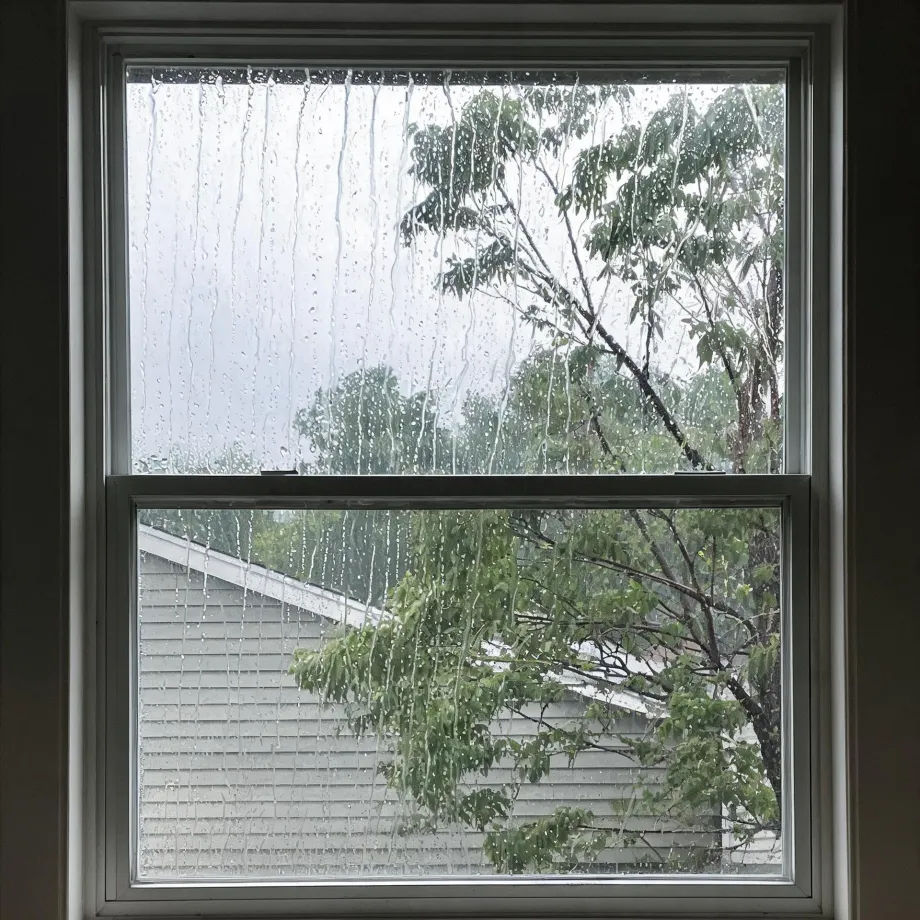
Sizing a mini-split for Wayne County means accounting for a weather record that contractors here treat as a working condition, not an occasional variable. 109 severe weather events were recorded in Wayne County, North Carolina between 2015 and 2024. At that rate, the load a system carries over its life is real enough that line-set routing, unit placement, and refrigerant charge all get specified with weather exposure in mind. A contractor quoting an install here will ask about the structure and its orientation before settling on capacity, because a unit sized for a milder assumption will run hard and lose ground.
Electrical panels in this county's housing stock were sized for what builders specified decades ago, and a mini-split draws differently than what those panels were designed around. Half the homes in Wayne County, North Carolina were built in 1984 or earlier (2020-2024 ACS 5-year). A contractor quoting a mini-split installation here checks the panel first, because an undersized service means an electrician has to upgrade it before the HVAC work can finish. The ductwork question is simpler for mini-splits since they run without ducts, but the electrical is where the job either stays on schedule or doesn't.
The Parts of a Mini-Split System and What Gets Installed
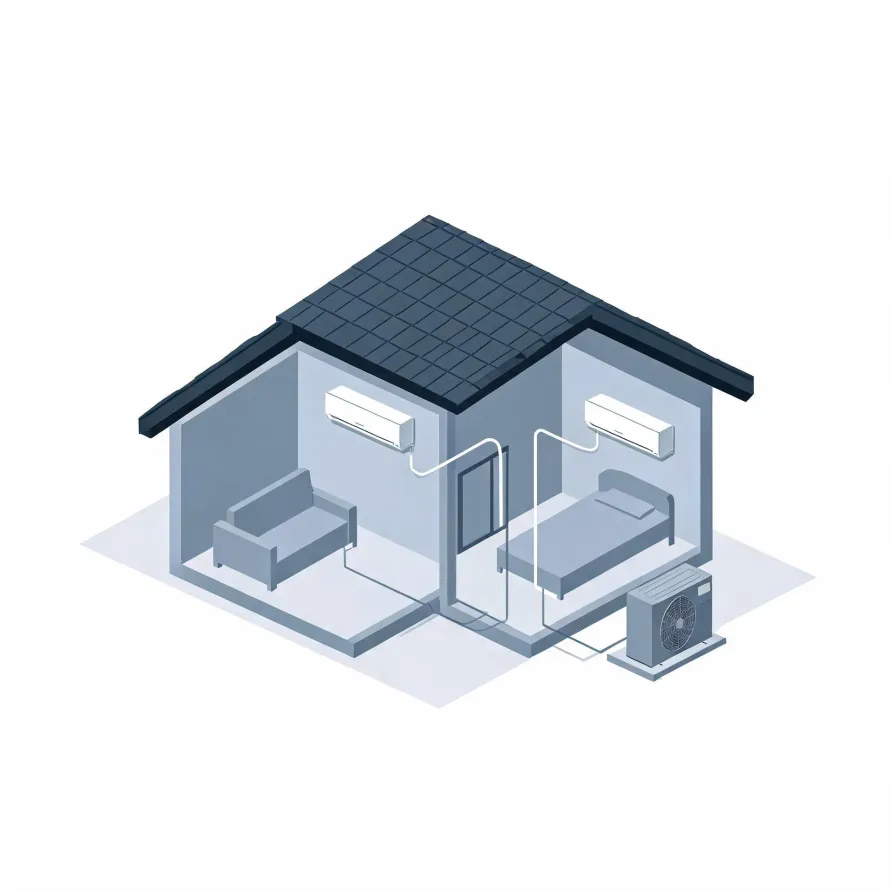
The indoor air handler mounts high on a wall inside the room and delivers conditioned air directly to that space. The outdoor condenser unit sits outside the home, usually on a ground pad or bracket, and houses the compressor and the components that drive the whole system.
A refrigerant line set runs through a small opening in the wall to connect the two units, and a condensate drain line carries moisture from the indoor handler to the outside. A dedicated electrical disconnect is mounted near the outdoor unit to give the contractor a local shutoff point.
The drawing shows a typical layout, and a licensed contractor determines exactly how the system is configured for your home.
Find a contractor in Wayne CountyWayne County, by the numbers
109 severe weather events were recorded in Wayne County, North Carolina between 2015 and 2024.
NOAA National Centers for Environmental Information, Storm Events Database, bulk CSV export, events 2015-01-01 through 2024-12-31.Half the homes in Wayne County, North Carolina were built in 1984 or earlier (2020-2024 ACS 5-year).
U.S. Census Bureau, 2020-2024 American Community Survey 5-Year EstimatesWayne County, North Carolina holds 53,505 housing units (2020-2024 ACS 5-year).
U.S. Census Bureau, 2020-2024 American Community Survey 5-Year EstimatesOwners occupy 61.5% of the occupied homes in Wayne County, North Carolina (2020-2024 ACS 5-year).
U.S. Census Bureau, 2020-2024 American Community Survey 5-Year EstimatesCodes & Standards Governing Mini-Split Work in Wayne County, North Carolina2 sourced rules & standards
Licensing Rules for Wayne County, North Carolina
North Carolina issues Class I heating licenses covering all systems in all structures, and Class II licenses covering heating systems in single-family detached residential dwellings.
North Carolina requires a license before any person or firm may engage in, or offer to engage in, the business of heating contracting.
Severe Weather Events in Wayne County
Weather in Wayne County puts real demand on heating and cooling equipment, and that demand shapes what a mini-split installation here needs to handle. Sizing and setup decisions are local ones because the workload is local.
109 severe weather events, 2015–2024. Source: NOAA National Centers for Environmental Information, Storm Events Database.